Maltese Cross: History, Symbolism, and Global Usage
The Maltese cross, also known as the Amalfi cross, is a distinctive heraldic symbol characterized by four V-shaped or arrowhead-shaped concave quadrilaterals. These arms converge at a central vertex at right angles, with two tips pointing outward symmetrically to create an eight-pointed design.
While most famously associated with the island of Malta and the Knights Hospitaller, this symbol has evolved over centuries to become a global emblem of merit, faith, and service. From ancient grave slabs to modern aviation charts, the Maltese cross remains one of the most recognizable geometric symbols in the world.
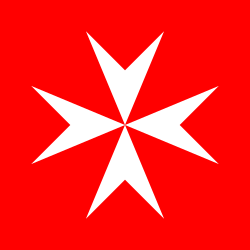
Key Facts
- Design: An eight-pointed cross formed by four concave quadrilaterals.
- Primary Association: The Sovereign Military Order of Malta (formerly the Knights Hospitaller).
- Origins: Developed from earlier eight-pointed crosses; potentially linked to the 11th-century Duchy of Amalfi.
- Modern Use: Featured on Maltese currency, national flags, and numerous international orders of merit.
- Common Misconception: Often confused with the cross pattée, which has curved arms rather than sharp vertices.
Historical Evolution

The journey of the Maltese cross began with the Knights Hospitaller during the Crusades, who originally utilized a plain Latin cross. The transition to an eight-pointed design began in the early 16th century, evolving from the cross moline (or cross branchée), which lacked the sharp, straight-edged vertices seen today.
Evidence suggests the design may have roots in the coastal town of Amalfi, Italy, appearing on coins minted by the Duchy of Amalfi as early as the 11th century.
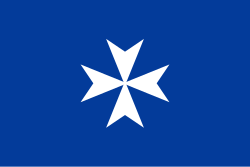
By 1489, the statutes of the Order of St. John mandated that all knights wear a "white cross with eight points." The specific "four-arrowhead" appearance emerged gradually between the 15th and 16th centuries. A transitional form known as the "Rhodian cross" appeared in the early 1500s, but the fully modern design was solidified by 1567, appearing on copper coins minted by Grand Master Jean Parisot de Valette.
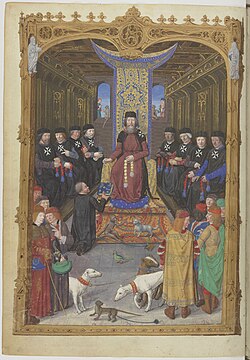
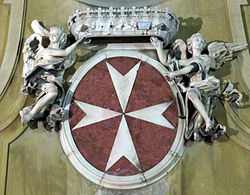
Throughout the 17th and 18th centuries, the symbol became a permanent fixture in the Order's heraldry, appearing on the facade of San Giovannino dei Cavalieri in 1699 and in various royal portraits.
Global Symbolism and Modern Usage
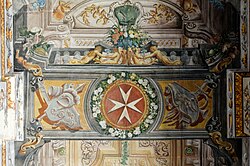
Today, the Maltese cross serves as the official symbol for the Sovereign Military Order of Malta and its allied service organizations. Beyond its religious and chivalric roots, the symbol has been adopted by various nations and institutions.
The Republic of Malta
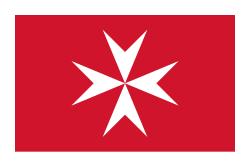
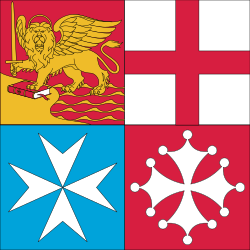
In its namesake country, the cross is integrated into the Maltese civil ensign and the presidential standard. It is also prominently featured on the 1- and 2-euro coins of Malta and serves as the trademark for the national airline, KM Malta Airlines.
Military and Civil Orders
Many nations use the eight-pointed cross as the foundation for their highest honors. Examples include:
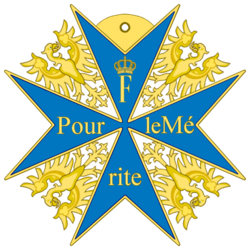
- Germany: The Pour le Mérite, founded in 1740, was the highest award for military valor in Imperial Germany.
- Poland: The Order of the White Eagle and the Virtuti Militari.
- Sweden: The Royal Order of the Seraphim and the Order of the Sword.
- Australia: Modified versions are used for the Distinguished Service Cross and the Conspicuous Service Cross.
Medical and Emergency Services
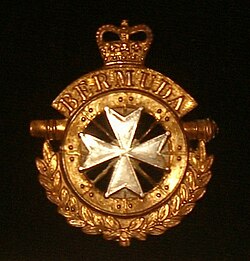
Due to the legacy of the Knights Hospitaller as providers of care, the Maltese cross is widely used by medical organizations. This includes St John Ambulance, the Order of Malta Ambulance Corps, and various emergency services in Germany and Portugal.

Diverse Applications
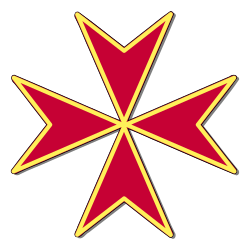
The symbol's versatility has led to its adoption in unexpected fields:
- Aviation: The FAA uses the eight-pointed cross to identify the final approach fix on published approach plates.
- Luxury Goods: The Swiss watchmaker Vacheron Constantin has used the cross as its trademark since 1755.
- Sports: The emblem is used by AJ Auxerre (football) and Neath Rugby Football Club.
- Academia: The Yale University School of Nursing features the cross on its official shield.

Summary of Cross Variants
![Tilted Maltese cross of the Order of Saints Maurice and Lazarus,[citation needed] founded in 1572 as an amalgamation and successor of the Order of Saint Lazarus with the Order of Saint Maurice, founded in 1434.](/images/d4/c4/d4c4abfa39691f4a0a15233d336f9dd83de945dd4f1332536a3d1d16d1f0ccfd.webp)
| Symbol Name | Key Visual Characteristic | Primary Association |
|---|---|---|
| Maltese Cross | Eight points, sharp V-shaped vertices | Order of Malta / Republic of Malta |
| Cross Pattée | Arms narrow at center, flare out with curved edges | Various military orders / Unicode U+2720 |
| Rhodian Cross | Transitional form, nearly sharp vertices | Early 16th-century Knights Hospitaller |
| George Cross | Latin cross with a border | National flag of Malta (since 1964) |

Frequently Asked Questions
Is the Maltese cross the same as the cross pattée?
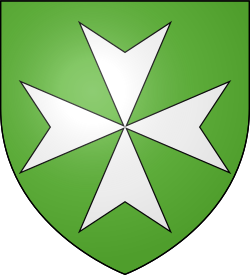
No. While they look similar, the Maltese cross has sharp, straight-edged V-shaped arms, whereas the cross pattée has arms that flare out with curved edges. Many people, and even some computer fonts, mistakenly use the cross pattée to represent the Maltese cross.
Why is the Maltese cross used by ambulance services?
This usage stems from the history of the Knights Hospitaller (the Order of St. John), who were founded to provide medical care and hospitality to pilgrims. Modern ambulance services descended from this order retained the symbol to honor this legacy of care.
Is the Maltese cross on the national flag of Malta?
No. The cross on the national flag of Malta is the George Cross, awarded by King George VI in 1942. The Maltese cross, however, appears on the Maltese civil ensign.
Where did the name "Maltese cross" come from?
The name derives from the association with the Knights Hospitaller, who were based on the island of Malta from 1530 until 1798, during which time the eight-pointed cross became their primary emblem.
Does the Maltese cross have any meaning in aviation?
Yes. In the United States, the Federal Aviation Administration (FAA) uses the eight-pointed cross on approach plates to mark the final approach fix for both precision and non-precision approaches.