Australian Honours and Awards: History, Structure, and Evolution
The Australian honours and awards system is a formal framework of orders, decorations, and medals designed to recognize outstanding achievement, bravery, and service. Established in its current form on February 14, 1975, the system is instituted by letters patent from the Monarch of Australia and countersigned by the Prime Minister. While it focuses on national recognition, it exists alongside a complex history of Imperial traditions and specific royal prerogatives.
It is important to note that this national system specifically excludes awards issued by state or local governments, as well as private organizations, although certain exceptions—such as the Order of St John—are recognized in the official order of wearing.
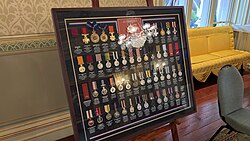
Key Facts
- Established: The modern Australian system began on February 14, 1975.
- Primary Order: The Order of Australia is the preeminent honour for achieving excellence.
- Imperial Transition: Australia phased out recommendations for British Imperial awards by 1992.
- Scope: Includes honours (appointments to orders of chivalry) and awards (decorations and medals).
- Authority: Instituted by the Monarch of Australia and countersigned by the Prime Minister.
The Evolution from Imperial to National Honours
Before the creation of a distinct national system, Australia relied on the Imperial honours system (also known as the British honours system). This system remained the primary means of recognition from pre-federation until it was fully phased out in 1994.
The transition was gradual. Between 1975 and 1992, the Australian and Imperial systems operated in parallel. The Australian Labor Party (ALP) created the national system in 1975, leading to a decline in Imperial recommendations. While the federal government ceased making Imperial recommendations in 1983, some states, specifically Queensland and Tasmania, continued until 1989.
The final shift occurred on October 5, 1992, when Prime Minister Paul Keating announced that Australia would no longer recommend citizens for British honours. Consequently, any Imperial British awards granted to Australian citizens after this date are classified as foreign awards.
Structure of the Australian System
The system is divided into two primary categories: honours and awards.
Honours
Honours are appointments to orders of chivalry. The most prominent is the Order of Australia, which consists of five distinct classes to recognize varying levels of service and achievement.
Awards
Awards are further categorized into decorations and medals:
- Decorations: Medals specifically awarded for valour, gallantry, bravery, or distinguished and conspicuous service.
- Medals: These include a wide array of recognitions, such as meritorious service, operational service, campaign medals, long service, commemorative medals, and the Champion Shots Medal.
Royal and Imperial Distinctions
Despite the move toward a national system, the Monarch of Australia may still confer certain honours in a personal capacity. These are known as Royal honours and are distinct from the government-recommended national system.
| Order | Foundation | Motto | Notable Australian Recipients/Context |
|---|---|---|---|
| Order of Merit | 1902 | "For Merit" | Sir Macfarlane Burnet, Dame Joan Sutherland, John Howard |
| Royal Victorian Order | 1896 | "Victoria" | Sir Paul Hasluck, Sir Zelman Cowen |
| Order of the Companions of Honour | 1917 | "In action faithful and in honour clear" | Sir Robert Menzies, Harold Holt, Malcolm Fraser |
| Order of the Garter | 1348 | "Honi soit qui mal y pense" | Sir Paul Hasluck, Sir Ninian Stephen |
Defence Honours and Awards
The Australian Defence system maintains its own rigorous categories of recognition. These are designed to honor military service across various theaters of operation and levels of risk. The Defence system includes four main categories of honours, alongside specific medals for nursing service (such as the Nursing Service Cross), campaign service, and long-term commitment.
Frequently Asked Questions
What is the difference between an honour and an award?
An honour is an appointment to an order of chivalry, such as the Order of Australia. An award refers to decorations (for bravery or distinguished service) and medals (for campaign, long service, or commemorative purposes).
Can Australians still receive British honours?
While the Australian government stopped recommending citizens for British honours in 1992, the Monarch may still confer certain honours personally. However, any Imperial awards granted after October 5, 1992, are treated as foreign awards.
What is the Order of Australia?
The Order of Australia is the preeminent means of recognizing Australian citizens and others for achievement or meritorious service. It is divided into five classes.
Are state-issued medals part of the Australian honours system?
No. The national Australian honours and awards system excludes all medals and awards issued by state governments, local governments, or private organizations.
What happened to hereditary peerages in Australia?
Hereditary peerages and baronetcies derive from Britain. There have never been any Australian peerages or baronetcies created under the Australian Crown; those held by Australians were created within the British system.