Lima: The Vibrant Capital of Peru
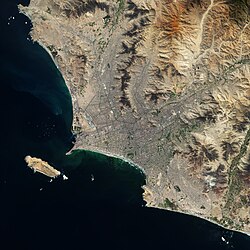
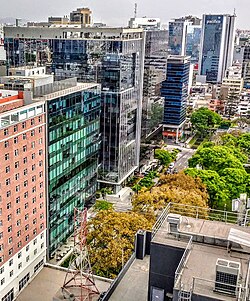
Perched on the coast of the Pacific Ocean, Lima serves as the political, economic, and cultural heart of Peru. As the second-largest city in South America, it is a sprawling metropolis where ancient pre-Columbian ruins coexist with colonial grandeur and cutting-edge modern architecture. From its designation as a UNESCO World Heritage Site to its global reputation as a gastronomic powerhouse, Lima is a city of profound contrasts and rich history.
Key Facts
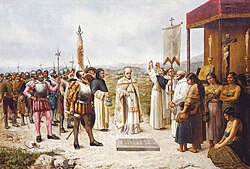
- Founded: January 18, 1535, by Francisco Pizarro.
- Population: Approximately 9.6 million in the city and 11.67 million in the urban area (2025).
- Status: Capital of Peru and a UNESCO World Heritage Site (Historic Center).
- Economy: A major financial hub with a GDP (PPP) of $210.4 billion as of 2023.
- Global Recognition: Home to some of the world's top-ranked restaurants, including Central and Maido.
Historical Evolution
Precolonial and Colonial Foundations
Long before the Spanish arrival, the region was a center of indigenous civilization. Sites like Pachacámac, a pilgrimage center active from the 3rd to the 15th century, and Huaca Pucllana (circa 500-700 CE) highlight the area's deep ancestral roots.
![Pachacámac, built from 3rd century to 15th century, was one of the most important pre-Columbian centers of pilgrimage on the Peruvian Coast.[13] In the image the Temple of the Moon.](/images/c9/5b/c95bcaa15e950b4a5ed588e679032ecea8306ea1448106114639e1ccccab4b92.jpg)
![Huaca Pucllana, Lima culture archaeological site, circa 500-700 CE[94]](/images/fc/cd/fccd9351c413410806b3c1e4eb9db4cbe314839748aff58507ac1eee2d71ba5d.jpg)
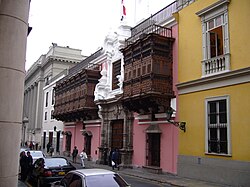
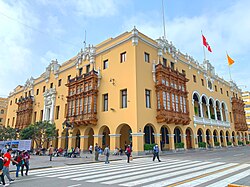
The city was formally established as a Spanish colonial capital in 1535 by Francisco Pizarro. During the colonial era, Lima became the center of Spanish power in South America, characterized by the construction of massive cathedrals, monasteries, and the iconic wooden balconies that still adorn the historic center.
Independence and the Republican Era
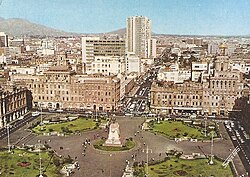
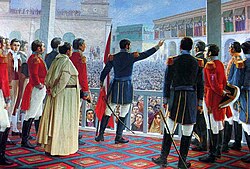
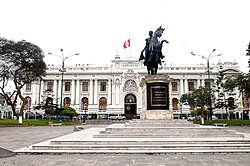
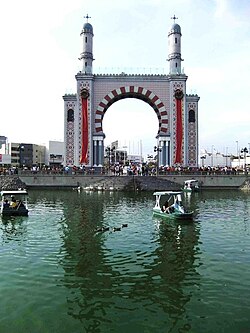
Peru's journey toward sovereignty culminated on July 28, 1821, when José de San Martín declared independence in the Plaza Mayor. The subsequent republican era saw the city expand beyond its colonial walls—walls that once featured ten gates, such as the Arco del Puente, most of which have since been demolished.
![Gate of the colonial wall of Lima, the "Arco del Puente" its partially wooden structures were consumed by a fire caused by street vendors in 1879.[38] The colonial wall of Lima had ten gates,[39][38] now demolished.](/images/0b/c5/0bc54644bcb9e32f49e05d55bb741b343bb8c1fa15655f744bfa06c543b19b6d.jpg)
Geography and Climate
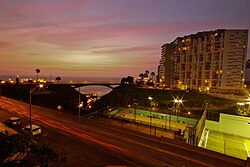
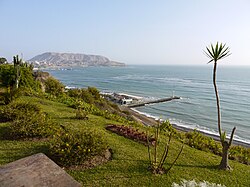
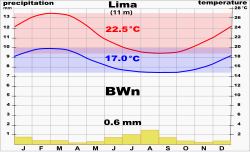
Lima is situated in a coastal desert region, resulting in a unique climate characterized by high humidity and very low annual precipitation. The city's elevation ranges from sea level to 1,550 meters.
| Metric | Summer (Jan/Feb) | Winter (Jul/Aug) | Annual Average |
|---|---|---|---|
| Mean Daily Max Temp | 26.8°C – 28.0°C | 19.6°C – 19.2°C | 23.1°C |
| Mean Daily Min Temp | 20.4°C – 21.0°C | 15.9°C – 15.4°C | 17.7°C |
| Average Precipitation | 0.8mm – 0.4mm | 1.5mm – 0.7mm | Very Low |
Urban Structure and Demographics
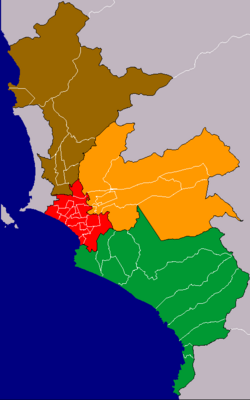
The metropolitan area represents roughly 29% of Peru's total population. The city is organized into five primary sectors: Cono Norte, Cono Este, Cono Centro, Cono Sur, and the Constitutional Province of Callao. San Juan de Lurigancho stands as the largest single district, housing approximately 1 million residents.
Demographically, Lima is a young city, with over 50% of its population under the age of 30. The population is distributed relatively evenly by gender, with women making up 51.3% of the residents.
Culture, Architecture, and Gastronomy
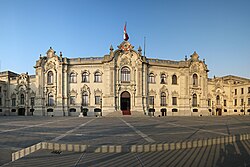
Architectural Landmarks
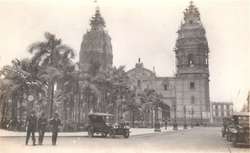
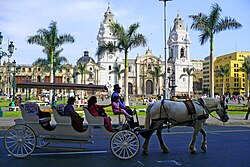
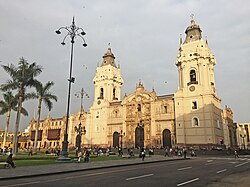
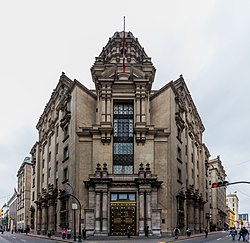
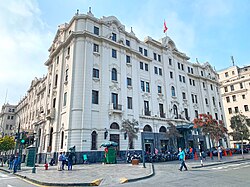
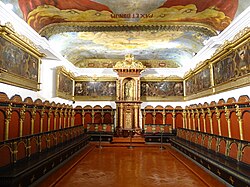
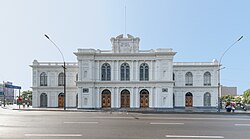
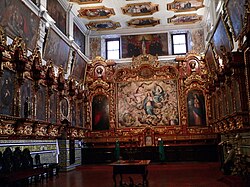
The Historic Center of Lima is renowned for its Renaissance and Baroque architecture. Key landmarks include the Metropolitan Cathedral, the Basilica of San Francisco—famous for its catacombs containing the remains of 70,000 people—and the Basilica of Santo Domingo.
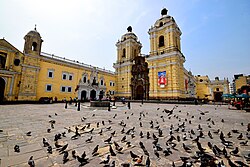
![The Catacombs of the Basilica of San Francisco was the Old cemetery of the city during all the colonial times, until 1810. It contains bones of some 70,000 colonial people.[91]](/images/37/40/37402bf908d8500c3805da5659ae436203247e4f053e33b5c97c4b160096ec41.jpg)
![Basilica of Santo Domingo, built between 1678 and 1766. It holds the tombs of the saints Rose of Lima, Martín de Porres and John Macias.[13]](/images/d2/8d/d28db145b1e3e2ee9f7fcf0c247e215b3747151d302d35a0c18b9f32ffe291ca.jpg)
A Global Culinary Capital
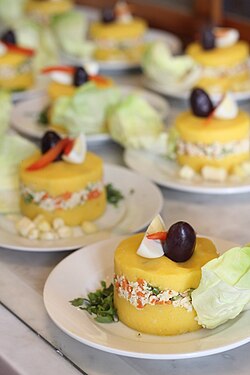
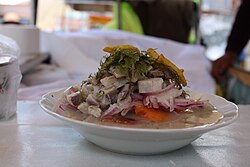
Lima has emerged as one of the world's premier dining destinations. Its cuisine blends indigenous ingredients with international influences. Restaurants such as Central (ranked #1 in 2023) and Maido (ranked #1 in 2025) have brought global acclaim to the city's gastronomic scene.
Infrastructure and Transportation
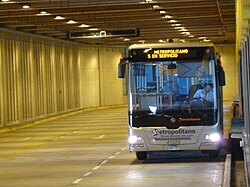
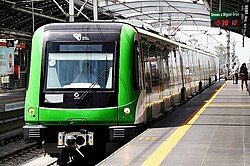
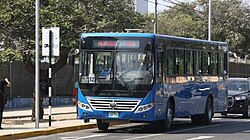
To manage its massive population, Lima employs a diverse transportation network. This includes the Lima Metro Line 1, the Metropolitano (a Bus Rapid Transit system), and the SIT (Integrated Transport System) which operates numerous routes across the city.
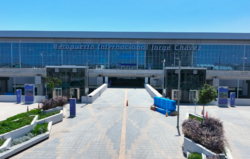
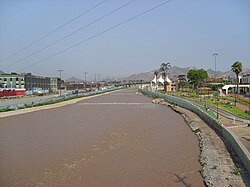
For international travel, the city relies on the Jorge Chávez International Airport, while the Rímac River remains a defining geographical feature of the urban landscape.
Frequently Asked Questions
![Market in the Plaza of the Inquisition (Lima) by Johann Moritz Rugendas, ca. 1843[74]](/images/7e/25/7e25720ef63d7b3afa13a40ce242b741ca98f937c439302531e5d6a227bf460f.jpg)
When was Lima founded?
Lima was founded on January 18, 1535, by the Spanish conquistador Francisco Pizarro.
What is the climate like in Lima?
Lima has a coastal desert climate with very little rainfall and high humidity. Temperatures are mild year-round, typically ranging from 15°C in winter to 28°C in summer.
Which restaurants in Lima are world-famous?
Central and Maido are among the most prestigious, both having been named the Best Restaurant in the World in 2023 and 2025, respectively.
What are the main transportation options in the city?
Residents and visitors use the Lima Metro Line 1, the Metropolitano bus system, the SIT bus network, and various colectivos.
Is the center of Lima a protected site?
Yes, the Historic Center of Lima was designated as a UNESCO World Heritage Site in 1988 and 1991 due to its cultural and architectural significance.