Conquistadors: The Spanish and Portuguese Expansion in the Age of Discovery
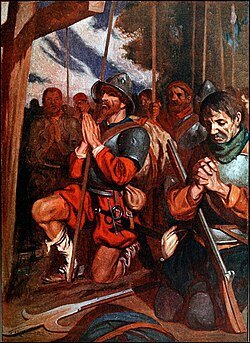
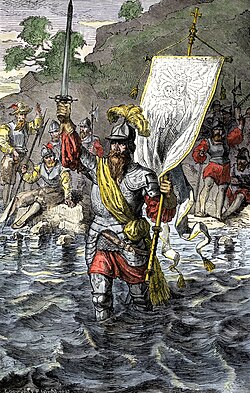
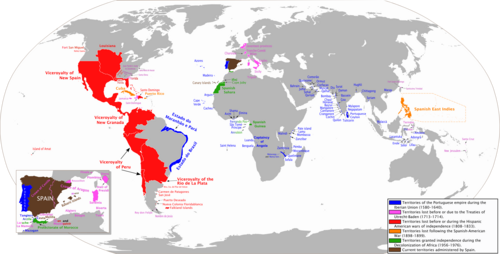
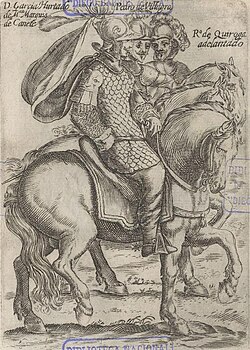
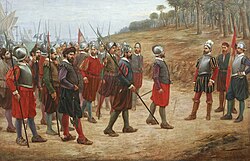
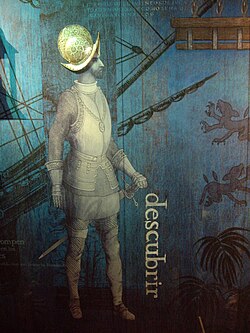
The Conquistadors (from the Spanish conquistadores and Portuguese conquistadores, meaning "conquerors") were Spanish and Portuguese colonists who explored, traded, and conquered vast territories across the Americas, Africa, Asia, and Oceania. During the Age of Discovery, these individuals sailed beyond the Iberian Peninsula to establish trade routes and colonies, bringing much of the New World under the dominion of the Spanish and Portuguese crowns.
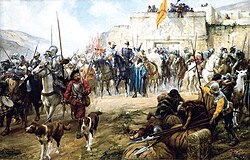
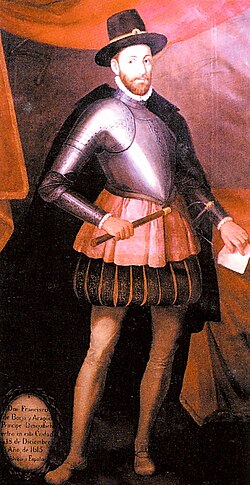
Their expeditions were often led by hidalgos (members of the lower nobility) from southern and western Spain. Following Christopher Columbus's arrival in the West Indies in 1492, Spain utilized bases in Santo Domingo, Cuba, and Puerto Rico to launch further incursions into the mainland.
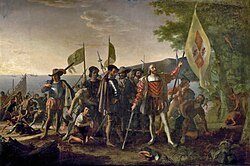
Key Facts
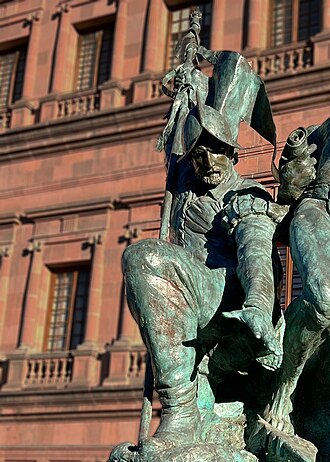
- Primary Nations: Spain and Portugal were the dominant powers of the early Age of Discovery.
- Major Conquests: The fall of the Aztec Empire (led by Hernán Cortés) and the Inca Empire (led by Francisco Pizarro).
- Global Reach: Expansion extended from the Americas to the Philippines, Japan, India, and various African coasts.
- Biological Impact: European diseases, particularly smallpox, caused massive population declines among indigenous peoples.
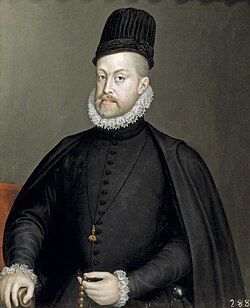
- Iberian Union: A period from 1580 to 1640 when the Spanish and Portuguese empires were joined under a single crown.
The Spanish Conquest of the Americas
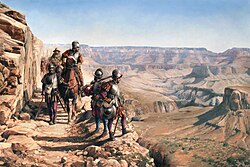
Mesoamerica and the Aztec Empire
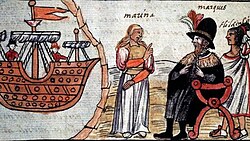
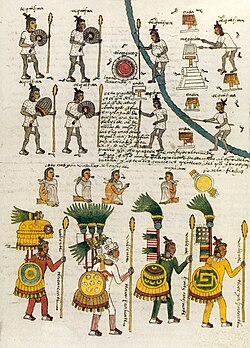
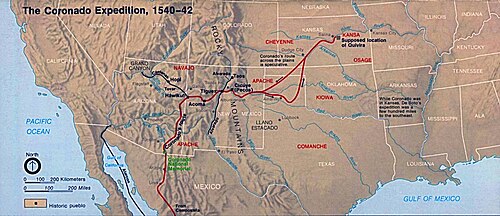
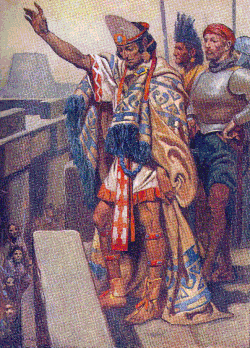
Between 1519 and 1521, Hernán Cortés led the conquest of the Aztec Empire, which was ruled by Moctezuma II. This victory allowed Spain to expand its rule into northern Central America and parts of the modern-day southern and western United States.
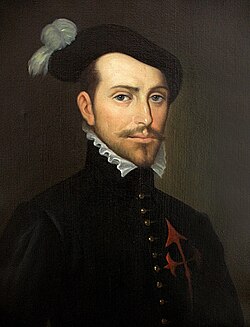
South America and the Inca Empire
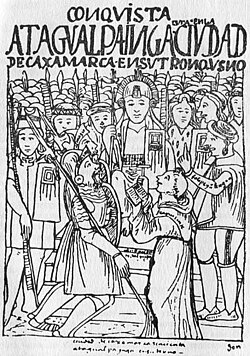
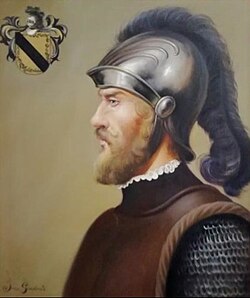
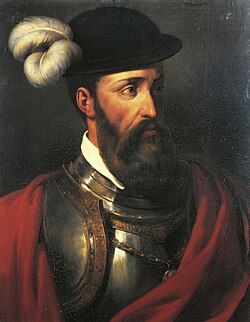
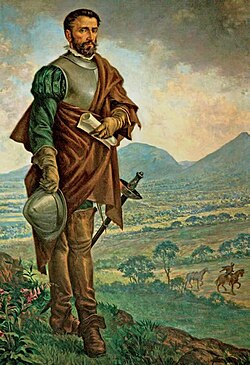
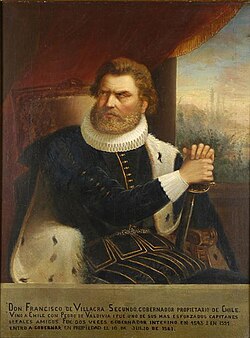
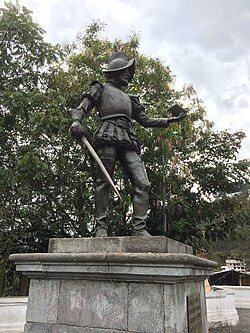
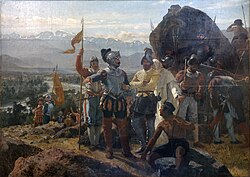
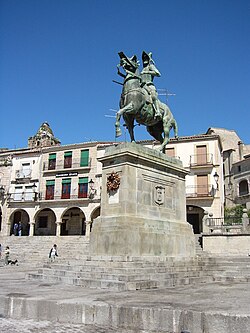
In South America, Francisco Pizarro crossed the Isthmus of Panama and sailed to northern Peru. From 1532 to 1572, Pizarro subdued the Inca Empire, using Peru as a strategic base to conquer much of Ecuador and Chile. Other regions, such as central Colombia, were conquered by Gonzalo Jiménez de Quesada.
North American Exploration
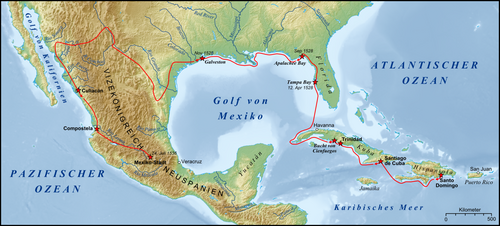
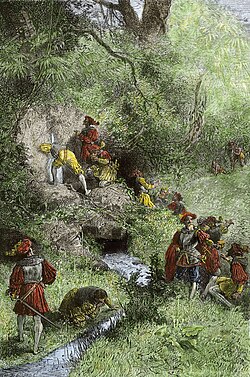
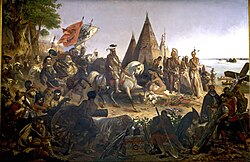
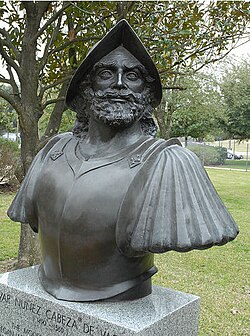
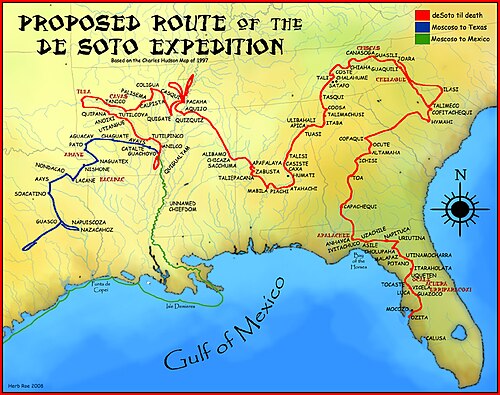
Spanish exploration also pushed deep into North America. Between 1527 and 1535, Álvar Núñez Cabeza de Vaca led an expedition of 600 men. After landing in Florida, the party traveled on foot through Texas, New Mexico, Arizona, and several Mexican states before reaching the mouth of the Mississippi River.
Portuguese Exploration and Global Trade
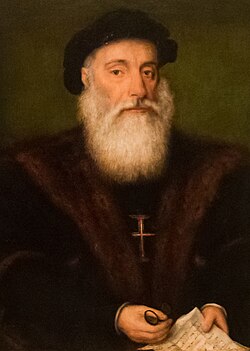
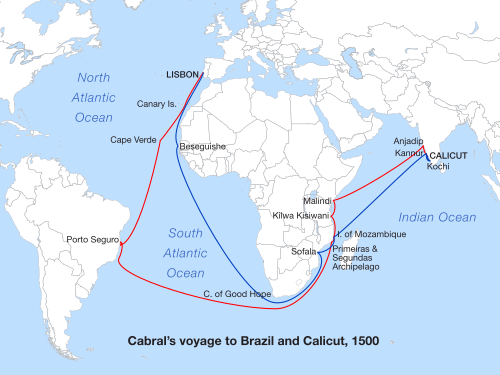
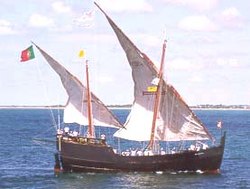
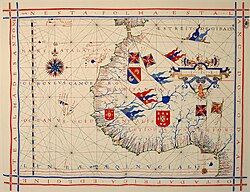
While Spain focused heavily on the Americas, Portugal expanded its influence across the Atlantic and Indian Oceans. In 1498, Vasco da Gama reached India, and in 1500, Pedro Álvares Cabral claimed Brazil for Portugal.
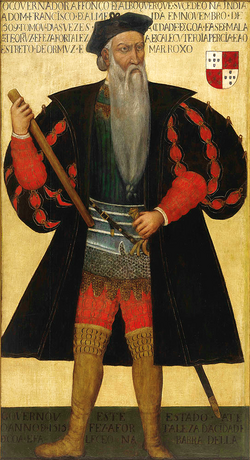
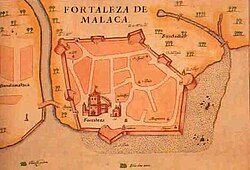
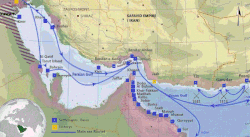
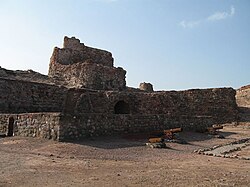
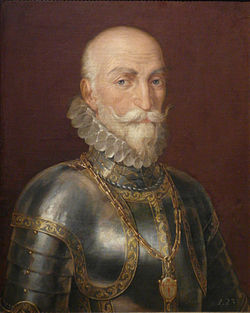
Afonso de Albuquerque further expanded the Portuguese Empire by conquering Goa in India, Hormuz in the Persian Strait, and Malacca. Portuguese sailors eventually reached Taiwan, Japan, and Timor, establishing a commercial monopoly in regions like Guangzhou and Macau.
Expansion into Asia and Oceania
![Dom Francisco de Almeida, Viceroy of Portuguese India.[6]](/images/e2/10/e2104d2f429538b27a913e62a7d1546167c96d2d99cd584e6d6bac1b736947aa.png)
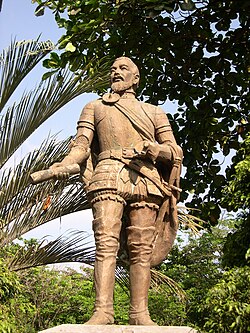
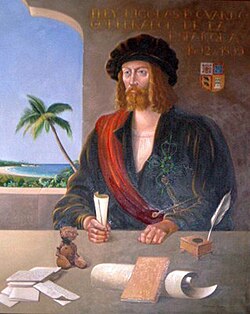
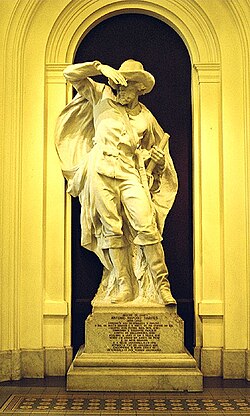
Spain also established a presence in the East. In 1564, Miguel López de Legazpi was commissioned to explore the Maluku Islands. After conflicts with native tribes, he established settlements in the Philippines in 1571, becoming the first governor-general of the Spanish East Indies.
The Impact of Disease and Conflict
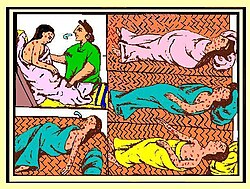
The arrival of Europeans brought devastating biological consequences. Indigenous populations had no immunity to Old World diseases. Smallpox, typhus, influenza, diphtheria, and measles caused catastrophic mortality rates. For example, a smallpox epidemic killed the Inca emperor Huayna Capac in 1529, destabilizing the empire before Pizarro's arrival.
Summary of Major Conquistadors and Explorers
| Name | Nationality | Primary Region | Key Achievement |
|---|---|---|---|
| Hernán Cortés | Spanish | Mexico | Conquest of the Aztec Empire |
| Francisco Pizarro | Spanish | Peru | Conquest of the Inca Empire |
| Vasco da Gama | Portuguese | India | First European to reach India by sea |
| Pedro Álvares Cabral | Portuguese | Brazil | Claimed Brazil for Portugal |
| Miguel López de Legazpi | Spanish | Philippines | First Governor-General of Spanish East Indies |
| Cabeza de Vaca | Spanish | North America | Explored Florida, Texas, and the Southwest |
Frequently Asked Questions
![Portuguese expansion in Africa and the Middle East (1415–1801)[43]](/images/c1/3e/c13e6bc4fed548cc73ee0e493a3e3990296f904f6f4b4552be59229967454b72.png)


Who were the conquistadors?
Conquistadors were Spanish and Portuguese explorers and soldiers who led military expeditions to conquer territories in the Americas, Africa, Asia, and Oceania during the 15th and 16th centuries.
What was the Iberian Union?
The Iberian Union was a period between 1580 and 1640 when the crowns of Spain and Portugal were joined under a single monarch, effectively combining their global empires.
How did diseases affect the indigenous populations?
European diseases such as smallpox, measles, and influenza decimated indigenous populations who lacked natural immunity, often killing a large portion of the population and weakening empires before military conquest.
Which empires were the primary targets of the Spanish conquistadors?
The two most prominent targets were the Aztec Empire in Mesoamerica (conquered by Hernán Cortés) and the Inca Empire in South America (conquered by Francisco Pizarro).
What role did Portugal play in the Age of Discovery?
Portugal focused heavily on maritime trade routes around Africa to India and Asia, while also establishing a significant colony in Brazil.