Kingdom of Jerusalem
The Kingdom of Jerusalem, often referred to as the Crusader Kingdom, was a pivotal feudal monarchy established in the Levant following the First Crusade. Spanning nearly two centuries from 1099 to 1291, the kingdom served as the center of Western Christian power in the Near East. Its history is characterized by two distinct phases: the original kingdom centered in Jerusalem and the subsequent "Second Kingdom," also known as the Kingdom of Acre.
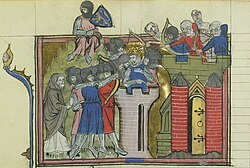
The state was born from the successful siege of Jerusalem in July 1099, marking a transformative era in the High Middle Ages. Throughout its existence, the kingdom navigated complex alliances with the Byzantine Empire and endured relentless conflicts with neighboring Muslim powers, including the Fatimids and the Ayyubid Sultanate.
Key Facts
- Duration: 1099–1187 and 1192–1291.
- Capitals: Jerusalem (1099–1187), Tyre (1187–1191), and Acre (1191–1291).
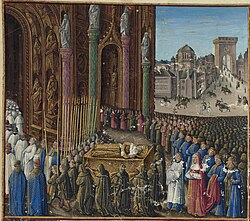
- First Ruler: Godfrey of Bouillon.
- Last Ruler: Henry II.
- Government: A feudal monarchy governed by the Haute Cour (High Court).
- Official Language: Latin, though Old French, Italian, Greek, and Arabic were commonly spoken.
The Foundation and Expansion (1099–1162)
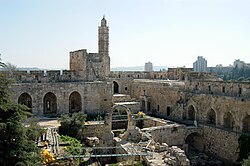
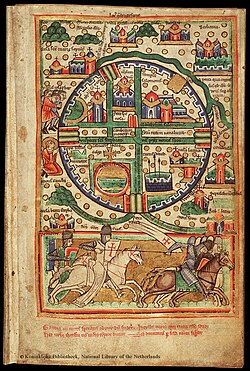
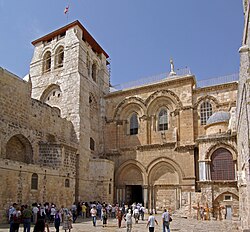
Following the capture of Jerusalem on July 15, 1099, the kingdom began as a tenuous arrangement. However, under the leadership of Baldwin I, it evolved into a solid feudal state. Baldwin I expanded the kingdom's reach by capturing vital port cities, including Acre (1104), Beirut (1110), and Sidon (1111), which secured the coast and facilitated reinforcements from Europe.
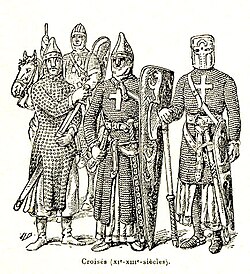
Baldwin I also exerted suzerainty—a position of sovereign authority—over other Crusader states such as Edessa, Antioch, and Tripoli. By repopulating Jerusalem with Franks and native Christians, he strengthened the kingdom's internal stability and defended its borders against invasions from the Fatimids and the forces of Damascus and Mosul.
Political Turmoil and the Leper King
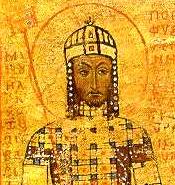
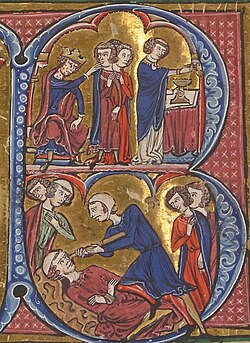
By the mid-12th century, the kingdom faced internal instability and external pressure. King Amalric I attempted to secure the state by invading Egypt, though these campaigns met with mixed success. The succession then passed to Baldwin IV, known as the "Leper King." Despite his debilitating illness, Baldwin IV ruled with determination, though his inability to produce an heir shifted the political focus to his sisters, Sibylla and Isabella.
The reign of Baldwin IV was marked by the rise of Saladin, the leader of the Ayyubid Sultanate. The kingdom's internal divisions, split between different court factions, weakened its ability to present a united front against Saladin's growing power.
The Fall of Jerusalem and the Third Crusade
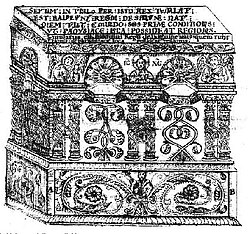
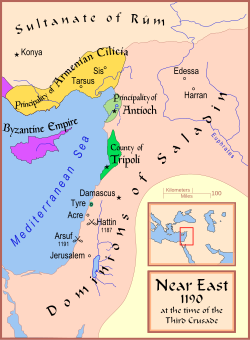
The original kingdom collapsed in 1187 after the siege of Jerusalem by Saladin. This loss prompted the Third Crusade (1189–1192), led by figures such as Richard the Lionheart and Philip II of France. While Richard achieved significant victories at the Battle of Arsuf and the Battle of Jaffa, recovering much of the coastline, Jerusalem itself remained under Ayyubid control.
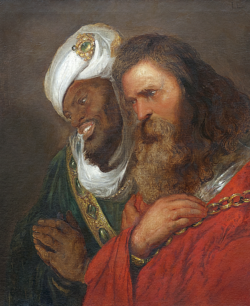
In 1192, a treaty re-established a diminished Christian state. This "Second Kingdom" moved its capital to Acre, as Jerusalem was deemed a strategic liability due to its isolation from the sea, where Western reinforcements arrived.
The Kingdom of Acre and Final Decline
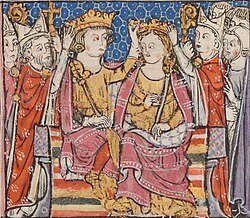
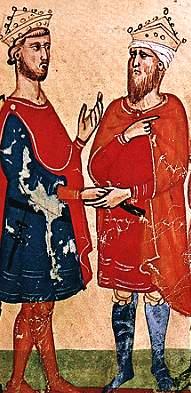
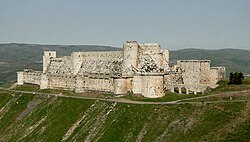
For the next century, the Kingdom of Jerusalem existed as a narrow strip of territory along the Syrian coastline. Despite various attempts to recapture Jerusalem—including the diplomacy of Emperor Frederick II during the Sixth Crusade—the state remained fragile.
The kingdom relied heavily on coastal strongholds and the support of military orders. However, the rise of the Mamluk Sultanate in Egypt signaled the end. After a series of losses and internal conflicts, the final Crusader stronghold, Acre, fell on May 18, 1291, effectively ending the Latin presence in the Levant.
Economy and Culture
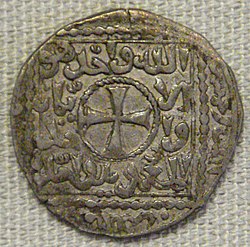
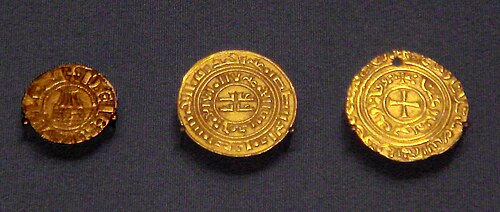
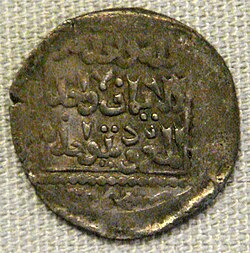
The kingdom's economy was bolstered by its position as a trade hub between Europe and Asia. The currency consisted of the Bezant (gold) and the Denier (silver). Initially, gold coins copied the Kufic script of Islamic dinars to facilitate trade, though Christian symbols were added later following Papal requests.
Society was a complex blend of European feudalism and local Levantine influences. The Latin Church held primary religious authority, but the population included Eastern Christians, Muslims, and Jews.
| Feature | First Kingdom (1099–1187) | Second Kingdom (1192–1291) |
|---|---|---|
| Primary Capital | Jerusalem | Acre |
| Key Adversary | Fatimids / Saladin | Ayyubids / Mamluks |
| Territorial Scope | Broad inland and coastal areas | Primarily coastal strip |
| End Event | Fall of Jerusalem (1187) | Fall of Acre (1291) |
Frequently Asked Questions
Who was the first ruler of the Kingdom of Jerusalem?
Godfrey of Bouillon became the first ruler of the kingdom in 1099 following the successful siege of Jerusalem during the First Crusade.
Why was the capital moved from Jerusalem to Acre?
After the Third Crusade, Jerusalem remained under Muslim control. Acre became the capital because it was a strategic port city that allowed for easier communication and reinforcement from Europe.
What was the role of the Haute Cour?
The Haute Cour, or High Court, served as the legislature and judicial body of the feudal monarchy, advising the king and managing the nobility.
How did the kingdom's currency evolve?
The kingdom used the Bezant and Denier. Gold bezants originally used Kufic script to mimic Islamic coins for trade purposes, but Christian symbols were added after 1250 due to complaints from the Pope.
Who was Baldwin IV?
Baldwin IV was the King of Jerusalem who suffered from leprosy. Despite his illness, he ruled the kingdom during a period of intense conflict with Saladin.