Principality of Antioch
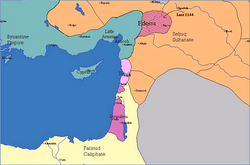
The Principality of Antioch was a pivotal feudal monarchy established during the First Crusade. Existing from 1098 to 1268, it served as a strategic bastion for Western Christendom in the Near East, blending Norman military ambition with the complex geopolitical landscape of the Levant.
Founded by Norman adventurers, primarily from the Duchy of Apulia and Calabria in southern Italy, the state was centered in the city of Antioch (modern-day Antakya, Turkey). While the ruling elite were Roman Catholic, the general population remained a diverse mosaic of Greek Orthodox Christians, Armenians, and Muslims.
Key Facts
- Duration: 1098–1268 AD.
- Capital: Antioch (modern-day Turkey).
- Founding Ruler: Bohemond I.
- Ruling Dynasty: Primarily Norman (Hauteville dynasty).
- Vassalage: Served as a vassal to the Byzantine Empire, the Armenian Kingdom of Cilicia, and the Ilkhanate at different periods.
- Final Conquest: Captured by the Mamluk Sultanate under Baibars in 1268.
The Foundation and Early Conquest
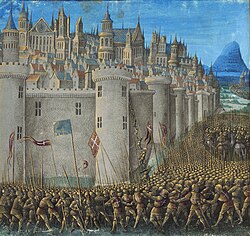
Antioch had been a major Byzantine stronghold before falling to the Seljuk Turks in 1084. Consequently, it became a primary target for the First Crusade. In October 1097, the Crusader army began a grueling siege of the city, which was protected by over four hundred towers.
The siege was marked by extreme attrition and hunger. However, the deadlock broke on June 2, 1098, when Bohemond of Taranto conspired with an Armenian guard named Firouz to gain entry to the city. Shortly after the city fell, the Crusaders themselves were besieged by a relief army led by Kerbogha of Mosul, but they eventually secured victory.
The Era of Bohemond I and Tancred
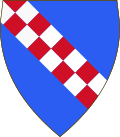
Following the victory, Bohemond I established himself as the Prince of Antioch. He expanded the territory into Cilicia and secured the harbor of St. Symeon. However, tensions rose with the Byzantine Empire, as Bohemond failed to return the territory to Emperor Alexios I Komnenos as previously sworn.
After Bohemond's capture by the Danishmends in 1100, his nephew Tancred served as regent, further expanding the borders to include Tarsus and Latakia. Though Bohemond returned and later signed the Treaty of Devol in 1108—which nominally made Antioch a Byzantine vassal—the state remained largely independent in practice until Bohemond's death in 1111.
Byzantine Relations and Internal Struggles
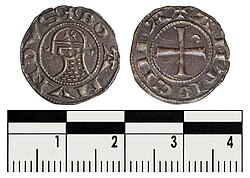
The relationship between Antioch and the Byzantine Empire fluctuated between open conflict and strategic alliance. By 1159, under Emperor Manuel I Comnenus, the Principality became a formal vassal of Byzantium. This arrangement provided essential protection against the threats of Nur ad-Din, though it required Antioch to provide troops for the Byzantine army.
Internal stability was often precarious. The state saw various regencies, including those of the Kings of Jerusalem, and suffered significant losses during the Second Crusade, including the death of Raymond of Poitiers at the Battle of Inab in 1149.
The Latin Patriarchate
In 1100, the Latin Patriarchate of Antioch was established to provide ecclesiastical jurisdiction over the city. While the ruling nobility adhered to the Latin Church, the majority of the 20,000 inhabitants in the 12th century remained Eastern Christians. This patriarchate continued as a titular entity long after the state fell, until 1964.
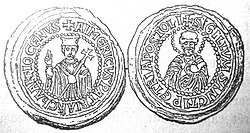
The Decline and Fall of the Principality
By the 13th century, the Principality's power had waned. In 1254, Bohemond VI married Sibylla of Armenia, effectively making Antioch a vassal of the Armenian Kingdom of Cilicia. As the Mongol Empire expanded, Bohemond VI submitted to Hülegü in 1260, becoming a tributary state of the Mongols.
This alliance with the Mongols proved fatal when the Mamluk Sultan of Egypt, Baibars, launched a campaign to reclaim northern Syria. In 1268, Baibars captured and brutally sacked Antioch. Contemporary accounts, such as those by the illuminator Toros Roslin, describe the destruction of the city's temples and houses by fire, marking the end of the Principality.
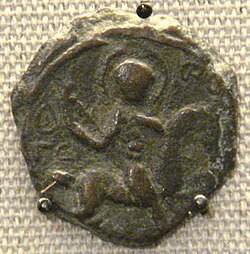
Summary of the Principality of Antioch
| Category | Details |
|---|---|
| Government | Feudal Monarchy |
| Primary Languages | Old Norman, Old French, Medieval Latin, Greek, Arabic, Armenian, Aramaic |
| Key Rulers | Bohemond I, Tancred (Regent), Bohemond III, Bohemond VI |
| Major Adversaries | Seljuk Turks, Nur ad-Din, Mamluk Sultanate |
| Religious Composition | Latin Church (Elite), Eastern Christianity & Islam (Majority) |
Frequently Asked Questions
How was the city of Antioch captured during the First Crusade?
The city was captured on June 2, 1098, after a long siege. Bohemond of Taranto convinced an Armenian guard named Firouz to allow the Crusader forces to enter the city through one of its towers.
What was the relationship between Antioch and the Byzantine Empire?
The relationship was often strained. While the Crusaders initially promised to return captured lands to the Byzantines, they frequently refused. However, Antioch later became a vassal of the Empire under Manuel I Comnenus to secure protection from Muslim forces.
Who were the primary inhabitants of the Principality?
The ruling class consisted mostly of Normans from southern Italy. The general population, however, was predominantly composed of Armenian and Greek Orthodox Christians, with a minority of Muslims and Jews.
What led to the final collapse of the Principality?
The Principality's alliance with the Mongol Empire made it a target for the Mamluk Sultanate. In 1268, the Mamluk leader Baibars captured and destroyed the city, ending the state's existence.
What happened to the title "Prince of Antioch" after 1268?
The title became a titular honor. It passed to the kings of Cyprus and was occasionally granted as a dignity to junior members of the royal house.