Baldwin II: The Resilient King of Jerusalem and Count of Edessa
Baldwin II, also known as Baldwin of Bourcq, was a pivotal figure in the early history of the Crusader States. A member of the House of Rethel, he served as the Count of Edessa from 1100 to 1118 and subsequently as the King of Jerusalem from 1118 until his death in 1131. His reign was defined by a constant struggle for survival against Seljuq invasions, periods of captivity, and the complex diplomacy required to maintain Frankish rule in the Levant.
Baldwin's journey to power began during the First Crusade, where he accompanied his kinsmen, Godfrey of Bouillon and Baldwin of Boulogne. His military experience and strategic positioning allowed him to rise quickly through the ranks of the newly established Latin states, eventually succeeding Baldwin of Boulogne as the second Count of Edessa.
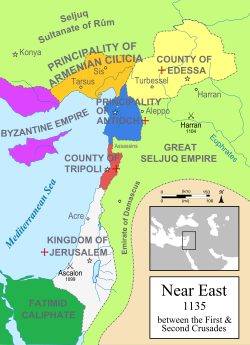
Key Facts
- Full Name: Baldwin II (Baldwin of Bourcq).
- Reigns: Count of Edessa (1100–1118); King of Jerusalem (1118–1131).
- Key Successors: His daughter Melisende and her husband Fulk.
- Major Conflicts: Battle of Harran and various campaigns against Aleppo and Damascus.
- Notable Captivities: Captured twice—once in 1104 and again in 1123.
- Burial Site: Church of the Holy Sepulchre, Jerusalem.
The County of Edessa and Early Struggles
Baldwin first established his authority in the County of Edessa, the first of the Crusader states. However, his early tenure was marked by volatility. In 1104, he was captured at the Battle of Harran and spent several years in captivity under various Muslim leaders, including Sökmen of Mardin, Jikirmish of Mosul, and Jawali Saqawa.

He was eventually ransomed in 1108 by his cousin, Joscelin of Courtenay. Upon his return, Baldwin faced internal friction with Prince Tancred of Antioch, though the two eventually reconciled in 1109. Throughout the early 1110s, Baldwin defended Edessa against devastating campaigns led by the Atabegs of Mosul, Mawdud and Aqsunqur al-Bursuqi, while simultaneously expanding his influence by capturing neighboring Armenian lordships.
Ascension to the Throne of Jerusalem
Following the death of Baldwin I on April 2, 1118, the peers of the kingdom elected Baldwin of Bourcq as the new king. He was formally crowned on December 25, 1119. To stabilize his transition, he transferred the County of Edessa to Joscelin of Courtenay.
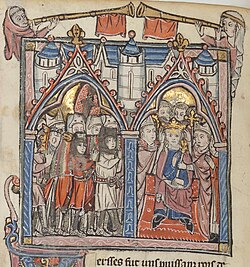
Baldwin II's kingship was characterized by his role as a protector of the wider Crusader presence. He frequently served as regent for the Principality of Antioch, particularly after the army of Antioch was nearly destroyed in June 1119. This commitment to the north often led to discontent among the nobility in Jerusalem, who felt their king was too frequently absent.

Captivity and Recovery
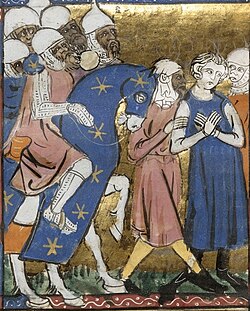
In April 1123, Baldwin was captured for a second time by Belek. His absence was so prolonged that some noblemen attempted to offer the throne to Charles I of Flanders, though Charles declined. Baldwin was released in August 1124 after paying a ransom of 80,000 dinars and agreeing to cede several fortresses, including Atarib and Zardana.
Later Campaigns and Succession
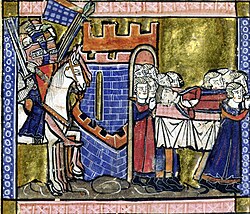
In his final years, Baldwin focused on the threat of Damascus. To secure the necessary military support, he married his eldest daughter, Melisende, to Count Fulk V of Anjou in 1129. With Fulk's troops, Baldwin invaded Damascene territory and seized Banias with the help of the Nizari (Assassins).
Baldwin's later years were also spent managing the regency of Antioch for his granddaughter, Constance, after the death of his son-in-law Bohemond II. Despite his reputation for military talent, contemporary accounts note his strong "love for money." He fell seriously ill in Antioch and took monastic vows shortly before his death on August 21, 1131.
| Role | Period | Key Events |
|---|---|---|
| Count of Edessa | 1100–1118 | Battle of Harran; First captivity; Defense against Mawdud. |
| King of Jerusalem | 1118–1131 | Regency of Antioch; Second captivity; Invasion of Banias. |
| Family Legacy | N/A | Father of Melisende, Alice, Hodierna, and Ioveta. |
Frequently Asked Questions
Who succeeded Baldwin II as the ruler of Jerusalem?
Baldwin II bequeathed the kingdom to his eldest daughter, Melisende, and her husband, Fulk V of Anjou, who were crowned on September 14, 1131.
How many times was Baldwin II captured during his career?
Baldwin II was captured twice: first at the Battle of Harran in 1104 and again in April 1123 by Belek.
What was Baldwin II's relationship with the Principality of Antioch?
Baldwin maintained a close and often stressful relationship with Antioch, serving as regent for Prince Bohemond II and later for Bohemond's daughter, Constance.
Where is Baldwin II buried?
He is buried in the Church of the Holy Sepulchre in Jerusalem.
What was the significance of Baldwin II's marriage alliance with Fulk of Anjou?
The marriage of his daughter Melisende to Fulk V of Anjou provided Baldwin with the external military support needed to launch campaigns against Damascus and seize Banias.