Juntos por el Cambio: The Rise and Fall of Argentina's Liberal Coalition
Juntos por el Cambio (Together for Change), often abbreviated as JxC, was a prominent center to center-right political coalition in Argentina. Rooted in the philosophy of liberalism—which emphasizes individual liberties and free-market capitalism—the alliance sought to provide a systemic alternative to the prevailing political landscape of the early 21st century.
The coalition began its journey in 2015 under the name Cambiemos (Let's Change), before expanding and rebranding in 2019. Throughout its existence, it served as a primary vehicle for liberal conservatism, social liberalism, and conservative liberalism in Argentine governance.

Key Facts
- Founded: June 15, 2015 (as Cambiemos); June 12, 2019 (as Juntos por el Cambio).
- Dissolved: December 27, 2023.
- Primary Ideology: Liberalism (including liberal conservatism and social liberalism).
- Key Figures: Mauricio Macri, Elisa Carrió, and Ernesto Sanz.
- Political Position: Centre to centre-right.
- Notable Presidency: Mauricio Macri served as President from 2015 to 2019.
The Formation of Cambiemos
The coalition was established to unite several disparate liberal forces. The founding core consisted of the Republican Proposal (PRO), the Radical Civic Union (UCR), and the Civic Coalition ARI. To determine their candidate for the 2015 presidential election, the parties held primary elections in August 2015, nominating Mauricio Macri, Ernesto Sanz, and Elisa Carrió respectively.

Mauricio Macri emerged as the representative for the alliance on August 9. Following a competitive campaign, Macri won the second-round runoff on November 22, 2015, with 51% of the vote, marking a significant shift in Argentine politics.

Governance and Evolution
Upon taking office on December 10, 2015, President Macri initiated a series of reforms aimed at shifting the country away from previous populist trends. His administration focused on economic renewal and strengthening international ties.

The alliance saw continued success in the 2017 legislative elections, winning the most votes in 13 of the 24 districts and securing a strong presence in both the Senate and the Chamber of Deputies.

Expansion to Juntos por el Cambio
In June 2019, the coalition expanded its reach by incorporating Federal Peronism, led by Miguel Ángel Pichetto. This expansion coincided with the renaming of the alliance to Juntos por el Cambio. Despite this growth, the coalition was unable to retain the presidency in the 2019 general elections, where they finished second with 40% of the vote, losing to Alberto Fernández.

Legislative Impact and Internal Divisions
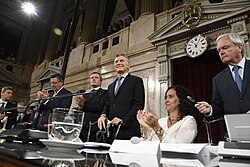
JxC's tenure was marked by both legislative victories and internal ideological friction. A notable example of this division occurred during debates over the legalization of abortion. The coalition often split along party lines: the PRO generally leaned toward rejecting such projects, while the Radical Civic Union (UCR) showed more internal support for the initiatives.
Despite these internal rifts, the coalition remained a powerful opposition force. In the November 2021 midterm elections, JxC achieved a significant victory, causing the ruling Frente de Todos coalition to lose its majority in Congress for the first time in nearly 40 years. This victory forced the executive branch to negotiate more heavily with the opposition on judicial appointments and legislative initiatives.
Foreign Policy and International Relations
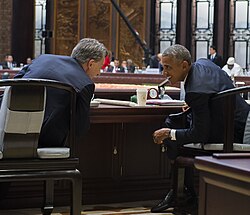
Under the leadership of Mauricio Macri, the coalition pursued a strategy of global reintegration. This included improving relations with the United States, the United Kingdom, and the International Monetary Fund (IMF), as well as seeking closer ties with the Pacific Alliance and the European Union.

The Final Years and Dissolution
In the 2023 general elections, JxC nominated Patricia Bullrich. However, Bullrich was defeated in the first round, finishing third with approximately 23.8% of the vote. Following the victory of Javier Milei, Bullrich joined the new government as the Security Minister in December 2023.
Shortly thereafter, Bullrich announced her resignation as the leader of both Juntos por el Cambio and the Republican Proposal (PRO). The coalition was officially dissolved on December 27, 2023.
Coalition Summary
| Attribute | Details |
|---|---|
| Core Member Parties | PRO, UCR, Civic Coalition ARI, United Republicans |
| Total Member Parties | 13 |
| Presidential Term | 2015–2019 (Mauricio Macri) |
| Primary Ideologies | Liberalism, Liberal Conservatism, Social Liberalism |
| Final Status | Dissolved December 27, 2023 |
Frequently Asked Questions
What was the difference between Cambiemos and Juntos por el Cambio?
Cambiemos was the original name of the coalition founded in 2015. In 2019, the alliance expanded to include more parties, such as Federal Peronism, and was renamed Juntos por el Cambio to reflect this broader unity.
Who were the primary founders of the coalition?
The coalition was founded by Mauricio Macri, Elisa Carrió, and Ernesto Sanz, representing the PRO, Civic Coalition ARI, and UCR respectively.
How did JxC perform in the 2021 midterm elections?
JxC won a significant victory in 2021, stripping the ruling Peronist coalition (Frente de Todos) of its majority in Congress for the first time in nearly four decades.
Why was the coalition dissolved in 2023?
Following the 2023 general election defeat of candidate Patricia Bullrich and her subsequent appointment to Javier Milei's cabinet, Bullrich stepped down from her leadership roles, leading to the coalition's dissolution on December 27, 2023.
What were the main ideological divisions within the alliance?
The coalition experienced internal splits primarily on social issues, such as abortion rights, where the more conservative PRO members often clashed with the social-liberal wing of the Radical Civic Union (UCR).