Domingo Crespo: The Governor Who Shaped Santa Fe
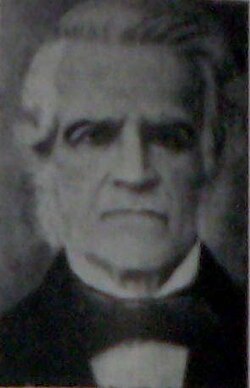
In the turbulent landscape of 19th-century Argentine politics, few figures in the province of Santa Fe were as pivotal as Domingo Crespo. A landowner by trade and a statesman by calling, Crespo navigated the complex power struggles between regional caudillos—local political-military leaders—and the central authority of Buenos Aires to lay the groundwork for a modern provincial administration.
Born in Santa Fe City, Crespo rose to prominence during a period of intense ideological conflict. In 1851, he aligned himself with the Federales, a political faction advocating for a federal system of government that granted more autonomy to the provinces. This movement was led by the caudillo Justo José de Urquiza, who sought to end the long-standing supremacy of Juan Manuel de Rosas, the governor of Buenos Aires.
Rise to the Governorship
Crespo's political alignment and leadership capabilities led to his appointment as the governor of Santa Fe. On February 29, 1852, the Junta of Representatives of the province officially named him governor, a position he held until 1854.
Administrative Reforms and Economic Recovery
Upon taking office, Governor Crespo inherited a critical economic situation. To stabilize the province, he implemented a series of disciplined fiscal measures. His administration focused on controlling government spending and paying off existing debts, which successfully restored order to the provincial budget.
Beyond financial stabilization, Crespo looked toward long-term growth through structural reforms:
- Land Management: He sponsored legislation that favored the renting of public lands to stimulate agricultural productivity.
- Demographic Growth: He actively encouraged immigration and colonization to populate and develop the region.
- Judicial Independence: He worked to organize a more independent judicial branch, separating the legal system from direct political interference.
The Path to a National Constitution
Domingo Crespo played a significant role in the transition of Argentina from a collection of warring factions to a constitutional republic. In April 1852, he served as the representative for Santa Fe at a historic meeting summoned by Justo José de Urquiza in San Nicolás de los Arroyos.
This gathering resulted in the San Nicolás Agreement, which outlined the preliminary steps necessary to create a National Constitution. As a direct result of this agreement, the city of Santa Fe was designated as the seat of the General Constitutional Congress, which convened there in 1853 to draft the nation's fundamental law.
Key Facts
- Tenure: Served as Governor of Santa Fe from 1851 to 1854.
- Political Affiliation: Supported the Federales led by Justo José de Urquiza.
- Economic Legacy: Eliminated provincial debt and stabilized the budget.
- National Impact: Represented Santa Fe during the San Nicolás Agreement.
- Constitutional Role: Helped establish Santa Fe as the site of the 1853 General Constitutional Congress.
| Category | Action/Achievement |
|---|---|
| Fiscal Policy | Controlled spending and paid off provincial debt. |
| Development | Promoted public land rental, immigration, and colonization. |
| Legal Reform | Established a more independent judicial branch. |
| National Diplomacy | Participated in the San Nicolás Agreement (1852). |
Frequently Asked Questions
Who was Domingo Crespo?
Domingo Crespo (1791–1871) was an Argentine landowner and politician who served as the governor of the province of Santa Fe between 1851 and 1854.
Which political faction did Crespo support?
He supported the Federales, led by Justo José de Urquiza, in their opposition to the dominance of Buenos Aires governor Juan Manuel de Rosas.
How did Crespo improve Santa Fe's economy?
He brought order to the provincial budget by controlling government expenditures and paying off the province's debts.
What was Crespo's role in the Argentine Constitution?
He represented Santa Fe at the San Nicolás Agreement in 1852, which paved the way for the National Constitution and established Santa Fe as the location for the General Constitutional Congress in 1853.
What social policies did Crespo implement?
Crespo encouraged colonization and immigration while sponsoring laws that facilitated the renting of public lands.