The Allure of Jasmine: A Guide to the Fragrant Genus *Jasminum*
Known for its intoxicating and characteristic fragrance, jasmine is one of the most beloved botanical groups in the world. Belonging to the genus Jasminum (pronounced YAS-min-əm), these plants are part of the olive family, known scientifically as Oleaceae. While many people associate the name with a single scent, jasmine actually represents a diverse group of approximately 200 species of shrubs and vines found across the globe.
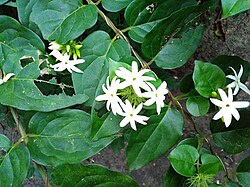
Key Facts
- Genus: Jasminum
- Family: Oleaceae (the olive family)
- Species Count: Over 200 different species
- Native Regions: Tropical and warm temperate regions of Asia, Africa, and Oceania
- Primary Uses: Perfumery, religious rituals, and cultural symbolism
- Scientific Impact: The study of jasmine led to the discovery of jasmonates, essential plant hormones
Botanical Overview
Etymology and Origins
The name "jasmine" has a rich linguistic history. It traces back to the Old French word jessemin, which originated from the Persian word yāsamin. This, in turn, was derived from the Middle Persian yāsaman and the Arabic yāsamīn. The term entered Middle French around 1570 and was first utilized in English during the 16th century.
Physical Characteristics
Jasmine plants are highly versatile in their growth habits, appearing as either deciduous (plants that shed leaves annually) or evergreen shrubs and vines. They can grow in an erect, spreading, or climbing fashion. Their leaves are arranged in either opposing or alternating patterns and may be simple, trifoliate (three leaflets), or pinnate (feather-like).
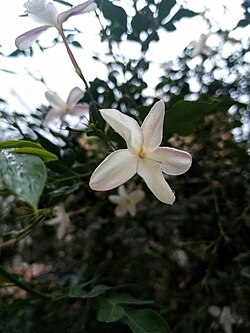
The flowers are the most defining feature of the genus. Typically measuring around 2.5 cm (0.98 in) in diameter, they are most commonly white or yellow, though rare reddish varieties exist. These flowers grow in cymose clusters—a type of flower arrangement where the central stem ends in a flower—containing at least three blooms, though they can also appear individually. Each flower generally possesses four to nine petals, two stamens with very short filaments, and a bell-shaped calyx (the outermost part of the flower that protects the bud).
Genetics and Taxonomy
Taxonomically, the genus is divided into five distinct sections: Alternifolia, Jasminum, Primulina, Trifoliolata, and Unifoliolata. Most species are diploid, meaning they have two sets of chromosomes, with a basic chromosome number of 13 (2n=26). However, some species exhibit polyploidy, a condition where an organism has more than two complete sets of chromosomes. Examples include the triploid Jasminum sambac (3n=39) and the tetraploid Jasminum flexile (4n=52).
Global Distribution and Ecology
The center of diversity for jasmine is located in South and Southeast Asia, with species native to the tropical and subtropical regions of Asia, Africa, and Australasia. While many species are widely cultivated, some have become naturalized in other regions, such as the Spanish jasmine (*Jasminum grandiflorum*) in the Iberian Peninsula.
However, some species can become problematic in non-native environments. For instance, Jasminum fluminense and Jasminum dichotomum are considered invasive species in Hawaii and Florida, while Jasminum polyanthum (pink jasmine) is an invasive weed in Australia.
Scientific and Cultural Significance
The Discovery of Jasmonates
Jasmine has played a vital role in plant biology. The study of methyl jasmonate, which was isolated from the oil of Jasminum grandiflorum, led scientists to the discovery of jasmonates. These are ubiquitous plant hormones that play a critical role in how plants respond to environmental stressors, such as extreme heat or cold, by participating in signal transduction pathways.
Cultural Importance and Symbolism
Beyond science, jasmine is deeply woven into the fabric of human culture. The village of Shubra Beloula in Egypt is a major contributor to the global perfume industry, growing much of the jasmine used in high-end fragrances. In many cultures, jasmine is used in religious ceremonies, weddings, and festivals, often sold in garlands or bunches.
The flower also carries immense symbolic weight. In Tunisia, jasmine is the national flower and was a symbol of the "Jasmine Revolutions" in 1987 and 2011. In Indonesia and the Philippines, specific species like Jasminum sambac serve as national symbols, used extensively in traditional ceremonies and to adorn religious images.
| Country/Region | Symbolic Meaning or Usage |
|---|---|
| Indonesia | National flower (*melati putih*); used in weddings |
| Pakistan | National flower (*chambeli* or *yasmin*) |
| Philippines | National flower (*sampaguita*); used in religious garlands |
| Thailand | A symbol of motherhood |
| Tunisia | National flower and symbol of revolution |
| Syria | Damascus is known as the "City of Jasmine" |
Frequently Asked Questions
What is the scientific classification of jasmine?
Jasmine belongs to the genus Jasminum, which is part of the tribe Jasmineae within the family Oleaceae (the olive family).
Where is jasmine native to?
Jasmine species are native to the tropical and subtropical regions of Asia, Africa, and Oceania, with the highest diversity found in South and Southeast Asia.
What are jasmonates?
Jasmonates are plant hormones found throughout the plant kingdom. They are essential for helping plants respond to environmental cues and stresses, such as temperature changes.
Are all plants called "jasmine" part of the same genus?
No. Many plants use the name "jasmine" colloquially but belong to different genera. Examples include Gardenia (Cape jasmine), Mandevilla (Brazilian jasmine), and even Jasmine rice, which is a type of long-grain rice.
Why is the village of Shubra Beloula significant?
Shubra Beloula, located in Egypt, is a critical site for the perfume industry, as it grows a significant portion of the jasmine used in global fragrance production.