The Ranunculaceae Family: Exploring the Buttercups and Crowfoots
Known commonly as the buttercup or crowfoot family, Ranunculaceae is a diverse group of flowering plants found across the globe. The name is derived from the Latin word rānunculus, meaning "little frog." As of February 2026, the World Flora Online recognizes 53 genera and more than 3,700 species within this family. The most prominent genera include Ranunculus, with over 1,600 species, Delphinium with more than 500, and Clematis with nearly 400.
Botanical Characteristics
Most members of the Ranunculaceae family are herbaceous annuals or perennials. However, the family also includes shrubs, such as Xanthorhiza, and woody climbers, such as Clematis. Many perennial species develop rhizomes—horizontal underground stems—that produce new roots annually, while Ficaria verna utilizes root tubers in the leaf axils for vegetative reproduction.
The flowers of this family are typically bisexual, meaning they possess both male and female reproductive organs. While most are radially symmetrical (symmetrical around a central axis), some genera like Aconitum and Delphinium exhibit bilateral symmetry. The sepals, petals, stamens, and carpels are generally free and not fused together. In some cases, the outer stamens are modified to produce nectar, as seen in Aquilegia, Helleborus, and Delphinium. In the genus Thalictrum, the sepals are petaloid (colorful and petal-like), while the actual petals may be inconspicuous or entirely absent.
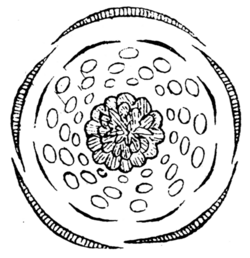
Leaves in the Ranunculaceae family are highly variable. Most species feature both basal leaves (at the base of the plant) and cauline leaves (on the stem), which are typically lobed or compound. Pollination strategies vary by genus: some utilize entomophily (pollination by insects), while others rely on anemophily (pollination by wind).
The fruit types vary across the family. The most common are achenes (small, dry, one-seeded fruits) and follicles (dry fruits that split open along one side), though Actaea produces berries.
Phytochemistry and Toxicity
Many plants in the Ranunculaceae family contain protoanemonin, a chemical compound toxic to both humans and animals. Contact with the sap of these plants can cause skin blistering and inflammation, while ingestion may lead to vomiting, diarrhea, and mouth irritation. Additionally, some species, such as Aconitum carmichaelii, contain dangerous alkaloids like aconitine.
Taxonomy and Molecular Phylogenetics
According to the Angiosperm Phylogeny Group (APG) classification, Ranunculaceae is a monophyletic group—meaning it consists of a common ancestor and all its descendants—within the order Ranunculales. Modern research using transcriptome sequencing suggests that the ancestors of this family underwent multiple whole-genome duplication (WGD) events, which may have contributed to the group's long-term evolutionary success.
Subfamily Classification
Current classification divides the family into five primary subfamilies:
- Glaucidioideae: A monotypic subfamily containing only Glaucidium palmatum.
- Hydrastidoideae: A monotypic subfamily containing only Hydrastis canadense.
- Coptoideae: Includes 17 species.
- Thalictroideae: Includes 450 species, notably Thalictrum and Aquilegia.
- Ranunculoideae: The largest group, containing 2,025 species (approximately 81% of the family).
| Subfamily | Key Genera / Examples | Characteristics |
|---|---|---|
| Ranunculoideae | Ranunculus, Delphinium, Clematis, Anemone | Largest subfamily; diverse tribes including Adonideae and Ranunculeae. |
| Thalictroideae | Thalictrum, Aquilegia | Includes wind-pollinated species. |
| Coptoideae | Coptis, Xanthorhiza | Includes shrubby members. |
| Glaucidioideae | Glaucidium | Monotypic; sister to other genera. |
| Hydrastidoideae | Hydrastis | Monotypic. |
Fossil Record
While some early Cretaceous specimens like Leefructus mirus from China are linked to the family's stem lineage, there are no confirmed pre-Tertiary fossils of Ranunculaceae. The oldest confirmed representative of the family is Paleoactaea nagelii, identified from fruit fossils found in the Upper Paleocene of North Dakota.
Practical Uses
The Ranunculaceae family is valued for its medicinal, ornamental, and culinary properties:
- Traditional Medicine: Over 30 species are used medicinally, including Hydrastis canadensis, Aconitum napellus, and Helleborus niger.
- Horticulture: Many are popular garden plants, such as Clematis, Aquilegia (columbine), Delphinium, and Helleborus (Christmas rose).
- Culinary: The seeds of Nigella sativa are used as a spice in Middle Eastern and Indian cuisines.