Perennial: Nature's Long-Term Survivors
In the world of botany, plants are often categorized by their life spans. While many gardeners are familiar with annuals—plants that complete their entire life cycle in a single growing season—the vast majority of the plant kingdom operates on a much longer timeline. Perennials, derived from the Latin for "through the year," are plants that live for more than two years. In fact, it is estimated that approximately 94% of all plant species are perennials.
Understanding perennials is essential for anyone interested in ecology or gardening. These plants are not just long-lived; they have evolved sophisticated biological mechanisms to survive harsh winters, droughts, and even wildfires, making them the dominant force in most land and freshwater ecosystems.
Understanding the Types of Perennials
Not all perennials look or behave the same. Botanists distinguish them based on their structure and how they handle dormancy.
Herbaceous vs. Woody Perennials
The most common distinction is between herbaceous and woody plants. Herbaceous perennials are plants that lack a persistent woody stem. They typically grow and bloom during the spring and summer, then die back to the ground every autumn and winter. They return in the spring from their rootstock or other overwintering structures.
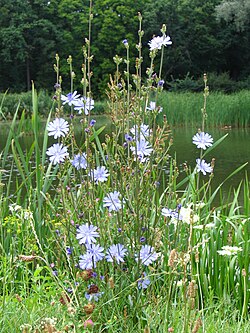
In contrast, woody perennials—which include most trees and shrubs—possess stems with secondary growth (growth in girth) and a protective outer cortex. These stems survive above ground during dormancy. There is also an intermediate group called subshrubs, such as Penstemon, which retain a small, vestigial woody structure during the winter.
Evergreen and Deciduous Varieties
Perennials are also categorized by their foliage habits:
- Evergreen perennials: These plants retain their leaves year-round. Some, like Bergenia, are evergreen but lack woody stems.
- Deciduous perennials: These plants shed all their leaves when conditions become unsuitable for photosynthesis, such as during extreme cold or dry seasons.
- Semi-deciduous perennials: These plants lose only a portion of their foliage during the summer or winter.
Life Cycles and Survival Mechanisms
Perennials invest significantly more resources into their root systems and crowns than annuals do. This investment gives them a competitive advantage, allowing them to grow taller and leaf out earlier in the spring to capture more sunlight.
Monocarpic vs. Polycarpic Life Cycles
While most perennials are polycarpic (or iteroparous), meaning they flower and fruit over many seasons, some follow a different path. Monocarpic (or semelparous) plants grow for many years, flower and set seed only once, and then die. A striking example is the century plant, which can grow up to 30 meters tall and live for 80 years before its single flowering event.
Adapting to Harsh Environments
To survive periods of dormancy, perennials develop specialized structures to store carbohydrates. These include:
- Bulbs and Tubers: Fleshy storage organs.
- Rhizomes: Horizontal underground stems.
- Crowns and Turions: Specialized buds or shoots used for overwintering.
Beyond physical structures, some perennials use genetic adaptations. For instance, Thinopyrum intermedium (a perennial relative of common wheat) overexpresses DNA repair genes to survive freezing stress. Additionally, some species protect themselves from wildfires using thick cork layers on their stems or by producing adventitious shoots from underground roots.
Perennials in Agriculture and the Environment
While global food systems rely heavily on annual grains, perennial crops offer significant environmental advantages. Because they possess deep, extensive root systems, perennials are superior at holding soil to prevent erosion and capturing dissolved nitrogen before it can contaminate water sources.
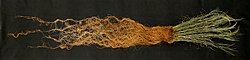
These benefits have led to the development of perennial grains—crops that remain productive for multiple years without needing to be replanted. Examples include intermediate wheatgrass and a variety of perennial rice developed in 2018, which has shown yields similar to annual rice over eight consecutive harvests.
Cultivating Perennials in the Garden
Perennials are highly valued in landscaping for their reliability and beauty. In 2019 alone, over 900 million dollars' worth of potted herbaceous perennials were sold in the United States.
Common Cultivated Varieties
Gardeners grow a wide array of perennials, including:
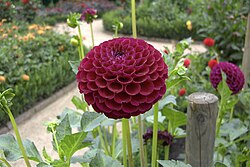
- Ornamentals: Flowering plants like Dahlias and bulbs such as tulips and narcissus.
- Food Crops: Asparagus, rhubarb, and strawberries.
- Herbs: Mint, rosemary, sage, and thyme.
Maintenance and Division
To increase the number of plants in a garden, perennials are often divided. The method depends on the root system:
- Fibrous roots: Plants like daylilies or grasses can be pried apart using garden forks or cut with knives.
- Rhizomes: Plants like bearded irises must be planted with the top of the rhizome just above the soil level to ensure healthy growth.
Summary of Perennial Types
The following table provides a quick overview of the different categories of perennial plants and common examples.
| Type | Key Characteristic | Examples |
|---|---|---|
| Herbaceous | Stems die back to the ground annually | Chicory, Mint, Alfalfa |
| Woody | Persistent above-ground stems with secondary growth | Apple trees, Roses, Pines |
| Evergreen | Persistent foliage without woody stems | Vinca, Begonia, Tradescantia |
| Monocarpic | Flowers once in a lifetime, then dies | Agave, Century plant |
| Aquatic | Perennial growth in water environments | Water soldier, Pickerell weed |