Henri Pharaon: The Statesman, Businessman, and Art Collector of Lebanon
Henri Philippe Pharaon was a towering figure in 20th-century Lebanon, embodying a rare blend of political influence, commercial success, and cultural patronage. As a za'im (a traditional political boss), Pharaon was instrumental in the movement to secure Lebanon's independence from France, leaving an indelible mark on the nation's early identity and governance.
Key Facts
- Role in Independence: Played a crucial role in securing Lebanon's independence and designed the Lebanese flag.
- Political Career: Served as the Minister of Foreign Affairs during two separate terms (1945 and 1946–1947).
- Business Legacy: Founded Banque Pharaon & Chiha and owned the world's largest racing stable of Arabian horses in the 1950s and 60s.
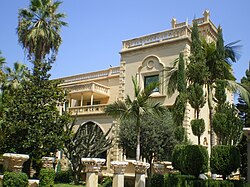
- Cultural Impact: His former Beirut residence now houses the Robert Mouawad Private Museum.
- Ideology: A proponent of Mediterraneanism, favoring cooperation between Christians and Muslims over pan-Arabism.
Early Life and Education
Born in 1901 in Alexandria, Khedivate of Egypt, Henri Pharaon was born into a prominent Melkite Catholic family with roots in present-day Syria. His father, Philippe Pharaon, was a wealthy merchant. The family relocated to Beirut when Henri was four years old, where he began his education in Jesuit schools.
Pharaon's academic journey took him across Europe, attending college in Switzerland and eventually earning a law degree from the University of Lyon in France. In 1922, while serving as Lebanon's national tennis champion, he married Noelie Cassar, the heiress to a wealthy Maltese family from Jaffa. The couple had one son, Naji Henri.
Political Career and Ideology
Pharaon's political ascent was marked by his role as a key architect of the modern Lebanese state. He served in the Lebanese Parliament from 1943 to 1946 and held the position of Minister of Foreign Affairs intermittently between 1945 and 1947, serving under Prime Ministers Abdul Hamid Karami and Riad Al Solh.
Ideologically, Pharaon identified as a Mediterraneanist. This philosophy emphasized the unique cultural crossroads of Lebanon, encouraging cooperation between the country's Christian and Muslim populations. This stance often put him at odds with Prime Minister Riad El-Solh and the prevailing currents of pan-Arabism. Following his tenure in the cabinet, Pharaon retired from active politics to focus on his business ventures, notably remaining neutral during the Lebanese Civil War (1975–1990).
Business Ventures and Cultural Patronage
Widely regarded as one of the wealthiest men in Lebanon, Pharaon's financial influence was anchored by the founding of Banque Pharaon & Chiha. Beyond banking, he was a passionate sportsman and breeder, owning the largest stable of Arabian racing horses globally during the 1950s and 1960s.
Pharaon was also a renowned collector of art and antiquities. In 1962, he collaborated with architect Oscar Niemeyer and architect-archaeologist Lucien Cavro on a project to exhume the ancient city of Baalbeck.
His residence in Beirut, located on the city's Green Line, was described as a Gothic-style palace filled with Greek and Roman statues and sarcophaguses. While the palace was partially destroyed during the civil war and later sold to the Saudi royal family, it now serves as the Robert Mouawad Private Museum, showcasing a vast collection of Byzantine, Greek, and Arab antiquities.
Death and Legacy
Henri Pharaon's life ended tragically on August 6, 1993, when he was assassinated in his bedroom at the Carlton Hotel in Beirut at the age of 92. He was stabbed 16 times; his bodyguard and driver were also killed at the scene. While police initially considered robbery as a motive, a former bodyguard employed by Pharaon was eventually arrested for the murder.
| Category | Details |
|---|---|
| Political Offices | Minister of Foreign Affairs (1945, 1946–1947); Member of Parliament (1943–1946) |
| Key Contributions | Secured independence from France; Designed the Lebanese flag |
| Business Interests | Banque Pharaon & Chiha; Arabian horse racing |
| Education | University of Lyon (Law) |
| Lifespan | 1901 – August 6, 1993 |
Frequently Asked Questions
What was Henri Pharaon's role in the creation of Lebanon?
Henri Pharaon was a political boss (za'im) who played a crucial role in securing Lebanon's independence from France and is credited with designing the Lebanese flag.
What is Mediterraneanism in the context of Pharaon's beliefs?
Mediterraneanism was Pharaon's ideological approach that encouraged cooperation between Christians and Muslims in Lebanon, acting as a counter-perspective to pan-Arabism.
What happened to Henri Pharaon's former home in Beirut?
His former residence, a palace resembling a Gothic castle, was partially destroyed during the civil war and later sold to the Saudi royal family. It now houses the Robert Mouawad Private Museum.
How did Henri Pharaon die?
He was assassinated on August 6, 1993, at the Carlton Hotel in Beirut, where he was stabbed to death along with his driver and bodyguard.
What were Pharaon's primary business achievements?
He founded Banque Pharaon & Chiha and, during the 1950s and 1960s, owned the world's largest racing stable of Arabian horses.