Henri Gouraud: The General Who Shaped French Colonialism in Africa and the Levant
Henri Joseph Eugène Gouraud was a pivotal figure in the French military and colonial administration, whose career spanned the late 19th century to the mid-20th century. A Général d'armée, Gouraud is remembered as a central architect of French expansion in Africa and the Middle East, as well as a symbol of national resilience during World War I.
From the jungles of West Africa to the deserts of the Levant and the streets of Paris, Gouraud's life mirrored the trajectory of the French Empire—transitioning from traditional colonies to protectorates and international mandates.
Key Facts
- Full Name: Henri Joseph Eugène Gouraud (1867–1946).
- Major Roles: High Commissioner of the Levant (1919–1922) and Military Governor of Paris (1923–1937).
- Colonial Impact: Captured Samory Touré in 1898 and proclaimed the state of Greater Lebanon in 1920.
- WWI Sacrifice: Lost his right arm during the Dardanelles campaign.
- Strategic Legacy: Implemented a policy of dividing Syrian territories based on confessional (religious) criteria to maintain control.
Early Life and Military Foundations
Born on November 17, 1867, in Paris to Dr. Xavier Gouraud and Marie Portal, Henri Gouraud was driven toward a military career by the national trauma of the French defeat in the Franco-Prussian War. He entered the prestigious Saint Cyr Military Academy in 1888, graduating in 1890 as part of the "Grand Triomphe" promotion—a cohort that eventually produced sixty generals.
Although he initially joined the Troupes de marine (marine troops), he was posted to the 21st Foot Chasseur Regiment in Montbéliard to satisfy his father's wishes before eventually embarking on the overseas assignments that would define his legacy.
The Conquest of French Africa
Gouraud's rise to prominence began in 1894 when he was assigned to French Sudan. He gained widespread fame on September 29, 1898, when his unit captured Samory Touré, the leader of a long-standing resistance movement. This victory effectively ended the last major state opposing French colonialism in West Africa.
This achievement brought Gouraud into the inner circle of the "parti colonial" (colonial party), led by figures like Eugène Étienne. Over the next fifteen years, he served in Niger, Chad, and Mauritania. By 1907, as the commissaire du Gouvernement général of Mauritania, he led campaigns against Bedouin tribes to secure transport routes between Morocco and West Africa.
In 1911, Gouraud was stationed in Morocco under General Lyautey, where he was promoted to général de brigade and commanded the Fez military region.
World War I: Sacrifice and Victory
During the Great War, Gouraud's courage made him a national hero. In mid-1915, while commanding the French Expeditionary Corps during the Dardanelles campaign, he was seriously wounded and lost his right arm. This injury transformed him into a symbol of resilience for the French people.
He later commanded the Fourth Army on the Western Front. He is credited with the effective use of elastic defense (a flexible defensive strategy) during the Second Battle of the Marne in July 1918. His military successes culminated on November 22, 1918, when he entered Strasbourg, liberating the city and contributing to the reconquest of Alsace-Lorraine.
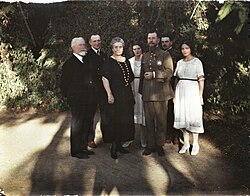
The French Mandate in Syria and Lebanon
Following the war, Gouraud was appointed High Commissioner of the French Republic in the Levant (1919–1922). Tasked with enforcing the 1916 Sykes-Picot Agreement—which divided the former Ottoman Empire between France and Britain—Gouraud led military campaigns in Cilicia and Syria.
On July 23, 1920, Gouraud's forces crushed the monarchy of King Faisal at the Battle of Maysalun, leading to the occupation of Damascus and the establishment of the French Mandate of Syria. One of his most enduring political acts occurred on September 1, 1920, when he proclaimed the creation of the State of Greater Lebanon.
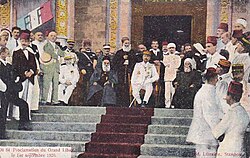
Gouraud's administration in the Levant was characterized by a "divide and rule" strategy. He established separate administrations for the Alawite and Druze communities, aiming to isolate rural populations from urban nationalists. This policy of confessional division remains a point of historical criticism due to its impact on the region's long-term stability.
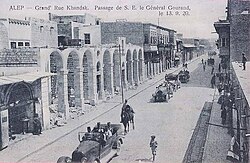
Final Years and Legacy
Gouraud returned to France in 1923 to serve as the Military Governor of Paris, a position he held until 1937. He also contributed to the Supreme Allied War Council starting in 1927. He died in Paris on September 16, 1946, and was later interred at the Navarin Farm ossuary, the site of the Second Battle of Champagne.
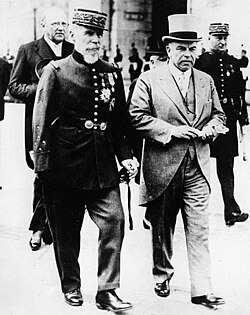
His legacy persists in geography and botany. In Morocco, the Gouraud Cedar—a tree over 800 years old—and the Cèdre Gouraud Forest (a habitat for the endangered Barbary macaque) bear his name. In Paris and Beirut, streets and squares continue to commemorate his influence.
| Period | Role/Location | Key Achievement/Event |
|---|---|---|
| 1898 | French Sudan | Capture of Samory Touré |
| 1907 | Mauritania | Campaign against Bedouin tribes |
| 1915 | Dardanelles | Wounded in action; loss of right arm |
| 1918 | Strasbourg | Liberation of the city |
| 1919–1922 | The Levant | Proclamation of Greater Lebanon |
| 1923–1937 | Paris | Military Governor of Paris |
Frequently Asked Questions
What was Henri Gouraud's role in the creation of Lebanon?
As the French High Commissioner in the Levant, Gouraud proclaimed the creation of the State of Greater Lebanon on September 1, 1920, which was a cornerstone of French colonial policy in the Middle East.
How did Gouraud contribute to the colonization of West Africa?
Gouraud became a celebrated figure after capturing the resistance leader Samory Touré in 1898, an event that marked the end of the last large state opposing French rule in West Africa.
What happened to Gouraud during World War I?
He served in several major battles, including the Dardanelles, where he lost his right arm, and the Second Battle of the Marne, where he utilized elastic defense strategies to achieve victory.
Why is Gouraud's policy in Syria criticized today?
He is criticized for dividing Syria into several small states based on confessional (religious and ethnic) criteria, a strategy intended to make the territory easier to control by dividing the interests of different communities.
What is the "Gouraud Cedar"?
The Gouraud Cedar is a massive tree over 800 years old located in the Atlas Mountains of Morocco, discovered by Gouraud's troops during a campaign between 1917 and 1919.