Articles/Great Syrian Revolt: The Struggle Against French Colonial Rule (1925–1927)
Great Syrian RevoltFrench Mandate for SyriaSultan al-AtrashSyrian nationalismJabal Druze
Great Syrian Revolt: The Struggle Against French Colonial Rule (1925–1927)
Great Syrian Revolt: The Struggle Against French Colonial Rule (1925–1927) The Great Syrian Revolt, also known as the Revolt of 1925, was a massive general uprising that swept across the ...
Great Syrian Revolt: The Struggle Against French Colonial Rule (1925–1927)
The Great Syrian Revolt, also known as the Revolt of 1925, was a massive general uprising that swept across the State of Syria and Greater Lebanon between 1925 and 1927. This conflict represented a unified effort by various ethnic and religious groups to end the French occupation of regions that had transitioned from Ottoman to French administration following World War I.
The movement was an extension of earlier resistance that began in 1920. At that time, Faisal I had been proclaimed King of Syria, but his rule was short-lived. Following a French ultimatum and the Syrian defeat at the Battle of Maysalun in July 1920, French troops occupied Damascus and forced Faisal into exile. This set the stage for years of simmering tension that eventually erupted into a full-scale revolution.
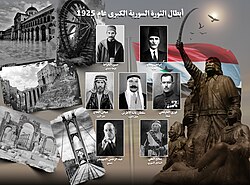
Participants in the 1925 Great Syrian Revolt: Participants in the 1925 Great Syrian Revolt
Key Facts
Duration: 1925–1927.
Primary Goal: Termination of the French Mandate and achievement of Syrian independence.
Key Belligerents: France against a coalition of Syrians and Lebanese, including Sunnis, Shiites, Druze, Alawites, Kurds, and Turkmen.
Outcome: Military victory for France, but political progress leading toward the 1936 Viénot Agreement.
Total Casualties: 4,213 recorded deaths across various governorates.
The Outbreak of Violence
By 1925, the French military presence in the Syrian Mandate had dropped significantly to 14,397 men and officers, supported by 5,902 Syrian auxiliaries—a sharp decline from the 70,000 troops stationed there in 1920. This underestimation of the region's volatility proved critical.
The revolt began in September 1925 in the Jabal Druze State. The Druze population, feeling mistreated by colonial authorities, launched a series of successful attacks, including the capture of the fort at al-Suwayda and the annihilation of a French relief column.
In an attempt to stabilize the region, French representative Jouvenel called for popular elections in early 1926. While many areas complied, local elites in Homs and Hama refused. This led to a two-day uprising in Hama on October 4–5, 1925, led by Fawzi al-Qawuqji. Although the French eventually regained control of Homs and Hama, the diversion of troops allowed the rebellion to gain momentum and spread to other regions, including Damascus.
Prominent Leaders of the Resistance
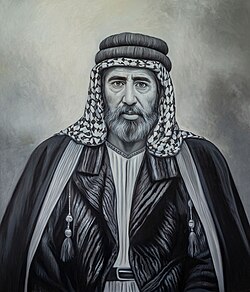
Sultan al-Atrash and the Jabal al-Arab
Sultan al-Atrash officially declared the revolution on August 23, 1925. A member of a prominent Druze family, al-Atrash secured early victories at the Battle of al-Kafr and the Battle of al-Mazraa. However, the tide turned when France deployed thousands of modernly equipped troops from Morocco and Senegal. Although sentenced to death in absentia, al-Atrash escaped to Transjordan and later returned to Syria in 1937.
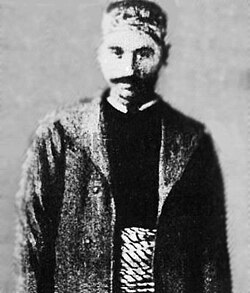
Hasan al-Kharrat: Hasan al-Kharrat
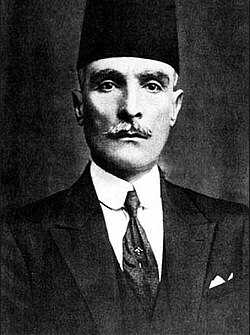
Abd al-Rahman Shahbandar in Damascus
A key political strategist, Shahbandar founded the Iron Hand Society to agitate against French rule. After periods of imprisonment and exile, he helped form the People's Party, Syria's first nationalist party. He coordinated the spread of the revolt from the Druze regions to the rest of the country and established a provisional government alongside Sultan al-Atrash.
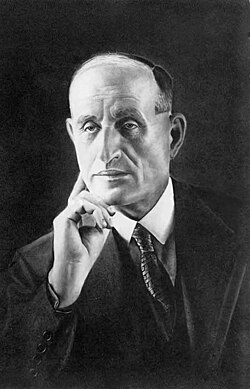
Abd al-Rahman Shahbandar: Abd al-Rahman Shahbandar
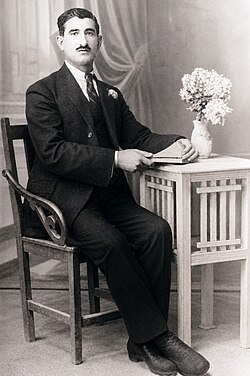
Fawzi al-Qawuqji in Hama
A former commander in the French-established Syrian Legion, al-Qawuqji defected to lead the revolution in Hama. His forces seized the city, cutting telephone lines and attacking the Government House. The French responded with a three-day aerial and artillery bombardment that caused significant civilian casualties, with estimates ranging from 344 to 500 deaths.
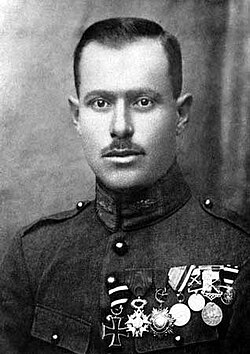
Fawzi al-Qawuqji: Fawzi al-Qawuqji
Other Regional Leaders
Ibrahim Hananu: A legal scholar and former member of the Committee of Union and Progress who led resistance in Idlib. Ibrahim Hananu: Ibrahim Hananu
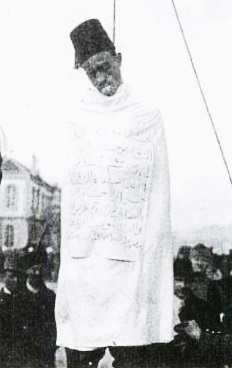
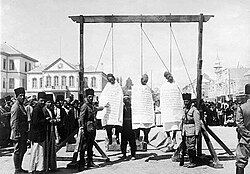
Hasan al-Kharrat: A leader of the insurgency in the Ghouta region of Damascus. Rebel commander Fakhri al-Kharrat, son of Hasan al-Kharrat, hanged by the French in January 1926.: Rebel commander Fakhri al-Kharrat, son of Hasan al-Kharrat, hanged by the French in January 1926.
Ayash Al-Haj and Mohammed Al-Ayyash: Active in the Deir ez-Zor region. Ayyash Al-Haj: Ayyash Al-Haj Mohammed Al-Ayyash: Mohammed Al-Ayyash
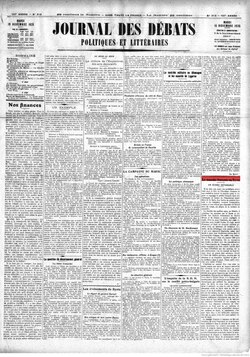
French newspaper article linking the killing of the two French officers, Vannières and Wysocki, near Deir ez-Zor in 1925 to Mohammed Al-Ayyash, and referring to his coordination with Dr. Abd al-Rahman Shahbandar and the People's Party in Damascus. Journal des Débats politiques et littéraires, 10 November 1925, p. 2. View article.: French newspaper article linking the killing of the two French officers, Vannières and Wysocki, near Deir ez-Zor in 1925 to Mohammed Al-Ayyash, and referring to his coordination with Dr. Abd al-Rahman Shahbandar and the People's Party in Damascus. Journal des Débats politiques et littéraires, 10 November 1925, p. 2. View article.
Aftermath and Legacy
The French military eventually suppressed the uprising through superior firepower and reinforcements. The human cost was heavy, particularly in the Jabal al-Druze region.
Dead bodies of the Syrian rebels, killed by the French Army in 1925, placed in Marjeh Square: Dead bodies of the Syrian rebels, killed by the French Army in 1925, placed in Marjeh Square
Governorate/Region
Death Toll
Jabal al-Druze
2,064
Damascus and Ghouta
731
Aleppo and Idlib
315
Latakia, Tartus and the coast
331
Homs, Al-Nabek and An-Nabek District
250
Hama
150
Al-Balan, Rashaya, Majdal Shams
267
Deir ez-Zor and Al Jazira
71
Daraa
34
While the revolt ended in a French military victory, it forced the colonial administration to make political concessions. This led to the establishment of a national government and the eventual Viénot Agreement of 1936, which served as a preliminary step toward Syrian independence.
Today, the struggle is commemorated at the Great Syrian Revolution edifice in Al-Qurayya, the birthplace of Sultan al-Atrash. Opened in 2010, this museum serves as a living witness to the heroism of the revolutionaries.
Frequently Asked Questions
What triggered the start of the Great Syrian Revolt?
The revolt was triggered by a combination of nationalist sentiment, the alienation of local elites, and the mistreatment of the Druze population by French colonial authorities in the Jabal Druze State.
Who were the primary leaders of the uprising?
The most prominent leaders included Sultan al-Atrash (Jabal al-Arab), Abd al-Rahman Shahbandar (Damascus), Fawzi al-Qawuqji (Hama), and Ibrahim Hananu (Idlib).
Why did the French initially struggle to contain the revolt?
The French were severely understaffed in 1925, with only about 14,000 troops and 6,000 auxiliaries, compared to 70,000 in 1920. This lack of manpower allowed the rebellion to spread rapidly across different regions.
What was the result of the revolt?
Militarily, France won the conflict. However, the resistance led to the creation of a national government and paved the way for the 1936 Viénot Agreement, moving Syria closer to eventual independence.
Which region suffered the highest number of casualties?
The Jabal al-Druze region suffered the highest losses, with 2,064 recorded deaths.
References
Anderson, Betty S. (2016). A history of the modern Middle East: rulers, rebels, and rogues. Stanford, California: Stanford University Press. ISBN978-0-8047-8324-8.
Anderson, Betty S. (2016). A history of the modern Middle East: rulers, rebels, and rogues. Stanford, California: Stanford University Press. ISBN978-0-8047-8324-8.
Anderson, Betty S. (2016). A history of the modern Middle East: rulers, rebels, and rogues. Stanford, California: Stanford University Press. ISBN978-0-8047-8324-8.
Anderson, Betty S. (2016). A history of the modern Middle East: rulers, rebels, and rogues. Stanford, California: Stanford University Press. ISBN978-0-8047-8324-8.
Allawi, Ali A. (2014). Faisal I of Iraq. New Haven: Yale University Press. p. 139. ISBN978-0-300-12732-4.