Battle of Maysalun: The Fall of the Arab Kingdom of Syria
The Battle of Maysalun was a pivotal four-hour military engagement fought on July 24, 1920. It pitted the forces of the Arab Kingdom of Syria against the French Army of the Levant. Occurring near the Maysalun Pass in the Anti-Lebanon Mountains, approximately 25 kilometers west of Damascus, the battle resulted in a decisive French victory and the subsequent collapse of the short-lived Syrian monarchy.
This clash was the culmination of years of geopolitical tension following World War I, as the dream of an independent Arab state collided with the colonial ambitions of European powers.
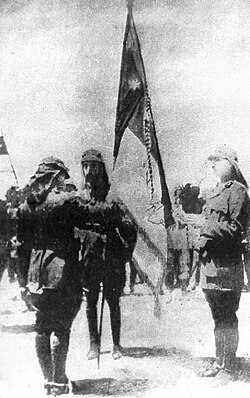
Key Facts
- Date: July 24, 1920 (primarily between 06:30 and 10:30).
- Location: Khan Maysalun and Wadi al-Qarn, Anti-Lebanon Mountains, Syria.
- Outcome: French victory; occupation of Damascus.
- French Strength: 9,000 to 12,000 troops, supported by tanks and aircraft.
- Syrian Strength: Between 1,400 and 4,000 regulars, Bedouin cavalry, and civilian volunteers.
- Key Syrian Casualty: War Minister Yusuf al-Azma, who died during the battle.
Historical Background
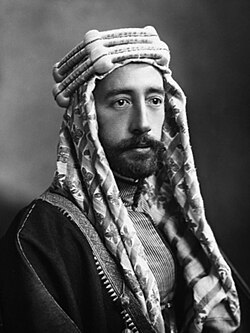
The roots of the conflict trace back to the Arab Revolt against the Ottoman Empire. In October 1918, Arab rebels led by Hashemite Emir Faisal, with British support, captured Damascus. While the British had promised support for a Sharifian kingdom in the region, they had secretly agreed to divide Ottoman Arab provinces with France via the 1916 Sykes-Picot Agreement.
By March 1920, Faisal was proclaimed King of Syria by the Syrian National Congress. However, the League of Nations allocated Syria to France as a mandate (a legal status giving a country the responsibility to administer a territory). This allocation was rejected by both Faisal and the Syrian people, the latter of whom had expressed an overwhelming preference against French rule during the US-led King–Crane Commission.
The Road to Conflict
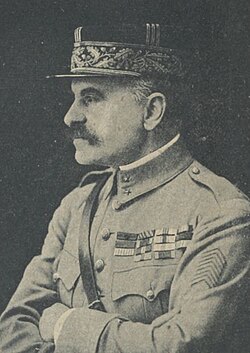
Tensions peaked in July 1920 when French General Henri Gouraud issued an ultimatum demanding that Faisal disband the Arab Army and submit to French authority. Although Faisal eventually accepted the terms, the notification reached Gouraud late, and the French continued their advance. While most of the cabinet agreed to surrender, War Minister Yusuf al-Azma remained staunchly opposed, pleading with the King to allow a final stand to defend Syrian sovereignty.
General Gouraud shifted his offensive target to Khan Maysalun, a caravanserai (a roadside inn for travelers) located at the crest of the Wadi al-Qarn mountain pass. This location was strategically vital due to its abundant water wells and proximity to the Hejaz Railway.
The Battle of July 24, 1920
Opposing Forces and Armaments
The French Army of the Levant was a professional force consisting largely of Senegalese and Algerian troops, supported by the 415th Infantry Regiment and Moroccan Spahis. They possessed a significant technological advantage, utilizing 155mm guns, field artillery, tanks, and fighter bombers.
In contrast, the Syrian forces were a motley assembly of army regulars, Bedouin camel cavalry, and civilian volunteers—some armed only with sticks or swords. Their equipment consisted of discarded Ottoman rifles and a small number of machine guns and artillery pieces. They suffered from severe ammunition shortages and incompatible calibers of bullets and rifles.
Course of the Engagement
The battle began at 06:30. French tanks stormed the center of the Syrian line while infantry and cavalry assaulted the flanks. Despite the disparity in power, the Syrians initially offered stiff resistance; their artillery managed to inflict casualties on a French battery, and Syrian forces briefly pinned down two Senegalese companies.
However, the French advantage in artillery and armor proved insurmountable. By 08:30, the French had broken the central Syrian trench. By 10:30, French forces reached the headquarters of Yusuf al-Azma.
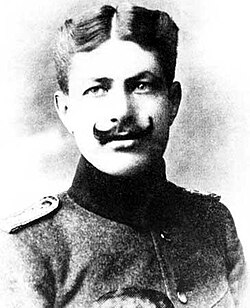
Accounts of al-Azma's final moments vary: some state he was gunned down by a French tank while ordering his artillery to fire, while others suggest he was shot while attempting to mine the trenches. His death effectively ended the organized resistance, though intermittent clashes continued until 13:30.
Aftermath and Legacy
The French victory cleared the path to the capital. After capturing Aleppo on July 23, French troops besieged and captured Damascus on July 25. General Gouraud condemned Faisal's leadership and ordered his expulsion from the country.
King Faisal departed Damascus on July 27. After a brief attempt to gain support from tribal leaders in the Hauran region, he was forced to move to Haifa in British-held Palestine on August 1 to avoid further bloodshed. This marked the end of the attempt to establish an independent Arab state in Syria under Faisal's rule.
| Feature | Syrian Forces | French Forces |
|---|---|---|
| Commanders | Yusuf al-Azma, Faisal I | Henri Gouraud, Mariano Goybet |
| Estimated Strength | 1,400 – 4,000 | 9,000 – 12,000 |
| Key Weaponry | Rifles, 15 artillery pieces | Tanks, Aircraft, 155mm guns |
| Casualties (French Claim) | ~150 killed, ~1,500 wounded | 42 killed, 152 wounded, 14 missing |
Frequently Asked Questions
Why did the Battle of Maysalun happen?
The battle occurred because the French government sought to implement a League of Nations mandate over Syria, while King Faisal and the Syrian National Congress sought full independence and sovereignty.
Who was Yusuf al-Azma?
Yusuf al-Azma was the Syrian War Minister who refused to surrender to the French. He led the Syrian defense at Maysalun and was killed during the battle.
What was the significance of the Sykes-Picot Agreement?
The Sykes-Picot Agreement was a secret 1916 pact between Britain and France that divided the Arab provinces of the Ottoman Empire into spheres of influence, contradicting promises made to Arab leaders during the Arab Revolt.
How did the battle end for King Faisal?
Following the French victory and the capture of Damascus, King Faisal was expelled from Syria by General Gouraud and eventually sought refuge in British-held Palestine.
What was the technological difference between the two armies?
The French army was a modernized force with tanks, fighter bombers, and heavy artillery. The Syrian forces were largely irregulars and regulars with outdated rifles and very limited ammunition.