Helpers at the Nest: The Dynamics of Cooperative Breeding
In the study of behavioral ecology and evolutionary biology, few social structures are as intriguing as helpers at the nest. This phenomenon occurs when juveniles or sexually mature adolescents remain with their parents to assist in raising subsequent broods or litters, rather than dispersing to establish their own territories and reproduce. This behavior represents a fundamental form of cooperative breeding, where individuals contribute to the care of offspring that are not their own.
While first identified and studied extensively in birds, this social strategy is found across a diverse range of taxa, including mammals and insects. Although the benefits of having helpers are generally positive, they are not distributed equally across all species or among the helpers themselves.
Key Facts
- Definition: A social structure where non-breeding individuals assist parents in raising offspring.
- Prevalence: Occurs in approximately 3% to 8% of bird species globally, with higher concentrations in Southern Africa and Australia.
- Taxonomic Range: Observed in birds (e.g., apostlebirds), mammals (e.g., meerkats, humans), and insects (e.g., carpenter bees).
- Primary Drivers: Evolution is driven by kin selection, protection from predation, and the potential to inherit parental territories.
- Impact: Often increases nestling survival rates and improves offspring immune responses.
Defining the "Helper"
The term "helper" was introduced by Alexander Skutch in 1935 and further refined in 1961. In an avian context, a helper is defined as a bird that assists in the nesting of an individual other than its mate, or attends to a bird that is neither its mate nor its own dependent offspring. While some critics argue the term is anthropomorphic, it remains a standard in scientific literature.
Depending on the animal group, other terms are used to describe similar behaviors. In mammals, researchers may use non-maternal care (care by anyone other than the mother), alloparental care (care by anyone other than the parents), cooperative care (care by non-breeding helpers), or communal care (care provided by multiple breeding females).
Examples Across the Animal Kingdom
Cooperative breeding is most frequent in birds, particularly in specific geographic regions. Notable avian examples include the apostlebird, the acorn woodpecker, the house sparrow, and the common moorhen.
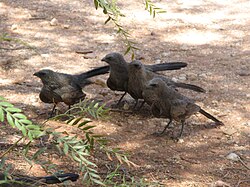
Among mammals, this behavior is seen in humans, meerkats, and damarland mole rats. It also appears in the insect world, specifically in certain bee species like carpenter bees. It is important to distinguish this from the social structure of European honey bees, where worker bees are sterile and cannot reproduce.
The Evolutionary Drivers of Helping
Scientists have proposed three primary, non-exclusive explanations for why animals evolve to help others reproduce instead of breeding themselves:
- Direct Advantage: Helpers may gain immediate benefits, such as increased protection from predators or the opportunity to acquire essential parenting skills needed for their own future reproductive efforts.
- Kin Selection: Because the offspring being raised are typically full siblings, they share a high percentage of the helper's genetic material. By ensuring the survival of siblings, the helper indirectly promotes the transmission of their own genes.
- Delayed Advantage: In environments where suitable breeding territories are scarce, helpers may stay to "queue" for inheritance. By remaining in the parental territory, they stand a better chance of inheriting a viable home in the future.
Common Misconceptions
A frequent assumption is that all helpers are non-breeders. However, molecular evidence reveals the existence of secondary helpers—individuals who assist the breeding pair but may actually be mating with the female or are not related to the parents. In contrast, primary helpers are the offspring of the pair and do not participate in mating.
Additionally, not all juveniles staying with parents are helpers. In species like the Siberian jay and logrunners, young birds remain in the parental territory for the delayed advantage of inheritance but do not actually assist in feeding the nestlings.
Impact on Reproductive Success and Investment
The presence of helpers often creates a net benefit, though the correlation with reproductive success varies. In many species, helper investment leads to higher nestling survival rates, better quality offspring, and stronger immune responses in the young.
Helpers also allow for plasticity in parental investment. When helpers are present, parents may reduce their own energy expenditure. For example, in superb fairy-wrens, the size of eggs laid by the mother changes based on the presence of helpers and climate conditions. In favorable conditions, mothers may decrease egg investment because helpers can shoulder more of the care-load; in harsh, hot, or dry conditions, egg sizes may increase to ensure survival, supported by the helpers' assistance.
Helper Variability
The contribution of helpers is not always uniform. In acorn woodpeckers, both sexes contribute to reproductive success, but male behavior is highly volatile. When acorn crops are large, males increase their activity, spending more time tending to granaries and remaining within the home territory.
Trade-offs for the Helper
While helping can increase a juvenile's immediate survival rate—especially for those who have failed in previous breeding attempts—there is a trade-off. Research suggests that juveniles who become helpers may experience a decrease in their own successful breeding rate later in life compared to those who did not help.
| Aspect | Details |
|---|---|
| Primary Helper | Offspring of the pair; does not mate. |
| Secondary Helper | May mate with the female or be unrelated to the pair. |
| Key Benefit (Offspring) | Increased survival and improved immune response. |
| Key Benefit (Parents) | Reduced investment load and increased plasticity. |
| Key Benefit (Helper) | Protection, skill acquisition, and territory inheritance. |
Frequently Asked Questions
Do all animals that stay with their parents help raise the young?
No. Some species, such as the Siberian jay and logrunners, have juveniles that remain in the parental territory to eventually inherit it, but they do not provide active help in feeding or raising nestlings.
Is helping always beneficial for the parents?
Generally, yes, but the benefits vary. While many species see increased nestling survival, some parents use the energy saved from having helpers to offset other reproductive losses rather than increasing the total number of successful offspring.
What is the difference between a primary and secondary helper?
A primary helper is typically the offspring of the breeding pair and does not mate. A secondary helper is an individual who assists the nest but may be unrelated to the parents or may actually be mating with the female.
Why would an animal help raise siblings instead of having its own babies?
This is often explained by kin selection, where helping siblings ensures the survival of shared genes. Other reasons include a lack of available breeding territories or the need to gain parenting experience and protection before attempting to breed independently.
How does climate affect the behavior of helpers?
Climate can influence the level of investment required. In superb fairy-wrens, for instance, the presence of helpers allows mothers to adjust egg size based on environmental conditions, reducing their own investment when helpers can provide sufficient care.