Cooperative Breeding: The Evolution and Dynamics of Alloparental Care
In the natural world, the responsibility of raising offspring is not always limited to the biological parents. Some species employ a sophisticated social system known as cooperative breeding. This system is defined by alloparental care, where offspring receive care and protection from additional group members, commonly referred to as helpers.
These social structures vary significantly across the animal kingdom. Some groups consist of a single breeding pair supported by offspring from previous seasons. Others exhibit polygynandry, where multiple males and females breed, while helpers may be the adult offspring of only some of the breeders. In certain cases, helpers may eventually achieve co-breeding status, contributing their own offspring to the group's collective brood. This behavior is observed across diverse taxonomic groups, including mammals, birds, fish, and insects.
Key Facts
- Alloparental Care: Care provided by individuals other than the biological parents.
- Inclusive Fitness: The sum of direct fitness (own offspring) and indirect fitness (aiding relatives' offspring).
- Hamilton's Rule: A mathematical formula (rB−C>0) explaining when kin selection occurs.
- Reproductive Skew: A distribution where reproductive success is concentrated in a few dominant individuals.
- Mammalian Rarity: Less than 1% of all mammalian species practice cooperative breeding.
The Evolutionary Mechanics of Cooperation
The primary driver behind cooperative breeding is kin selection, an evolutionary strategy where individuals aid the reproductive success of relatives, even at a cost to their own direct fitness. This ensures that shared genes are passed to the next generation.
Biologists use Hamilton's rule (rB−C>0) to determine if this behavior will evolve. In this equation, r represents the genetic relatedness between the helper and the recipient, B is the benefit to the recipient, and C is the cost to the helper. If the benefit multiplied by relatedness outweighs the cost, the behavior is evolutionary viable. For example, the chestnut-crowned babbler (Pomatostomus ruficeps) and the fish Neolamprologus pulcher demonstrate high rates of kin selection, with helpers predominantly aiding closely related broods.
Costs and Benefits of the System
Cooperative breeding creates a trade-off between different members of the social group, leading to a reproductive skew where most sexually mature adults do not breed.
For the Helpers
Helpers face several costs, including a reduction in their own direct fitness, increased energy spent on territory defense and offspring guarding, and potential stunted growth. However, the benefits are significant: reduced predation risk, more time for foraging, the possibility of inheriting the territory, and increased inclusive fitness through kin selection.
For the Breeders
Breeders must invest energy into mate guarding and the suppression of subordinate mating. In return, they receive a massive reduction in the stress of offspring care and territory maintenance. This support allows breeding females to maintain a healthier physique, increase their lifespan, and produce larger broods.
| Role | Costs | Benefits |
|---|---|---|
| Helpers | Fitness reduction, growth costs, territory defense | Inclusive fitness, predation protection, territory inheritance |
| Breeders | Mate guarding, suppression of subordinates | Increased reproductive rate, higher survival, reduced care stress |
Cooperative Breeding in Mammals
Cooperative breeding is rare in mammals, appearing in less than 1% of species. Phylogenetic analysis identifies fourteen discrete evolutionary transitions to this system. Key lineages include nine genera of rodents (such as Heterocephalus and Castor), four genera of Carnivora (including Canis and Lycaon), and one genus of primates (Callitrichidae).
Two independent factors are highly correlated with the evolution of this system in mammals: social monogamy (or solitary breeding) and polytocy (the birth of multiple offspring per episode). Additionally, initial transitions to cooperative breeding are often associated with species living in regions of high aridity.
Biological Examples
- Canids: Species such as red wolves, Arctic foxes, and Ethiopian wolves utilize this system, which typically increases the female reproduction rate while decreasing individual litter size.
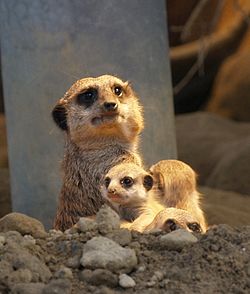
- Meerkats: A well-known example where helpers provide critical sentinel behavior and pup guarding.
- Primates: Observed in specific lineages, often linked to the high energetic demands of infant care.
Frequently Asked Questions
What is the difference between direct and indirect fitness?
Direct fitness is the genetic success gained by producing one's own offspring. Indirect fitness is the genetic success gained by helping relatives produce offspring, thereby ensuring shared genes persist.
Why do some animals choose to help instead of breeding?
Animals help when the inclusive fitness benefit (helping relatives) outweighs the cost of not breeding themselves, often due to harsh environmental conditions or limited territory availability.
How does Hamilton's Rule explain cooperation?
It provides a mathematical threshold: if the genetic relatedness (r) multiplied by the benefit to the relative (B) is greater than the cost to the helper (C), the cooperative trait is likely to be selected for evolutionarily.
Is cooperative breeding common in mammals?
No, it is very rare, occurring in less than 1% of mammalian species, with most instances appearing in specific rodent, carnivore, and primate lineages.
What role does environment play in this behavior?
Evidence suggests that the initial evolutionary transitions to cooperative breeding in mammals are frequently associated with species inhabiting high-aridity regions.