German Empire Federal Structure and State Unification
The German Empire was not a monolithic state but a complex federation consisting of 25 constituent states and the imperial territory of Alsace–Lorraine. This federal arrangement was the result of centuries of political fragmentation, evolving from the remnants of the Holy Roman Empire into a unified national entity between 1866 and 1871.
Unlike the highly centralized systems of France or England, the German Empire's federalism was fundamental to its existence. It balanced the dominance of Prussia with the autonomy of smaller kingdoms, duchies, and free cities, creating a political framework that influenced subsequent German governments, including the Weimar Republic and the modern Federal Republic of Germany.
Key Facts
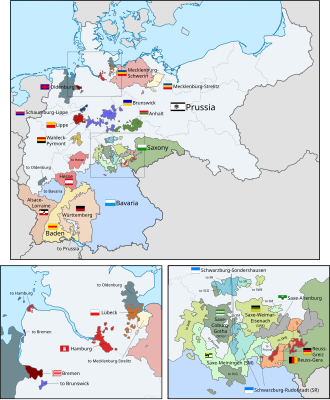
- Composition: 25 constituent states plus the imperial territory of Alsace–Lorraine.
- Governance: A strong federal system where states retained control over justice, education, and finance.
- Legislature: A two-chamber system consisting of the popularly elected Reichstag and the state-appointed Bundesrat.
- Prussian Influence: Prussia held roughly two-thirds of the population and exerted significant control over the Empire.
- Reserve Rights: Special autonomy granted to southern states (Bavaria, Württemberg, and Saxony) to encourage unification.
Historical Evolution of German Unification
The path to the German Empire began with the Holy Roman Empire of the German Nation, a highly fragmented entity that, by the early 19th century, comprised over 300 individual political units ranging from tiny abbeys to large principalities.
During the Napoleonic Wars (1803–1815), Napoleon Bonaparte streamlined this map by abolishing 112 of the smallest entities. The Holy Roman Empire was formally dissolved in 1806, and many states were incorporated into the French-led Confederation of the Rhine.
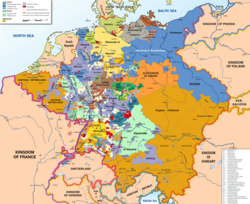
Following Napoleon's defeat, the Congress of Vienna (1814–1815) established the German Confederation, a loose 39-state defensive alliance. This was later replaced in 1866 by the North German Confederation after Prussia defeated Austria in the Austro-Prussian War. This new entity, dominated by Prussia, excluded Austria and established the Bundesrat as its federal authority.
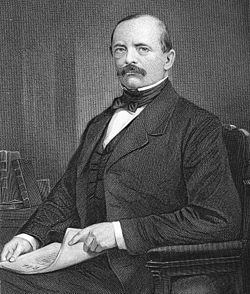
The final step occurred after the Franco-Prussian War (1870–1871), when southern states—Baden, Upper Hesse, Bavaria, and Württemberg—joined the North German Confederation. This completed the unification process, creating the German Empire under the architectural guidance of Chancellor Otto von Bismarck.
The Constitutional Framework
The imperial constitution established a clear division of power. While the Empire handled national affairs, the states maintained authority over administration, schools, churches, election laws, and finance. This meant that the implementation of national laws often varied depending on the state's own administrative bodies.
The Reichstag and the Bundesrat
The legislature was split into two distinct bodies:
- The Reichstag: The lower house, elected by universal manhood suffrage. Seats were generally allocated at a ratio of one seat per 100,000 inhabitants.
- The Bundesrat: The upper house, where members were appointed by state governments. Unlike the Reichstag, seats were not based on population. Prussia held 17 seats, which, combined with its size, allowed it to dominate the chamber.
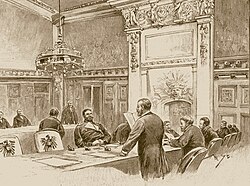
The Bundesrat was responsible for enacting laws, resolving disputes between states, and approving declarations of war. While Bismarck initially envisioned the member states as the primary bearers of sovereignty through the Bundesrat, he eventually shifted power toward the chancellorship to prevent the government from becoming fully responsible to the parliament.
Financial and Legal Autonomy
States held a virtual monopoly on direct taxes. The central government relied primarily on indirect taxes (such as those on salt, tobacco, and beer) and tariffs. When the central government required more funds, states provided "matricular contributions" based on their population.
Reserve Rights and Particularism
To persuade the southern states to join a Prussia-led empire, Bismarck granted them reserve rights—special modifications to imperial legislation and supervision.
These rights were primarily detailed in the November Treaties of 1870. Key examples included:
- Military Autonomy: Bavaria maintained a self-contained army with its own administration, though it fell under Prussian command during wartime. Württemberg and Saxony also retained specific military administrative privileges.
- Infrastructure and Revenue: Bavaria and Württemberg managed their own postal, telegraph, and railway systems, keeping the resulting revenues.
- Taxation: Baden, Bavaria, and Württemberg were permitted to regulate their own taxes on spirits and beer.
Prussian Provinces and State Identity
Prussia was the largest constituent state, divided into 14 provinces by 1918. Each province had its own capital and parliament. It is important to note that Prussia's "Province of Saxony" was a separate entity from the independent "Kingdom of Saxony," which was one of the 25 constituent states of the Empire.
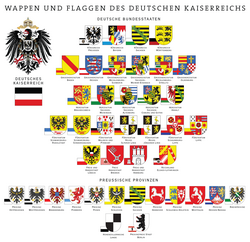
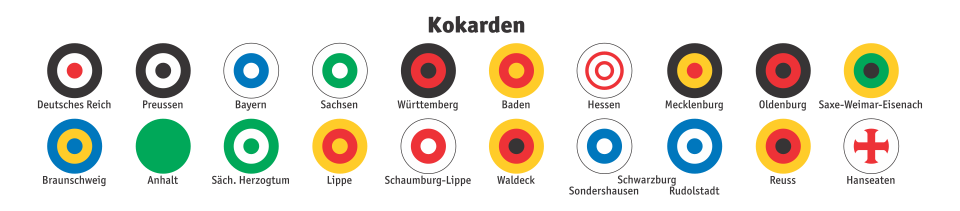
The diversity of these states was reflected in their unique flags, coats of arms, and cockades, symbolizing the tension between national unity and regional identity.
| Feature | Reichstag (Lower House) | Bundesrat (Upper House) |
|---|---|---|
| Representation | Popularly elected | Appointed by state governments |
| Allocation | Based on population (1:100,000) | Fixed seats per state (Non-population based) |
| Primary Role | Legislative approval | Enactment of laws, state dispute resolution |
| Prussian Influence | Proportional to population | Dominant via 17 seats and political weight |
Frequently Asked Questions
What were the reserve rights in the German Empire?
Reserve rights were special privileges granted to southern states like Bavaria and Württemberg to encourage them to join the Empire. These included independent control over postal services, railways, and certain military administrations during peacetime.
How did the Bundesrat differ from the Reichstag?
The Reichstag was a popularly elected body representing the people based on population. The Bundesrat was an appointed body representing the interests of the individual constituent states.
Why was Prussia so influential in the federation?
Prussia was the largest state, accounting for approximately two-thirds of the Empire's population. This size, combined with its 17 seats in the Bundesrat, allowed it to exert effective control over the federal government.
What happened to the 300+ states of the Holy Roman Empire?
They were consolidated through two major waves: first by Napoleon during the Napoleonic Wars (1803–1815), and later through the process of German unification (1866–1871), eventually becoming the 25 states of the German Empire.
Who was responsible for the Empire's constitution?
The constitutions of both the North German Confederation and the subsequent German Empire were largely the work of Otto von Bismarck, the Empire's first chancellor.