Constitution of the German Empire
The Constitution of the German Empire (German: Verfassung des Deutschen Reiches) served as the fundamental law of the German state from its ratification on April 16, 1871, until its formal repeal on August 14, 1919. Often referred to by historians as Bismarck's imperial constitution, this document established a complex federal parliamentary semi-constitutional monarchy that balanced the power of the Prussian crown with a representative legislative system.
At its core, the constitution created a federation of 25 German states. This union was dominated by Prussia, the largest and most influential state, which held the permanent presidency of the Empire. This legal framework transitioned Germany from a collection of sovereign entities into a unified national state, setting the stage for the Empire's rapid industrial and political rise in the late 19th century.
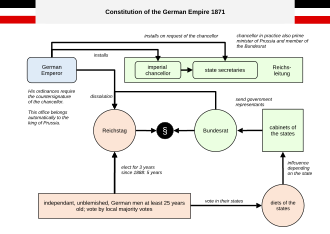
Key Facts
- Effective Dates: May 4, 1871, to August 14, 1919.
- System of Government: Federal parliamentary semi-constitutional monarchy.
- Head of State: The German Emperor (hereditary title held by the King of Prussia).
- Legislative Bodies: The Bundesrat (Upper House) and the Reichstag (Lower House).
- Chief Executive: The Imperial Chancellor, appointed by the Emperor.
- Judiciary: The Reichsgericht (Imperial Court).
Historical Origins and Evolution
The 1871 constitution did not emerge in a vacuum; it was the culmination of a series of political maneuvers led by Otto von Bismarck. Following Prussia's victory in the Austro-Prussian War of 1866, Bismarck formed the North German Confederation. The draft for this confederation, adopted in 1867, established the blueprint for the later Imperial constitution, including the creation of the Bundesrat and a national assembly elected by universal manhood suffrage.
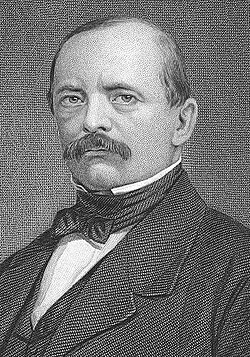
During the Franco-Prussian War (1870–1871), the North German Confederation negotiated unification with the southern German states. These agreements were formalized through the November Treaties, leading to the Constitution of the German Confederation on January 1, 1871. Finally, on April 16, 1871, the Act Concerning the Constitution of the German Empire was passed, replacing the term "Confederation" with "Empire" and officially establishing the Deutsches Reich.
The Structure of Power
The German Emperor
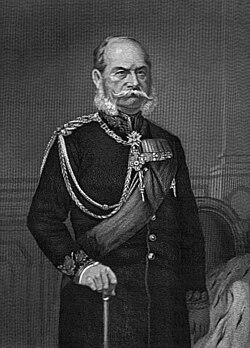
The presidency of the Empire was a hereditary office held by the King of Prussia, who assumed the title of German Emperor. The Emperor held significant executive authority, including the power to declare war (with Bundesrat consent for non-defensive wars), conclude treaties, and appoint or dismiss imperial officials.
The Imperial Chancellor
The Emperor exercised his authority through the Imperial Chancellor (Reichskanzler). While the chancellor's formal role was to chair the Bundesrat and implement its resolutions, in practice, the position was immensely powerful. Because the chancellor was typically also the minister president of Prussia, he could control Prussian votes in the Bundesrat and introduce legislation in the Reichstag.
The Legislative Branch
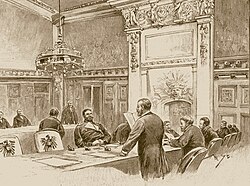
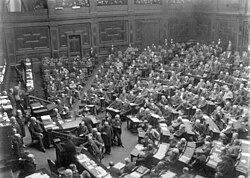
Legislation required a simple majority in both the Upper and Lower houses. The Bundesrat (Federal Council) represented the member states, with votes allocated based on state size. Prussia held 17 votes, which was sufficient to block constitutional amendments. The Reichstag (Imperial Diet) was the parliament elected by all male citizens over the age of 25 via secret ballot.
Imperial Jurisdiction and Citizenship
The Empire held exclusive legislative power over several critical areas, including coinage, banking, intellectual property, the Imperial Army and Navy, and criminal law. While individual states initially maintained their own rules for acquiring citizenship, a uniform Nationality Law was finally adopted on July 22, 1913, creating a single German citizenship.
| Component | Role/Function | Key Authority |
|---|---|---|
| Emperor | Head of State | Foreign affairs, military command, appointments |
| Chancellor | Head of Government | Administration, presiding over the Bundesrat |
| Bundesrat | Upper House | State representation, blocking constitutional changes |
| Reichstag | Lower House | Legislative approval, elected by male suffrage |
| Reichsgericht | Judiciary | Highest imperial court |
The Fall of the Imperial Constitution
The constitution underwent significant changes during the final days of World War I. The October Constitution of 1918 attempted to transform the authoritarian system into a parliamentary monarchy by making the chancellor responsible for the Emperor's political actions.
However, the November Revolution of 1918 swiftly ended the monarchy. While the 1871 document remained technically in force through various transitional laws, it was completely replaced on August 14, 1919, by the Weimar Constitution, which established a republic.
Frequently Asked Questions
Who was the primary architect of the 1871 Constitution?
Otto von Bismarck was the primary architect, drafting the original principles in the North German Constitution of 1867, which served as the foundation for the Imperial version.
How was the Reichstag elected?
The Reichstag was elected through universal manhood suffrage, meaning all male citizens over the age of 25 could vote via a direct, secret ballot.
Did Prussia have total control over the Bundesrat?
While Prussia did not have a majority of votes (holding 17 out of 61), its vote share was high enough to block any constitutional amendments, which required 14 negative votes to fail.
What was the role of the Imperial Chancellor?
Formally, the Chancellor chaired the Bundesrat and implemented its resolutions. In practice, as the usually concurrent minister president of Prussia, he wielded significant legislative and executive influence.
When did the Constitution of the German Empire officially end?
It was formally repealed on August 14, 1919, when it was replaced by the Constitution of the Weimar Republic.