Franco-Prussian War: The Conflict That Unified Germany
The Franco-Prussian War, also known as the Franco-German War or the War of 1870, was a pivotal conflict that fundamentally reshaped the map of Europe. Lasting from July 19, 1870, to January 28, 1871, the war pitted the Second French Empire against the North German Confederation, led by the Kingdom of Prussia. The struggle was driven by France's desire to maintain its dominance in continental Europe, a position that had been threatened by Prussia's rising power following its victory over Austria in 1866.
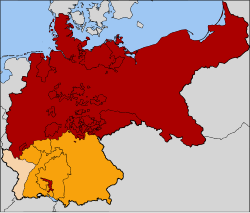
The conflict resulted in a decisive German victory, leading to the collapse of the Second French Empire, the birth of the French Third Republic, and the unification of various German states into a single German Empire.
Key Facts
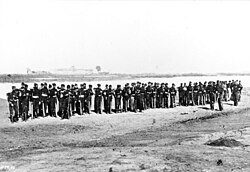
- Duration: July 19, 1870 – January 28, 1871.
- Primary Belligerents: France vs. the North German Confederation (led by Prussia) and southern German states.
- Major Outcome: German victory and the establishment of the German Empire.
- Territorial Change: Germany annexed the regions of Alsace and parts of Lorraine.
- Political Impact: End of the Second French Empire and the outbreak of the Paris Commune.
- Military Edge: Germany utilized superior mobilization, railways, and artillery.
The Road to War and Initial Mobilization
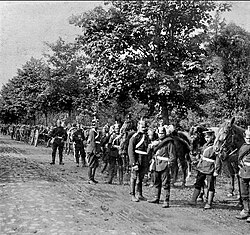
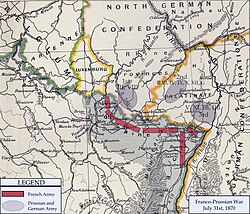
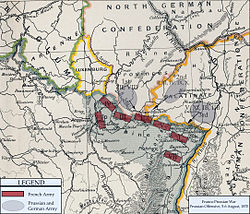
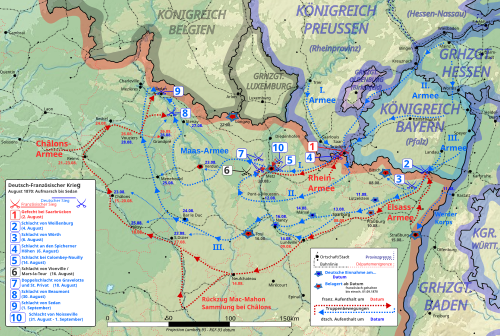
Tensions peaked in July 1870. France mobilized its army on July 15, prompting an immediate response from the North German Confederation. By July 16, the French parliament declared war on Prussia, and French forces invaded German territory on August 2.
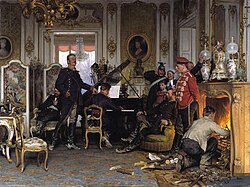
However, the German coalition proved far more efficient in its preparations. Utilizing a highly organized system of mobilization, German forces invaded northeastern France on August 4. The German military advantage was rooted in superior training, leadership, and the strategic use of modern technology, specifically the railway system for troop movement and advanced Krupp artillery.
Major Campaigns and Turning Points
The Frontier Battles and the Siege of Metz
The early phase of the war saw a series of German victories at the frontier, including the battles of Wissembourg, Spicheren, and Wörth. Following these defeats, approximately 160,000 French soldiers became besieged in the fortress of Metz.
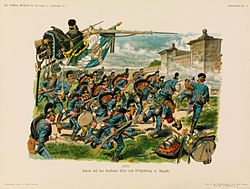
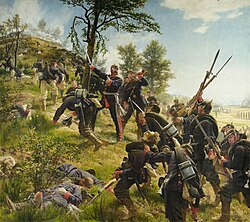
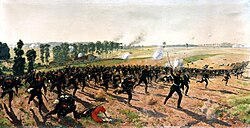
On August 16, 1870, a Prussian force of 30,000 men intercepted the French army near Mars-la-Tour. This was followed by the Battle of Gravelotte (August 18), the largest engagement of the war. Despite the French Army of the Rhine digging into high ground, the combined German forces under Field Marshal Count Helmuth von Moltke eventually forced the French to retreat back into Metz, where they remained besieged until their surrender two months later.
The Fall of Napoleon III at Sedan
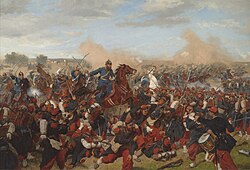
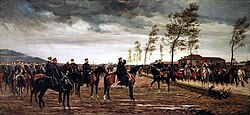
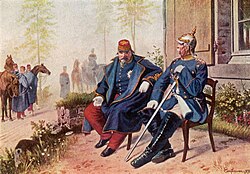
The strategic situation for France deteriorated rapidly, culminating in the Battle of Sedan on September 1, 1870. The defeat was absolute, resulting in the capture of Emperor Napoleon III. This event triggered the collapse of the Second French Empire and the proclamation of the French Third Republic.
The War of the Government of National Defence
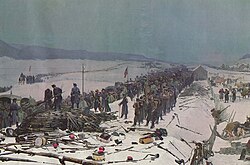
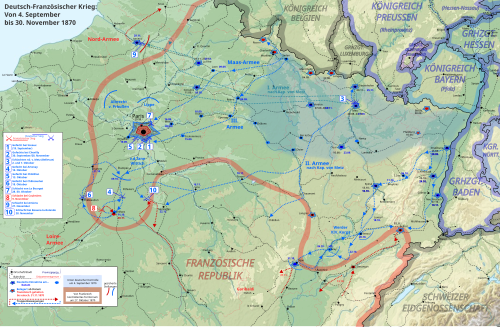
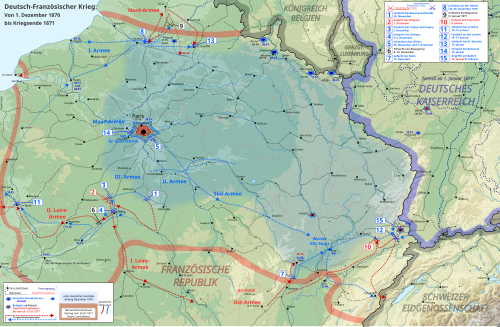
Despite the fall of the Emperor, the new French Government of National Defence continued the fight. France engaged in a feverish mobilization effort, more than tripling its forces during the conflict. This created a temporary crisis for the Germans in November 1870, which was only resolved by releasing troops from the siege of Metz to reinforce the front.
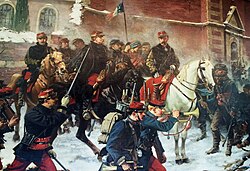
The conflict then entered a second phase, characterized by the Siege of Paris and various regional campaigns. In the Loire campaign, French forces initially saw success at the Battle of Coulmiers but were eventually defeated at the Battle of Le Mans in January 1871. Other French efforts in the north were turned back at Amiens, Bapaume, and St. Quentin.
Naval Warfare and Strategic Failures
France had planned a seaborne invasion of northern Germany to divert Prussian troops and encourage Danish intervention. However, this plan failed because Prussia had installed coastal artillery batteries with a range of 4,000 yards—double that of the French naval guns. The French Navy lacked the heavy weaponry necessary to breach these defenses, rendering a naval invasion impossible.
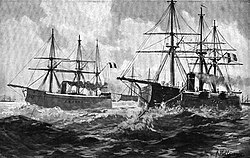
![Painting of Meteor in battle with Bouvet, by Robert Parlow [de]](/images/fe/af/feafc8ef7ba5b3266581d1896831862cf86255441661d41e0cfed455a5d9a9a1.jpg)
The Aftermath and the Birth of an Empire
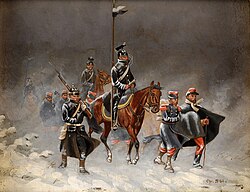
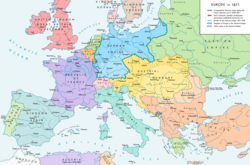
The war concluded with an armistice on January 28, 1871. One of the most significant political outcomes was the proclamation of the German Empire on January 18, 1871, unifying the North German Confederation with the southern states of Bavaria, Württemberg, and Baden.
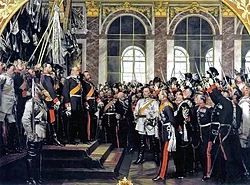
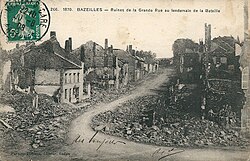
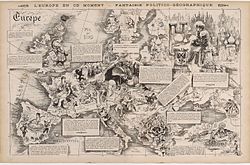
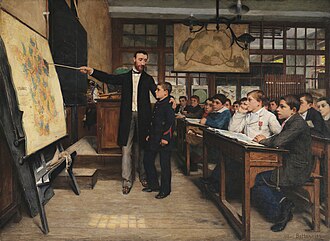
The peace terms were harsh for France. Germany annexed Alsace and parts of Lorraine, a loss that fueled French revanchism (the desire for revenge) for decades. Internally, the vacuum of power and the humiliation of defeat contributed to the outbreak of the Paris Commune, a radical socialist uprising in the capital.
Military Analysis and Casualties
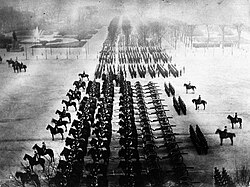
The Prussian victory is often attributed to the military reforms of Albrecht von Roon. By integrating the regular army with the Landwehr (national reserve) and implementing universal conscription for military-aged males, Prussia was able to mobilize a larger, more efficient force than France, despite France having a larger overall population.
The human cost was staggering. France suffered over 138,000 military deaths and an estimated 450,000 civilian deaths. Germany's losses were significantly lower, with roughly 44,000 dead.
| Metric | France (Second Empire/Third Republic) | Germany (North German Confederation/Empire) |
|---|---|---|
| Initial Mobilization | ~910,000 | ~938,000 |
| Total Deployment | 2,000,740 | 1,494,412 |
| Military Deaths | 138,871 | 44,781 |
| Captured/Interned | 474,414 | 10,129 |
| Population (1870) | 38,000,000 | 32,000,000 |
![In this painting by Pierre Puvis de Chavannes a woman holds up an oak twig as a symbol of hope for the nation's recovery from war and deprivation after the Franco-Prussian War.[99] The Walters Art Museum.](/images/ee/fe/eefe07475a87057ba33d4cdf0fed6b38f76befb2e9fad92be89a98f443c7b745.jpg)
Frequently Asked Questions
What was the primary cause of the Franco-Prussian War?
The war was primarily caused by France's determination to reassert its dominant position in continental Europe, which had been challenged by the rise of Prussia and its victory over Austria in 1866.
How did Germany achieve victory despite a smaller population?
Germany benefited from the military reforms of Albrecht von Roon, which integrated the regular army with the Landwehr reserves and utilized universal conscription. Additionally, they had superior mobilization logistics, better artillery, and more effective use of railways.
What were the territorial consequences for France?
As a result of the war, France was forced to cede the region of Alsace and parts of Lorraine to the newly formed German Empire.
What happened to Napoleon III?
Napoleon III was captured by German forces following the Battle of Sedan on September 1, 1870, which led to the end of the Second French Empire.
What was the Paris Commune?
The Paris Commune was a radical socialist and revolutionary government that seized power in Paris following the French defeat and the subsequent political instability of 1871.