Kingdom of Bavaria
The Kingdom of Bavaria was a prominent German state that existed from 1806 to 1918. Emerging from the former Electorate of Bavaria, it evolved through various political alignments—from a Napoleonic ally to a federal state of the German Empire. At its peak, it was the second most powerful, wealthy, and largest state in the German Empire, surpassed only by the Kingdom of Prussia.
The kingdom was ruled by the House of Wittelsbach, a dynasty whose influence spanned centuries. Its capital, Munich, served as the center of political and cultural life, while the state's borders shifted significantly due to the geopolitical upheavals of the 19th century.
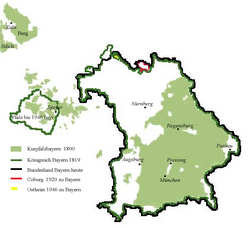
Key Facts
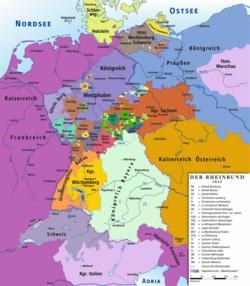
- Duration: 1806–1918.
- Ruling House: House of Wittelsbach.
- Capital: Munich.
- Motto: In Treue fest ("Steadfast in loyalty").
- Peak Population: 6,524,372 (1910).
- Religion: Predominantly Roman Catholicism.
- Final Monarch: King Ludwig III.
Foundation and the Napoleonic Era
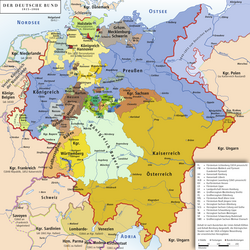
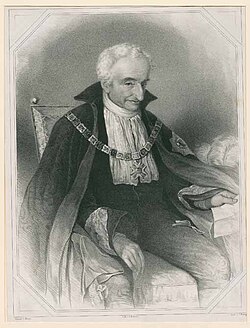
The kingdom was established on January 1, 1806, when Elector Maximilian IV Joseph proclaimed himself King Maximilian I. This transition was heavily influenced by the strategic guidance of his minister, Maximilian von Montgelas, who shifted Bavaria's alliance from Austria to Napoleonic France.
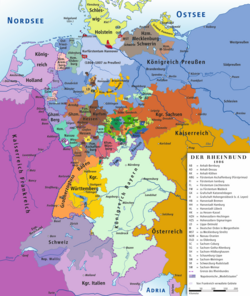
As a member of the Confederation of the Rhine (a league of German client states under Napoleon), Bavaria expanded its territory but paid a high price in conscripts for the Peninsular War and suffered heavy losses during the French invasion of Russia in 1812. However, this era also brought modernization; in 1808, Bavaria abolished serfdom and promulgated its first written constitution.
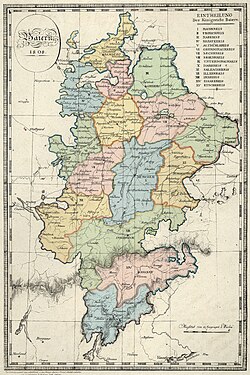
By 1813, Bavaria pivoted again, signing the Treaty of Ried to join the Sixth Coalition against Napoleon. The subsequent Treaty of Paris (1814) helped define the modern borders of the Bavarian Free State, as the kingdom ceded Tyrol and Vorarlberg to Austria while gaining Aschaffenburg and Würzburg.
Constitutional Struggles and the Path to Unification
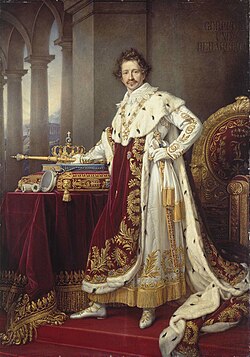
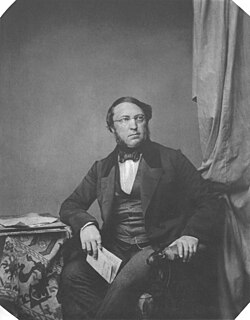
Under King Ludwig I, Bavaria focused on cultural growth and institutional stability, though the Revolutions of 1848 forced his abdication in favor of his son, Maximilian II.
The mid-19th century was marked by a struggle for German leadership between Austria and Prussia. Bavaria remained a staunch ally of Austria, opposing Prussian dominance. This alignment led to a decisive defeat for the Bavarian Army at the Battle of Roßbrunn in 1866 during the Austro-Prussian War.
The Shift Toward Prussia
The geopolitical landscape shifted when French Emperor Napoleon III threatened the Bavarian-held Palatinate. This external threat pushed King Ludwig II into an alliance with Prussia. Following the Franco-Prussian War (1870–1871), Bavaria joined the newly formed German Empire as a federated state.
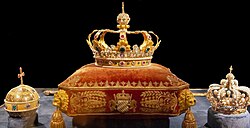
The Era of Ludwig II and the Regency
King Ludwig II is remembered as the "fairy tale king," known more for his architectural extravagances than for political governance. His reign saw the construction of iconic landmarks like Neuschwanstein Castle.
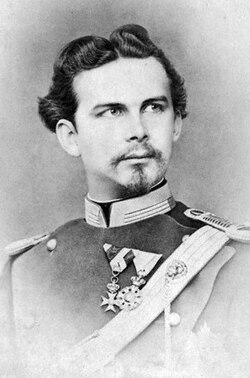

Following Ludwig II's death, the Prinzregentenzeit (Prince Regent's time) began under Prince Regent Luitpold (1886–1912). This period is often viewed retrospectively as a golden age of stability and modesty, during which Bavarian interests were gradually integrated into the broader German Empire.
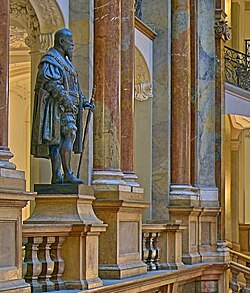
Military Autonomy and the Fall of the Monarchy
Unlike other German states, Bavaria maintained significant military autonomy. It kept its own army corps, distinctive light blue and green uniforms, and a separate oath of loyalty to the Bavarian King, though the German Emperor served as supreme commander during wartime.
The onset of World War I strained the monarchy. King Ludwig III became unpopular as he was perceived as being too loyal to the Prussian-led imperial government. By 1918, civil unrest and separatism peaked.
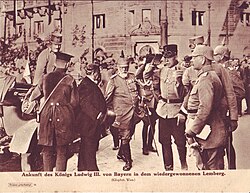
On November 7, 1918, during the German Revolution, Ludwig III fled Munich. On November 12, he issued the Anif declaration, stating he was unable to lead the government. This effectively ended the 700-year rule of the House of Wittelsbach, and the kingdom was replaced by the People's State of Bavaria.
Summary of the Kingdom of Bavaria
| Category | Details |
|---|---|
| Government Type | Parliamentary constitutional monarchy |
| Legislature | Landtag (House of Councillors & House of Representatives) |
| Currency | Bavarian gulden (until 1873), then German gold mark/Papiermark |
| Area (1910) | 75,865 km² |
| Key Alliances | France (Napoleonic era), Austria (mid-19th century), Prussia (post-1870) |
Frequently Asked Questions
How did Bavaria become a kingdom?
Bavaria was raised to the status of a kingdom in 1806 following the Peace of Pressburg, largely due to its strategic alliance with Napoleon Bonaparte and the diplomatic efforts of Minister Maximilian von Montgelas.
What was the role of the House of Wittelsbach?
The House of Wittelsbach was the ruling dynasty of Bavaria. They held the crown from the kingdom's inception in 1806 until the revolution of 1918, marking the end of a familial rule that had lasted 700 years in various forms.
Did Bavaria have its own army within the German Empire?
Yes. Bavaria maintained a degree of military autonomy, including its own army corps and distinct uniforms. Soldiers swore loyalty to the King of Bavaria, though they obeyed the German Emperor during wartime.
Why did the monarchy end in 1918?
The monarchy collapsed due to the pressures of World War I, widespread civil unrest, and the broader German Revolution. King Ludwig III fled Munich and issued the Anif declaration, which the new socialist-led government interpreted as an abdication.
What was the "Prinzregentenzeit"?
The Prinzregentenzeit refers to the regency of Prince Regent Luitpold from 1886 to 1912. It is remembered as a stable and prosperous era that bridged the gap between the eccentric rule of Ludwig II and the final years of the monarchy.