Druze of Lebanon: History, Demographics, and Political Influence
The Druze are a distinct ethno-religious group who play a disproportionately significant role in the political and social fabric of Lebanon. Referring to themselves as Ahl al-Tawhid (People of Unitarianism or Monotheism) or al-Muwaḥḥidūn, they maintain a unique identity that has navigated centuries of regional shifts, conflict, and reconciliation.
Despite being a minority, the Druze have been central to the formation of the modern Lebanese state, often acting as a pivotal force in the country's complex confessional political system.
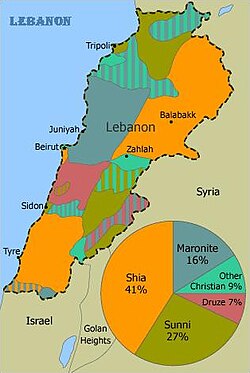
Key Facts
- Population: Approximately 212,086 registered voters (as of 2022), representing about 5.3% of the Lebanese population.
- Primary Region: The vast majority reside in the Mount Lebanon Governorate.
- Language: Lebanese Arabic.
- Political Power: Historically led by influential dynasties such as the Jumblatt and Arslan families.
- Global Context: Lebanon hosts roughly 35% to 40% of the world's total Druze population.
Historical and Political Evolution
The Druze community has long been a cornerstone of Lebanese sovereignty. During the Lebanese Civil War (1975–1990), the community was largely aligned with Pan-Arabism and the Palestinian cause, specifically the PLO. This era was dominated by the Progressive Socialist Party, founded by Kamal Jumblatt.
Following the assassination of Kamal Jumblatt on March 16, 1977, his son Walid Jumblatt assumed leadership. Walid Jumblatt became a central figure in preserving the community's existence through the sectarian violence of the 1980s, including the Mountain War. By 2005, Jumblatt's political trajectory shifted; he became a key figure in the Cedar Revolution and publicly accused Damascus of orchestrating his father's death.
While the Jumblatt family is the most prominent, the Lebanese Democratic Party, led by Prince Talal Arslan (son of independence hero Emir Majid Arslan), represents the second-largest political force supported by the Druze.
Demographics and Distribution
Globally, the Druze population is estimated at one million people. While the largest concentration is in Syria (45% to 50%), Lebanon remains a primary center of the faith. In Lebanon, the population has remained relatively stable, with a slight increase in the number of registered voters between 2014 and 2022.
Geographically, the community is heavily concentrated in the mountains. The Mount Lebanon Governorate is the heartland, housing nearly 79% of the Lebanese Druze population.
| Governorate | 2014 Population | 2022 Population | % of Total Druze (2022) |
|---|---|---|---|
| Mount Lebanon | 154,535 | 167,265 | 78.87% |
| Beqaa | 20,417 | 23,130 | 10.91% |
| Nabatieh | 15,535 | 17,435 | 8.22% |
| Beirut | 5,205 | 3,638 | 1.72% |
| Other Governorates | 1,000+ | 600+ | <1% |
| Total | 196,484 | 212,086 | 100% |
Cultural Heritage and Interfaith Relations
The Druze have a complex history of intercommunal relationships. While they have faced periods of persecution, they have also maintained deep bonds with Lebanese Christians. A historic moment of reconciliation occurred in August 2001, when Maronite Catholic Patriarch Nasrallah Boutros Sfeir visited Mukhtara, the stronghold of Walid Jumblatt, signaling an end to the hostilities of the 1983–84 war.
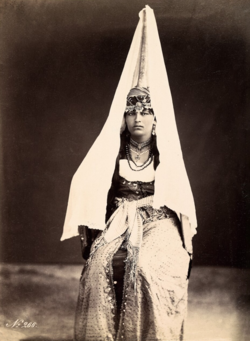
This harmony is often reflected in shared spiritual spaces. For example, the icon of Saidet et Tallé (the Virgin of the Druze) is venerated by both Maronite Christians and the Druze community, symbolizing a long-standing tradition of coexistence.
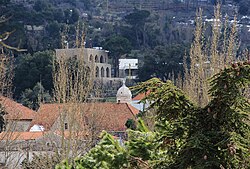
Other significant cultural and religious sites include the Prophet Job shrine in Niha village and the traditional Khalwa (Druze prayer house), which often stand alongside Christian churches in the Shuf Mountains.
![Prophet Job shrine in Niha village.[51]](/images/14/fd/14fd0322291a41622e5c08c428829cc08774226d8100d5e34de3a63b7c4d11bf.jpg)
![The icon of Saidet et Tallé, also known as "the Virgin of the Druze," is venerated by both the Druze and Maronite Christian communities. This veneration reflects the long-standing interfaith harmony in Lebanon.[57]](/images/61/26/6126bd70cbbe416d7f63e6e564951333de6d990222ec392082579d612d3a2c25.jpg)
Notable Figures
- Fakhr-al-Din II (1572–1635): An early leader of the Emirate of Chouf.
- Emir Shakib Arslan (1869–1946): A distinguished prince and Islamic scholar.
- Emir Majid Arslan (1908–1983): A leader in the movement for Lebanese independence.
- Kamal Jumblatt (1917–1977): A progressive socialist politician.
- Casey Kasem (1932–2014): The famous Lebanese-American radio personality.
Frequently Asked Questions
What is the primary religion of the Druze?
The Druze follow a monotheistic faith known as Tawhid. While it originated from Isma'ili Shia Islam, it is considered a distinct religion with its own precepts and beliefs, and the Druze do not follow the five pillars of Islam.
Where do most Druze live in Lebanon?
The vast majority of Lebanese Druze reside in the Mount Lebanon Governorate, particularly in the Chouf and Aley regions.
Who are the most influential political leaders of the Druze?
The most prominent leaders have historically come from the Jumblatt family (such as Kamal and Walid Jumblatt) and the Arslan family (such as Emir Majid and Prince Talal Arslan).
How do the Druze relate to other religious groups in Lebanon?
While there have been periods of conflict, such as the clashes with Hezbollah in 2008 or the civil war, there is a strong history of interfaith harmony, particularly between the Druze and Maronite Christians.
What is the global distribution of the Druze people?
There are approximately one million Druze worldwide, with the largest populations found in Syria (45-50%) and Lebanon (35-40%), and a smaller community in Israel (less than 10%).