Lebanese Civil War
The Lebanese Civil War was a complex, multifaceted armed conflict that ravaged Lebanon from April 13, 1975, to October 13, 1990. Spanning over 15 years, the war was not merely a domestic struggle but a focal point for broader regional and global tensions, including the Cold War, the Arab Cold War, and various proxy conflicts involving Iran, Saudi Arabia, Iraq, and Syria.
The conflict resulted in an estimated 120,000 to 150,000 deaths and displaced nearly one million people, leaving the nation's infrastructure in ruins and its social fabric deeply torn.
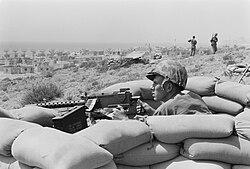
Key Facts
- Duration: April 13, 1975 – October 13, 1990.
- Casualties: Estimated 120,000 to 150,000 killed.
- Primary Resolution: The Taif Agreement.
- Major External Actors: Syria, Israel, Iran, and a Multinational Force (US, UK, France, Italy).
- Key Outcome: Shift in parliamentary representation from a 55:45 Christian-to-Muslim ratio to 50:50.
Historical Roots and Background
Ottoman Legacy and Independence
The seeds of sectarian tension were sown long before 1975. In 1860, a civil war between Druze and Maronite Christians in the Ottoman Mutasarrifate of Mount Lebanon led to thousands of deaths. Following World War II, Lebanon achieved independence on November 22, 1943. To maintain stability, a power-sharing system was established: the President was to be a Maronite Christian, the Prime Minister a Sunni Muslim, and the Speaker of Parliament a Shia Muslim.
The Palestinian Influence
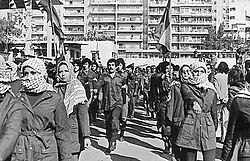
The 1948 Arab-Israeli War brought a significant influx of Palestinian refugees into Lebanon. Over time, the Palestine Liberation Organization (PLO) established a strong presence, using Lebanese soil as a base for operations against Israel. By the start of the civil war in 1975, Palestinian armed manpower in Lebanon numbered approximately 21,000, with Fatah being the largest group.
The Dynamics of Conflict
Sectarian and Political Divisions
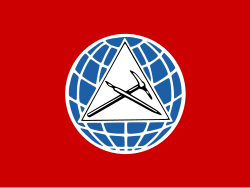
The war pitted various factions against one another, primarily divided between the Lebanese Front (largely Maronite Christian groups like the Kataeb Party and Lebanese Forces) and the Lebanese National Movement (a coalition of secularists, leftists, and Palestinian supporters).
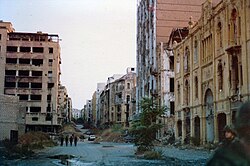
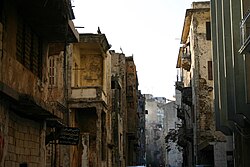
As the state collapsed, the country fractured into "mini-states" or cantons. In Beirut, the city was physically split by the Green Line, a demarcation zone separating the Christian-controlled East from the Muslim- and Palestinian-controlled West.
The Role of Regional Powers
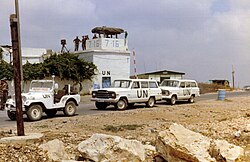
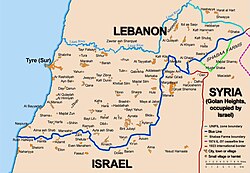
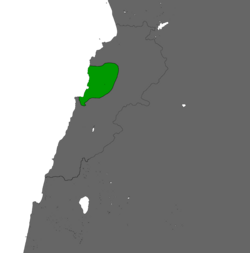
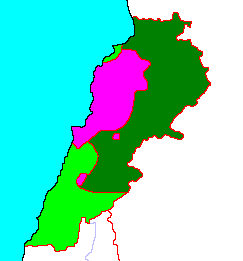
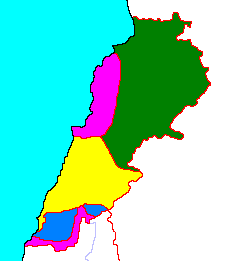
Lebanon became a battleground for neighboring states. Syria intervened in 1976 and maintained a presence in the north and east for decades. Israel launched major invasions in 1978 and 1982, the latter aiming to expel the PLO from Lebanon. These interventions often shifted the power balance, as seen in the various territorial controls exerted by Syria, Israel, and the UN.
The Rise of Hezbollah
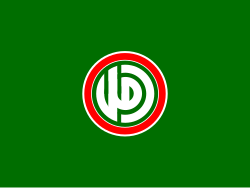
In the early 1980s, backed by Iran, Hezbollah emerged as a powerful Shia militant and political organization. While other militias were eventually disarmed, Hezbollah's military wing remained a dominant force in Lebanon following the war's end.
Major Military Phases and Interventions
The 1982 Invasion and International Response
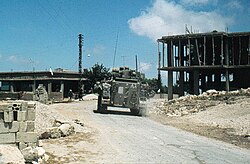
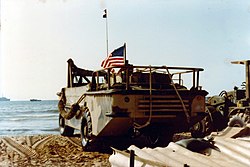
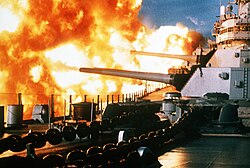
The 1982 Israeli invasion led to the siege of Beirut and the eventual evacuation of the PLO. In response to the chaos, a Multinational Force (MNF) consisting of U.S., French, Italian, and British troops was deployed to oversee the withdrawal and stabilize the city.
Violence and Escalation
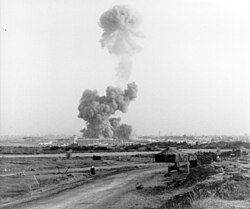
The conflict was marked by extreme violence, including the Sabra and Shatila massacres and the 1983 Beirut barracks bombing, which targeted U.S. and French peacekeepers. The U.S. eventually disengaged from Lebanon in 1984 after significant losses.
The Path to Peace: The Taif Agreement
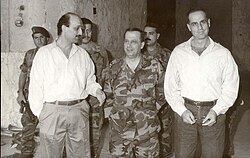
The war finally concluded with the Taif Agreement in 1989. This accord sought to rebalance political power and end the hostilities. Key provisions included:
- Adjusting the Christian-to-Muslim parliamentary ratio to 50:50.
- Increasing the number of parliamentary seats (eventually reaching 128).
- The disarmament of most Lebanese and non-Lebanese militias, with the notable exception of Hezbollah.
- The expulsion of Palestinian militias following the 1991 Battle of Sidon.
Aftermath and Reconstruction
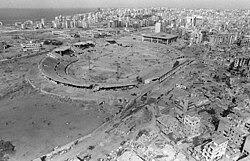
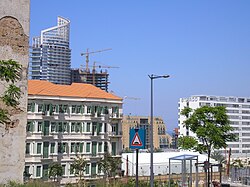
The post-war era was characterized by a long process of reconstruction. Beirut's downtown area was fully restructured to international standards. However, the country remained under Syrian occupation in the north and east until 2005, while Israel occupied southern Lebanon until May 2000.
| Category | Details |
|---|---|
| Primary Belligerents | Lebanese Front vs. Lebanese National Movement, PLO, and later Hezbollah/Amal. |
| External Interveners | Syria, Israel, Iran, USA, France, UK, Italy. |
| Key Peace Treaty | Taif Agreement (1989). |
| Political Shift | Parliamentary representation moved to a 50:50 Christian-Muslim split. |
| Territorial Legacy | Syrian occupation ended 2005; Israeli occupation ended 2000. |
Frequently Asked Questions
What was the primary cause of the Lebanese Civil War?
The war was caused by a combination of internal sectarian tensions between Maronite Christians and Muslims, the presence and activities of the PLO within Lebanon, and the interference of regional powers like Syria and Israel.
What was the "Green Line"?
The Green Line was the demarcation line that physically separated East Beirut (controlled by Christian militias) from West Beirut (controlled by Muslim and Palestinian factions) during the conflict.
How did the Taif Agreement end the war?
The Taif Agreement ended the war by redistributing political power more equitably between Christians and Muslims in Parliament and mandating the disarmament of most militias.
Why was Hezbollah allowed to keep its weapons?
Unlike other militias, Hezbollah's military wing was permitted to remain armed under the justification of providing "resistance" against the Israeli occupation of southern Lebanon.
What was the role of the Multinational Force (MNF)?
The MNF, comprising troops from the U.S., France, Italy, and the UK, was deployed in 1982 to oversee the PLO's withdrawal from Beirut and attempt to stabilize the city.