Raouché: The Iconic Coastal Landmark of Beirut
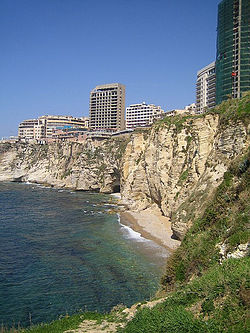
Nestled along the Mediterranean coast of Lebanon, Raouché (Arabic: الروشة) is one of Beirut's most distinguished residential and commercial neighborhoods. Renowned for its blend of upscale living and breathtaking natural beauty, the area is a focal point for both locals and visitors, characterized by its high-end apartment buildings and a vibrant social scene.
The neighborhood is most famous for the cliff-side cafés and diverse restaurants that line the Avenue de Paris, a scenic stretch that forms part of the Corniche Beirut, the city's famous waterfront promenade.
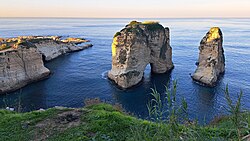
The Pigeons' Rock
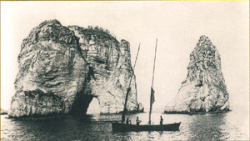
The defining feature of the district is the Pigeons' Rock, also known as the Rock of Raouché. This natural landmark consists of two massive rock formations rising dramatically from the sea off the coast. These formations serve as a symbol of the city's coastal identity and are a primary draw for photography and sightseeing.
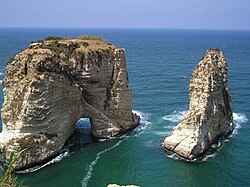
The name "Raouché" itself is derived from the French word rocher, which translates directly to "rock," reflecting the geological prominence of the area.
History and Heritage
While Raouché is today a modern urban hub, its shores hold evidence of ancient human activity. The oldest traces of human existence in the area—specifically flints and basic stone tools—have been recovered from the coast. These prehistoric artifacts are currently preserved and displayed in the American University of Beirut Archaeological Museum.
Modern Challenges and Current Status
In recent years, the area has faced tensions between urban development and environmental preservation. The Dalieh, a coastal area adjacent to Raouché, has been the subject of controversy due to attempts to sell the land to real-estate developers. In early 2014, a campaign titled "The last that remains" was launched to oppose the privatization of Raouché and the Dalieh.
The landmark has also been a site of political expression. In September 2025, Hezbollah used the rocks as a backdrop for an illuminated projection to commemorate former leaders Hassan Nasrallah and Hashem Safieddine following their assassinations by Israel in 2024. This event drew criticism from Prime Minister Nawaf Salam.
Key Facts
- Location: A residential and commercial neighborhood in Beirut, Lebanon.
- Primary Landmark: The Pigeons' Rock (Rock of Raouché), consisting of two rock formations.
- Etymology: Named after the French word rocher (rock).
- Archaeology: Home to some of the area's oldest human evidence, including stone tools.
- Key Thoroughfare: Avenue de Paris, part of the Corniche Beirut.
| Feature | Details |
|---|---|
| Neighborhood Type | Residential and Commercial |
| Famous Landmark | Pigeons' Rock |
| Key Street | Avenue de Paris |
| Historical Artifacts | Flints and stone tools |
| Coordinates | 33°53′N 35°28′E |
Frequently Asked Questions
What is the Pigeons' Rock?
The Pigeons' Rock, or the Rock of Raouché, is a natural landmark off the coast of Beirut consisting of two large rock formations.
Where does the name Raouché come from?
The name is derived from the French word "rocher," which means rock.
What historical significance does Raouché have?
The shores of Raouché have yielded some of the oldest evidence of human existence in the area, including basic stone tools and flints.
What is the Dalieh?
The Dalieh is a coastal area adjacent to Raouché that has been the center of a campaign against privatization and real-estate development.
Where can I see artifacts from Raouché?
Ancient flints and stone tools found in the area are displayed in the American University of Beirut Archaeological Museum.