Raouché: Beirut's Iconic Coastal Landmark and Neighborhood
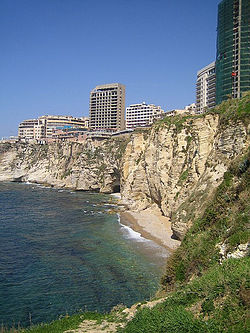
Located along the Mediterranean coast, Raouché (Arabic: الروشة) is one of Beirut, Lebanon's most distinguished residential and commercial districts. Renowned for its blend of upscale urban living and breathtaking natural scenery, the neighborhood is a focal point for both locals and visitors. The area is characterized by high-end apartment buildings and a vibrant social scene, featuring numerous restaurants and cliff-side cafés that line the Avenue de Paris, a key segment of the Corniche Beirut (the city's scenic waterfront promenade).
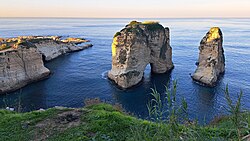
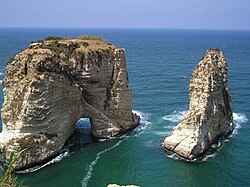
The most defining feature of the district is the Pigeons' Rock, also known as the Rock of Raouché. These two massive natural rock formations rise dramatically from the sea, serving as a timeless symbol of the Lebanese capital.
Key Facts
- Location: A residential and commercial neighborhood in Beirut, Lebanon.
- Primary Landmark: The Pigeons' Rock (Rock of Raouché), consisting of two rock formations.
- Etymology: The name is derived from the French word rocher, meaning rock.
- Historical Significance: Home to some of the oldest evidence of human existence in the area, including prehistoric stone tools.
- Key Thoroughfare: Avenue de Paris, known for its cliff-side cafés.
The Natural Wonder: Pigeons' Rock
The Pigeons' Rock is more than just a geological curiosity; it is a centerpiece of Beirut's identity. These formations provide a stunning vista of the city skyline and the surrounding coastline, making it a premier spot for photography and leisure.
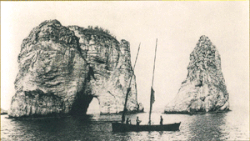
Historically, the site has remained a constant in the city's evolving landscape, appearing in records and imagery dating back to the late 19th and early 20th centuries.
History and Heritage
The shores of Raouché hold deep archaeological importance. The area has yielded some of the oldest evidence of human habitation in the region, specifically in the form of flints and basic stone tools. These prehistoric artifacts are currently preserved and displayed in the American University of Beirut Archaeological Museum.
Contemporary Issues and Events
In recent years, Raouché has been at the center of debates regarding urban development and political expression. The area known as Dalieh, adjacent to Raouché, has faced threats of privatization. In early 2014, a campaign titled "The last that remains" was launched to oppose the sale of this land to real-estate developers.
The landmark has also been used for political messaging. In September 2025, Hezbollah utilized the rocks as a backdrop for an illuminated projection to commemorate former leaders Hassan Nasrallah and Hashem Safieddine, who were assassinated by Israel in 2024. This event drew criticism from Prime Minister Nawaf Salam.
| Feature | Details |
|---|---|
| Primary Landmark | Pigeons' Rock (Rock of Raouché) |
| Main Street | Avenue de Paris |
| Archaeological Finds | Flints and basic stone tools |
| Contested Area | Dalieh |
| Coordinates | 33°53′N 35°28′E |
Frequently Asked Questions
What does the name Raouché mean?
The name Raouché is derived from the French word rocher, which translates to "rock" in English.
What is the Pigeons' Rock?
The Pigeons' Rock, or the Rock of Raouché, is a natural landmark consisting of two large rock formations located off the coast of the Raouché neighborhood in Beirut.
Where can I see the archaeological finds from Raouché?
The flints and basic stone tools discovered along the shores of Raouché are displayed in the American University of Beirut Archaeological Museum.
What is the 'Dalieh' controversy?
The Dalieh is an area adjacent to Raouché that has been the subject of a campaign against privatization, as activists have sought to prevent the land from being sold to real-estate developers.
What is the Corniche Beirut?
The Corniche Beirut is the scenic waterfront promenade of the city, of which the Avenue de Paris in Raouché forms a part.