Avenue de Paris: A Scenic Landmark of the Beirut Corniche
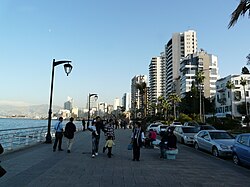
Avenue de Paris is a picturesque, palm-lined seaside street located in Beirut, Lebanon. Together with Avenue General de Gaulle, it forms the Corniche Beirut, a renowned waterfront promenade that serves as a vital recreational hub for the city's residents and visitors alike.
The avenue is particularly favored by those seeking active leisure, providing a scenic route for joggers, cyclists, and rollerbladers who enjoy the Mediterranean breeze and the city's coastal atmosphere.
Key Facts
- Location: Beirut, Lebanon, forming part of the Corniche Beirut promenade.
- Design: Features palm-lined streets and a pedestrian-friendly seaside environment.
- Artistic Upgrades: 76 ceramic-covered benches and a Mega Chessboard designed by Lena Kelekian.
- Historical Note: Former site of the U.S. Embassy before its relocation to Awkar.
Urban Embellishment and Public Art
In 2001, the municipality of Beirut launched an initiative to enhance the aesthetic appeal of the Avenue de Paris section of the Corniche. This embellishment project was conceived and designed by the Lebanese artist Lena Kelekian.
The project focused on transforming functional street furniture into works of art. Specifically, 76 existing cement benches were replaced with new versions adorned with colorful cut ceramics. Additionally, a Mega Chessboard was installed on the widest section of the sidewalk, adding an interactive element to the public space.
Historical and Literary Significance
The U.S. Embassy
Avenue de Paris holds significant historical weight as the former location of the U.S. embassy. This site was the target of an attack on April 8, 1983. Following these events, the embassy was relocated to Awkar, a hilly suburb situated north of Beirut.
Presence in Literature
The avenue's prominence in the city is reflected in literature, appearing in works such as The Tomato War and Theomachy by Edmond Y. Nicolas. In these texts, the street is depicted as part of the coastal route connecting the American University of Beirut to other key city landmarks, including the Phoenicia Hotel and Fakher ad-din Avenue.
Avenue de Paris Summary
| Feature | Details |
|---|---|
| Primary Use | Recreation (Jogging, Cycling, Rollerblading) |
| Key Artist | Lena Kelekian (2001 project) |
| Art Installations | 76 ceramic benches and a Mega Chessboard |
| Former Landmark | U.S. Embassy (pre-1983 attack) |
| Current Embassy Location | Awkar, Beirut |
Frequently Asked Questions
What is the Corniche Beirut?
The Corniche Beirut is a seaside promenade in Beirut, Lebanon, formed by Avenue de Paris and Avenue General de Gaulle.
Who designed the artistic benches on Avenue de Paris?
The colorful cut ceramic benches were designed by Lebanese artist Lena Kelekian as part of a 2001 municipal embellishment project.
Where is the U.S. Embassy located now?
The U.S. embassy is currently located in Awkar, a hilly suburb north of Beirut, after moving from its previous location on Avenue de Paris.
What activities are popular on Avenue de Paris?
The avenue is a popular spot for outdoor activities, specifically for those who enjoy jogging, cycling, and rollerblading along the coast.
What unique feature is found on the widest part of the sidewalk?
The widest section of the sidewalk features a Mega Chessboard, installed during the 2001 urban design project.