David I: The King Who Shaped Medieval Scotland
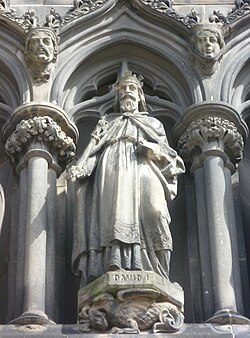
David I, reigning from 1124 to 1153, stands as one of the most transformative figures in Scottish history. A member of the House of Dunkeld, David was not merely a monarch but a bridge between the Gaelic traditions of the north and the sophisticated Norman influences of the south. His reign marked a period of intense modernization, often referred to by historians as the "Davidian Revolution," which reshaped the legal, economic, and religious landscape of the kingdom.
Key Facts
- Reign: King of Scotland from April 23, 1124, to May 24, 1153.
- Early Title: Served as Prince of the Cumbrians from 1113 to 1124.
- Family: Youngest son of King Malcolm III and Queen Margaret of Wessex.
- Legacy: Established Scotland's first burghs (towns) and founded numerous Cistercian monasteries.
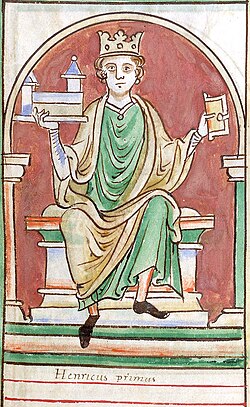
- Influence: Heavily influenced by the court of Henry I of England, leading to the Normanisation of Scotland.
Early Life and English Influence
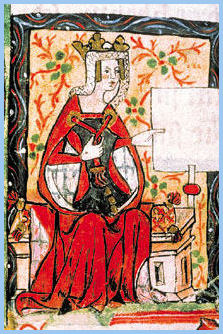
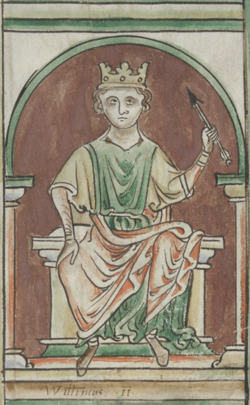
Born around 1084, David's early years were marked by political instability. During the power struggles of 1093–1097, he spent significant time in England. Following the death of William Rufus, David became a dependent at the court of Henry I, who was also his brother-in-law through the marriage of Henry to David's sister, Matilda.
This period was crucial in shaping David's worldview. He became a fully Normanised prince—meaning he adopted the culture, administration, and military styles of the Normans. The chronicler William of Malmesbury noted that David's time in England polished away the perceived "barbarity" of his Scottish origins, preparing him for a reign of systemic reform.
The Prince of the Cumbrians
Before ascending the throne, David held significant power in southern Scotland. His brother, King Edgar, had bequeathed him extensive territories south of the River Forth. By 1113, David formally claimed this inheritance, ruling as the Prince of the Cumbrians.
During this time, he also held the title of Earl of Huntingdon. His dual role as a Scottish prince and an English magnate allowed him to navigate the complex politics of the British Isles, maintaining the favor of Henry I even after the death of his sister in 1118.
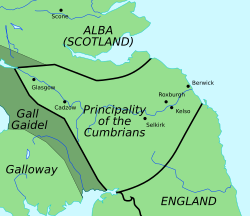
The Kingship of David I (1124–1153)
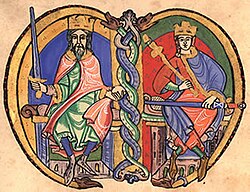
David was inaugurated at Scone in April or May 1124 following the death of his brother, Alexander I. His reign was characterized by a drive for territorial consolidation and the implementation of feudal structures.
Expanding the Realm
David worked tirelessly to bring the far north under royal control. In 1139, he appointed his five-year-old cousin, Harald Maddadsson, as Earl of Orkney and Caithness. By the 1140s, Caithness and Sutherland were firmly within the Scottish zone of control. To solidify this, he appointed Aindréas as the first Bishop of Caithness, based at Halkirk.
Conflict with England
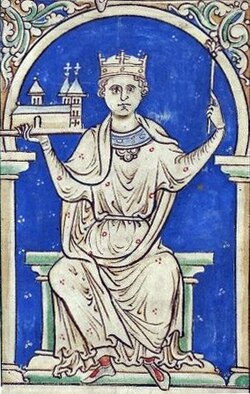
David's relationship with England shifted dramatically with the death of Henry I. David had sworn an oath to support the succession of Henry's daughter, Empress Matilda. When Stephen of Blois seized the throne instead, David used this "usurpation" as a casus belli (justification for war) to invade England.
This led to a series of military campaigns and treaties, including the Battle of the Standard and the Treaties of Durham. David sought to expand his influence into Northumberland, positioning himself as a powerful player in the English civil war known as the Anarchy.
The Davidian Revolution: Church and Economy
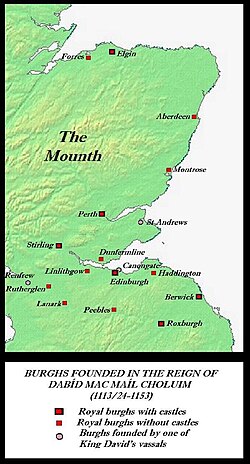
David's most lasting impact was the structural transformation of Scotland. He introduced burghs, which were chartered towns that encouraged trade and urban growth, creating the first true towns in Scotland.
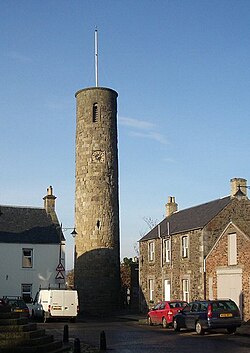
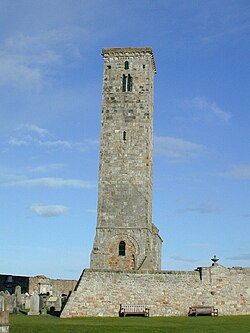
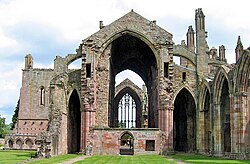
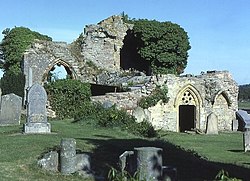
In the realm of faith, David was a prolific patron of the church. He moved Scotland away from pre-Davidian architecture—typified by round towers—toward the grander styles of the continent. He founded several great monasteries, most notably the Cistercian abbeys of Melrose and Kinloss.
Summary of David I's Reign
| Category | Details |
|---|---|
| Dates of Reign | 1124–1153 |
| Dynasty | House of Dunkeld |
| Key Territories | Scotland, Principality of the Cumbrians, Earldom of Huntingdon |
| Major Innovations | Burghs, Feudalism, Cistercian Monasteries |
| Successor | Malcolm IV (Grandson) |
Historical Perspectives
Modern historians have debated the extent of David's impact. Early 20th-century scholars emphasized the "Normanisation" of Scotland, viewing David as the primary agent of change. However, later historians like G.W.S. Barrow argued for a "Balance of New and Old," suggesting that Gaelic culture remained vibrant and healthy throughout David's reign.
Frequently Asked Questions
Who was David I's successor?
David I was succeeded by his grandson, Malcolm IV (Máel Coluim mac Eanric), who reigned for twelve years and was noted for his religious fervor.
What were the "burghs" established by David I?
Burghs were the first chartered towns in Scotland, designed to stimulate the economy through organized trade and commerce.
Why did David I go to war with King Stephen of England?
David had sworn an oath to uphold the succession of Empress Matilda. When Stephen seized the throne, David used this as a justification to invade England and attempt to secure the earldom of Northumberland.
What is the "Davidian Revolution"?
It is a term used by historians to describe the sweeping changes in government, economy, and church organization that David I introduced to Scotland, blending Norman feudalism with existing Scottish structures.
Where is David I buried?
King David I is buried at Dunfermline Abbey.