Cristina Fernández de Kirchner: A Legacy of Power and Controversy in Argentina
Cristina Fernández de Kirchner is one of the most influential and polarizing figures in modern Argentine history. A lawyer by training and a lifelong member of the Justicialist Party (the main Peronist party in Argentina), she has held nearly every major executive and legislative office in the country. From her early days in provincial politics to becoming the first woman elected President of Argentina, her career is marked by a commitment to social welfare, aggressive economic nationalism, and a series of high-profile legal battles.

Key Facts

- First Female President: Served as the 55th President of Argentina from 2007 to 2015.
- Executive Versatility: Has served as President, Vice President, and National Senator.
- Economic Shift: Led the renationalization of the oil company YPF.
- Legal Status: Convicted of corruption and currently under house arrest as of June 2025.
- Party Leadership: Currently serves as the President of the Justicialist Party.
Rise to Power and Early Political Career
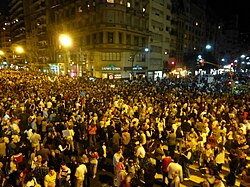
Born in La Plata, Buenos Aires, in 1953, Cristina Fernández de Kirchner began her political ascent in the province of Santa Cruz. Her early career saw her serve as a Provincial Deputy and later as a National Deputy and Senator. During this period, she was closely aligned with her husband, Néstor Kirchner, who served as the Intendant of Río Gallegos and later the Governor of Santa Cruz.
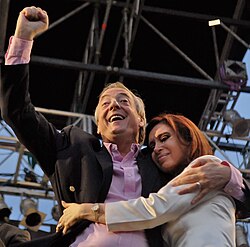
Her role expanded significantly when Néstor Kirchner became President of Argentina in 2003. Serving as First Lady, she maintained a high political profile, preparing the ground for her own presidential bid in 2007.
The Presidency (2007–2015)
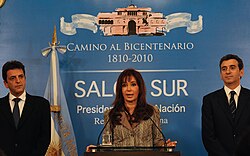
In 2007, Fernández de Kirchner made history by winning the presidency with 45.28% of the vote. She was re-elected in 2011 in a landslide victory, securing 54.11% of the ballots. Her administration was characterized by a strong state presence in the economy and a focus on human rights.
Economic and Energy Policy
Her tenure saw a shift toward economic nationalism. One of her most significant moves was the renationalization of YPF, the state oil company, to regain control over the country's energy resources. She also implemented strict dollar exchange controls and nationalized private pensions to fund government spending.
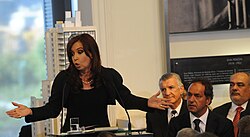
Social Conflict and Media Relations
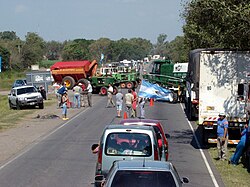
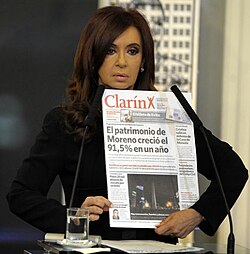
The presidency was not without turmoil. She faced significant opposition from the agricultural sector, leading to widespread road blockades and protests. Additionally, her relationship with the media—particularly the newspaper Clarín—became openly hostile, with the government often accusing the press of political bias.
Human Rights and Foreign Affairs
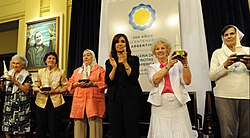
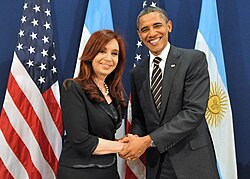
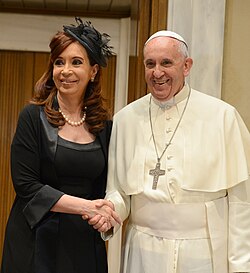
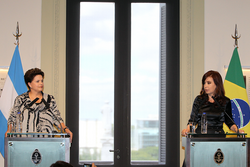
Fernández de Kirchner prioritized the pursuit of justice for crimes committed during Argentina's military dictatorship, maintaining close ties with the Mothers and Grandmothers of the Plaza de Mayo. Internationally, she fostered strong bonds with other Latin American leaders and maintained a complex relationship with the United States and the Vatican.
Post-Presidency and Return to Power
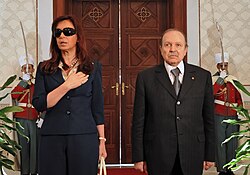
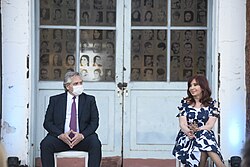
After leaving the presidency in 2015, she returned to the Senate in 2017. In 2019, she returned to the executive branch as the 37th Vice President of Argentina under President Alberto Fernández, serving until December 2023.
Legal Challenges and Convictions
The latter part of her career has been overshadowed by numerous legal investigations. These include probes into money laundering and corruption, such as the "Route of the K-Money" investigation. In December 2022, she was found guilty of corruption and sentenced to six years in prison.
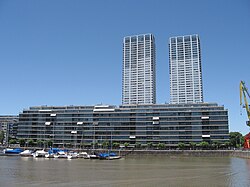
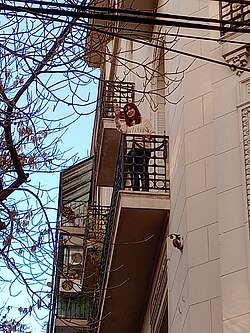
On June 17, 2025, she was apprehended and placed under house arrest in Buenos Aires, where she continues to engage with her supporters.
Summary of Political Offices
| Role | Period | Constituency/Context |
|---|---|---|
| President of Argentina | 2007–2015 | National |
| Vice President of Argentina | 2019–2023 | National |
| National Senator | Multiple terms (1995-2007, 2017-2019) | Santa Cruz / Buenos Aires |
| National Deputy | 1997–2001 | Santa Cruz |
| President of Justicialist Party | 2024–Present | Party Leadership |
Frequently Asked Questions

Was Cristina Fernández de Kirchner the first woman president of Argentina?
Yes, she became the first woman to be elected President of Argentina, serving two terms from 2007 to 2015.
What was the significance of the YPF renationalization?
The renationalization of YPF was a key part of her energy policy, aimed at bringing the country's primary oil and gas resources back under state control to ensure energy sovereignty.
Why is she currently under house arrest?
She was convicted of corruption and sentenced to six years in prison; she was apprehended on June 17, 2025, and placed under house arrest.
Which political party does she belong to?
She is a member of the Justicialist Party and has led various coalitions, including the Front for Victory and the Union for the Homeland.
What was her relationship with Néstor Kirchner?
Néstor Kirchner was her husband and the President of Argentina from 2003 to 2007. He preceded her in the presidency and served as "First Gentleman" during her first term.