Cowardice: Etymology, Social Stigma, and Military Law
Cowardice is a characteristic defined by excessive fear that prevents an individual from taking risks or facing danger. Positioned as the direct opposite of courage, it is often viewed as a failure of character when an individual is confronted with a challenge. Those who succumb to this state are referred to as cowards.
Because many historical and contemporary societies reward bravery, cowardice is frequently stigmatized or punished. It is often perceived as a character flaw that is detrimental to the collective well-being of society, leading to social repercussions for those unable to face their fears.
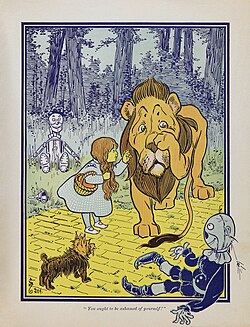
Key Facts
- Definition: A state where excessive fear overrides the ability to face danger or risk.
- Etymology: Derived from the Old French word coart, meaning "one with a tail."
- Military Law: Acts of cowardice, such as desertion, have historically been punishable by death.
- Legal Redress: The UK Armed Forces Act 2006 provided posthumous pardons to soldiers executed for cowardice in WWI.
- Historical Debate: S.L.A. Marshall's claim that 75% of WWII US troops didn't fire at the enemy has been widely challenged.
The Etymology of "Coward"
The English word "coward" has its roots in the Old French word coart (modern French couard). This term was a combination of the word for "tail" (Latin cauda, modern French queue) and an agent noun suffix. Literally meaning "one with a tail," the term likely evokes the image of an animal fleeing in fear or a dog tucking its tail between its legs.
This terminology entered the English language via the French-speaking Normans following the Norman conquest of England in 1066. It is important to note a linguistic distinction: the English surname Coward (such as that of Noël Coward) shares a different origin, stemming from the word "cowherd."
Cowardice and Military Law
Military legal systems have long treated acts of cowardice as severe offenses. These typically include surrendering to the enemy against orders or desertion (the unauthorized abandonment of duty). Punishments for these crimes have historically ranged from corporal punishment to execution.
Combat Law in the United States
Under United States military codes of justice, cowardice in combat is defined as a crime that can be punishable by death. However, historical application has varied. During World War II, Eddie Slovik was the only US soldier executed for desertion.
World War I and Posthumous Pardons
During World War I, cowardice was frequently punishable by execution via firing squad. In the United Kingdom, soldiers executed under these circumstances were often excluded from war memorials, and their families were denied benefits and faced significant social stigma. This changed with the UK Armed Forces Act 2006, which granted posthumous pardons to these soldiers, who are now commemorated at the Shot at Dawn Memorial.
While British, Canadian, French, German, and Russian forces utilized executions, the U.S. military generally did not follow through with executions for cowardice during this period, and German commanders were similarly less inclined to use execution as a primary punishment.
The Controversy of Combat Psychology
Military historian S.L.A. Marshall sparked significant debate by claiming that 75% of U.S. combat troops in World War II never fired their weapons at the enemy for the purpose of killing, even when under direct threat. This theory was further explored by author Dave Grossman in his book On Killing: The Psychological Cost of Learning to Kill in War and Society.
However, Marshall's findings have been heavily criticized. Later researchers challenged his data as mistaken or fabricated, and a more rigorous study of Canadian troops from World War II failed to replicate his results.
| Country/Force | WWI Approach | Notable Legal/Historical Outcome |
|---|---|---|
| United Kingdom | Execution by firing squad | Posthumous pardons via Armed Forces Act 2006 |
| United States | Tried for cowardice | Rarely executed (e.g., Eddie Slovik in WWII) |
| Germany | Less inclined to execute | Lower frequency of execution as punishment |
| Canada/France/Russia | Utilized executions | Varying levels of historical review |
Frequently Asked Questions
What is the linguistic origin of the word coward?
The word comes from the Old French coart, meaning "one with a tail," referring to the way animals tuck their tails when afraid. It was introduced to English by the Normans after 1066.
How does the surname Coward differ from the trait of cowardice?
While the trait refers to a lack of courage, the surname Coward originates from the word "cowherd," referring to someone who tends cattle.
What are common examples of cowardice in military law?
Military law typically defines cowardice through specific acts, such as deserting one's post in the face of the enemy or surrendering against direct orders.
Were all soldiers executed for cowardice in WWI pardoned?
In the United Kingdom, soldiers executed for cowardice during WWI received posthumous pardons under the UK Armed Forces Act 2006.
Is the claim that most WWII soldiers didn't fire their weapons true?
This claim, made by S.L.A. Marshall, is highly controversial and has been challenged by other historians and researchers who found the data to be fabricated or unreplicable.