Commercial Aviation: Evolution, Operations, and Global Impact
Commercial aviation is the sector of civil aviation dedicated to operating aircraft for hire or remuneration. Unlike private aviation, which is conducted for personal use, commercial aviation encompasses a wide range of activities designed to generate revenue, from transporting millions of passengers across oceans to providing specialized technical services from the air.
While the term is widely used, commercial aviation is not a rigidly defined category. It serves as an umbrella for several distinct types of operations, including commercial air transport, aerial work, and specific segments of general aviation.
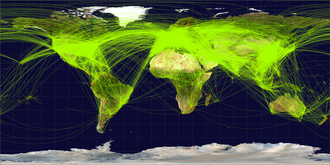
Defining Commercial Aviation
To understand the industry, it is essential to distinguish between the different types of flight operations based on their purpose and the nature of the service provided.
Commercial Air Transport
This refers to the transportation of passengers, mail, or goods for payment. This category includes both scheduled services (regular flights with fixed timetables) and unscheduled operations (charters or on-demand flights).
Aerial Work
Aerial work involves using aircraft for specialized professional services. Examples include agricultural spraying, construction support, aerial photography, surveying, search and rescue, and advertising.
General Aviation
General aviation is a broad category that includes both non-commercial activities, such as recreational flying, and commercial activities, such as flight instruction and corporate business aviation.
Licensing and Regulations
The distinction between a commercial and private flight is determined by the purpose of the flight, not the type of aircraft or the license held by the pilot. For instance, a commercially licensed pilot flying to visit a friend is conducting a private flight.
Because of the safety risks associated with transporting the public, strict licensing requirements are in place:
- Commercial Pilot Licence (CPL): The minimum requirement for most commercial activities.
- Airline Transport Pilot Licence (ATPL): Required for high-level command. In the US, the pilot in command of a scheduled air carrier must hold an ATPL. In the UK, an ATPL is required to command aircraft with nine or more passenger seats.
There are exceptions; for example, in the UK and European Union Aviation Safety Agency (EASA) states, some flight instructors can be paid while holding only a private pilot licence, though the instruction itself is still legally classified as a commercial operation.
The History of Commercial Flight
Modern aviation technology emerged during World War I, but the period between the world wars saw the birth of the first commercial flights, led primarily by Britain, France, the United States, and the Soviet Union.
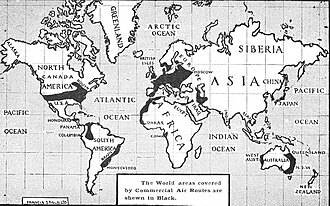
Developments in Europe
Britain was a pioneer in the field, establishing five airlines between 1916 and 1922. Aircraft Transport and Travel (AT&T) operated the world's first regular scheduled international passenger flight in 1919. Britain also produced the de Havilland DH.106 Comet, the first commercial jet airliner. Despite early technical failures and crashes, the Comet 4 eventually established the iconic London–New York City "jet set" route in 1958.
In France, the Société Générale des Transports Aériens (SGTA), founded in 1919 as Lignes Aériennes Farman, led early efforts, with the government providing subsidies to grow the industry during the 1920s.
Growth in North America
In the United States, the Air Commerce Act of 1926 began the process of regularizing the industry by setting standards and promoting airport development. The 1927 trans-Atlantic flight by Charles Lindbergh sparked a massive surge in public interest, leading to the growth of regional airlines that eventually merged into giants like Pan Am, TWA, American Airlines, and Eastern Airlines.
Following World War II, the industry expanded rapidly by adapting military technology. Heavy bombers like the Boeing B-29 and Avro Lancaster informed the design of heavy commercial aircraft, while the Douglas DC-3 made long-distance travel more accessible. By October 1958, Pan Am launched the first scheduled Boeing 707 flight from New York City to Paris.
Aviation in Latin America
Brazil and Argentina were early adopters of aircraft assembly in the 1910s. While some nations attempted to leapfrog propeller technology in favor of jets, the high cost of sophisticated technology—exemplified by the US F-80 jet fighter in 1945—hindered local development. To improve coordination, the Latin American Civil Aviation Commission (LACAC) was formed in 1973. The region's profitability has historically been tied to passenger load factors and airline pooling agreements.
Business Aviation Models
Business aviation offers alternatives to scheduled commercial travel, catering to corporations and high-net-worth individuals through various ownership and rental models.
| Model | Ownership/Access | Key Characteristics |
|---|---|---|
| Private Ownership | Full ownership by individual/corp | Owner manages maintenance and employs crew. |
| Charter Flights | Rental for specific trips | High flexibility; no long-term commitment. |
| Fractional Ownership | Shared ownership of a fleet | Initial acquisition cost plus monthly fees. |
| Jet Card Programs | Prepaid flight hours | Fixed hourly rates and guaranteed availability. |
Environmental and Health Considerations
Social and Environmental Impact
Aviation is a significant contributor to global pollution, accounting for approximately 2.4% of global CO2 emissions in 2018. While many airlines have adopted Environmental, Social, and Governance (ESG) frameworks, progress is uneven; for example, Air New Zealand cancelled its emissions reduction targets in 2024. Additionally, most jurisdictions do not tax fuel used for commercial aircraft.
Radiation Exposure
Due to the thinner atmosphere at high altitudes, airline pilots are exposed to higher levels of ionizing radiation (radiation that carries enough energy to detach electrons from atoms). Pilots are the fourth most exposed employee group, receiving an average annual effective dose of 3 millisieverts (mSv). This is well within the safe limit of 20 mSv per year, though exposure is notably higher in polar regions than in equatorial zones.
Key Facts
- Commercial Aviation includes commercial air transport (people/goods) and aerial work (specialized services).
- The purpose of the flight, not the pilot's license, determines if a flight is commercial or private.
- The de Havilland Comet was the first commercial jet airliner.
- ATPL (Airline Transport Pilot Licence) is required for commanding large commercial aircraft in the UK and US.
- Aviation contributed roughly 2.4% of global CO2 emissions in 2018.
- Airline pilots receive an average annual radiation dose of 3 mSv.
Frequently Asked Questions
What is the difference between commercial air transport and aerial work?
Commercial air transport involves moving passengers, mail, or cargo for payment, whereas aerial work refers to specialized services such as crop dusting, surveying, or search and rescue operations.
Does a pilot need a commercial license to fly a commercial aircraft?
Not necessarily; the classification depends on the purpose of the flight. However, to be paid for operating a flight or to act as a pilot in command for scheduled carriers, a Commercial Pilot Licence (CPL) or an Airline Transport Pilot Licence (ATPL) is typically required.
What is fractional ownership in business aviation?
Fractional ownership is a model where an individual or company buys a share of an aircraft, giving them access to a managed fleet rather than owning a single plane entirely.
Is the radiation exposure for pilots dangerous?
While pilots receive more ionizing radiation than the average person (3 mSv annually), this is well below the recommended safety limit of 20 mSv per year and is considered safe.
How did military technology influence commercial aviation?
After World War II, the design of heavy bombers, such as the Boeing B-29, provided the technical foundation for creating large, long-range commercial airliners.