The Bellanca Airbus and Aircruiser: The Versatile Workhorses of the Golden Age
In the early era of aviation, few aircraft embodied the concept of a "workhorse" quite like the designs from the Bellanca Aircraft Corporation. Developed by the renowned designer Giuseppe Mario Bellanca, the Airbus and Aircruiser series were high-wing, single-engine aircraft engineered for maximum utility. Whether serving as commercial passenger transports or rugged military cargo carriers, these aircraft were designed to adapt to almost any environment, utilizing wheels, floats, or skis to conquer diverse terrains.
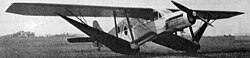
Design Evolution and Early Milestones
The lineage of these aircraft began in 1930 with the P-100 Airbus. This initial model proved the efficiency of Bellanca's design; in 1931, test pilot George Haldeman flew the P-100 a staggering 4,400 miles in just 35 hours. While the flight demonstrated an impressive cost-efficiency of just eight cents per mile, the P-100 struggled commercially due to its water-cooled engine.
To address this, Bellanca developed the P-200 Airbus, which utilized more reliable air-cooled engines. This model saw diverse applications, including a floatplane version (P-200-A) that operated a ferry service between New York City's Wall Street and the East River, and a "Deluxe" version featuring custom interiors for nine passengers. As the series progressed, the P-300 expanded capacity to 15 passengers, setting the stage for the ultimate evolution of the design.
The Rise of the Aircruiser
The final and most advanced iteration was the Aircruiser. This aircraft was widely considered one of the most efficient designs of its era. By utilizing a Wright Cyclone—a type of radial engine where cylinders are arranged in a circle around the crankcase—specifically a supercharged version rated at 715 hp, the Aircruiser achieved remarkable performance. It was capable of carrying a 4,000 lb payload at speeds between 145 and 155 mph, outperforming many multi-engine competitors like the Fokker or Ford Trimotor.
Operational History and the "Flying Ws"
Despite its technical superiority, the Aircruiser faced regulatory hurdles in the United States. In 1934, new federal regulations prohibited single-engine aircraft from serving as commercial transports on U.S. airlines, which significantly limited its market in the States. However, the aircraft found a second life in Canada.
In the Canadian North, the Aircruiser became a legend. Often nicknamed "The Flying Ws," these aircraft were essential to northern mining operations. They ferried ore, vital supplies, and passengers into remote regions, remaining in active service well into the 1970s.
Key Facts
- Manufacturer: Bellanca Aircraft Corporation (New Castle, Delaware).
- Primary Purpose: Passenger and cargo transport.
- Engine Types: Primarily powered by Wright Cyclone or Pratt & Whitney Hornet engines.
- Versatility: Could be equipped with wheels, floats, or skis.
- Canadian Legacy: Known as "The Flying Ws" for their work in northern mining.
- Total Built: 23 aircraft in the series.
Technical Specifications: Aircruiser 66-70
The following table provides a detailed look at the specifications for the 66-70 Aircruiser model, a version frequently exported to Canada.
| Feature | Detail |
|---|---|
| Crew | 1 pilot |
| Passenger Capacity | Up to 16 passengers |
| Engine | Wright R-1820 Cyclone (710 hp) |
| Wingspan | 65 ft 0 in (19.82 m) |
| Length | 43 ft 4 in (13.21 m) |
| Empty Weight | 6,072 lb (2,754 kg) |
| Gross Weight | 10,000 lb (4,536 kg) |
| Maximum Speed | 165 mph (266 km/h) |
| Range | 700 mi (1,130 km) |
| Service Ceiling | 22,000 ft (6,700 m) |
Aircraft Variants
The Airbus Series
- P-100: A 14-passenger monoplane with a 600 hp Curtiss Conqueror engine.
- P-200: A 12-passenger model; nine were built.
- P-300: A 15-seater powered by a Wright R-1820 Cyclone.
- C-27 Series: Military designations including the Y1C-27, C-27A, C-27B, and C-27C, primarily utilizing Pratt & Whitney or Wright engines.
The Aircruiser Series
The Aircruiser underwent several structural and engine improvements, identified by various model numbers:
- 66-67: Improved structure with a 675 hp Wright SR-1820 Cyclone.
- 66-70: 710 hp engine; five units built and exported to Canada.
- 66-75: 730 hp Wright Cyclone.
- 66-76: A dedicated cargo version with a 760 hp engine.
- 66-80: The most powerful variant, featuring an 850 hp Wright Cyclone.
Frequently Asked Questions
Why did the Airbus struggle to sell initially?
The first model, the P-100, utilized a water-cooled engine, which was less desirable for the market at that time compared to the more reliable air-cooled engines used in later models.
What does the nickname "The Flying Ws" mean?
This was a common nickname used in Canada for the Bellanca Aircruisers that were used extensively in northern mining and transport operations.
How did the Aircruiser compare to other aircraft of its time?
The Aircruiser was exceptionally efficient. Its ability to carry heavy payloads at high speeds allowed it to outperform multi-engine aircraft like the Fokker and Ford Trimotor.
Are there any Bellanca aircraft still in existence?
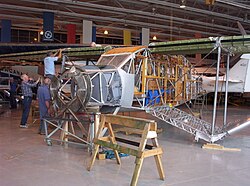
Yes. The 1938 Aircruiser "CF-BTW" is on display at the Erickson Aircraft Collection in Oregon, and the 1935 "Eldorado Radium Silver Express" (CF-AWR) is currently under restoration at the Western Canada Aviation Museum in Winnipeg.