Alexander III: The Reign and Tragic End of a Scottish King
Alexander III, known in Scottish Gaelic as Alaxandair mac Alaxandair, ruled the Kingdom of Alba (Scotland) from 1249 to 1286. His reign is often remembered as a period of significant territorial gain and relative stability, though it ended in a sudden tragedy that plunged the nation into a succession crisis and eventual war.
Born on September 4, 1241, at Roxburgh Castle to King Alexander II and Marie de Coucy, Alexander ascended to the throne at the tender age of seven. His inauguration took place at Scone on July 13, 1249, where he was greeted by the ollamh rígh (royal poet) with the proclamation "Benach De Re Albanne," meaning "God Bless the King of Scotland."
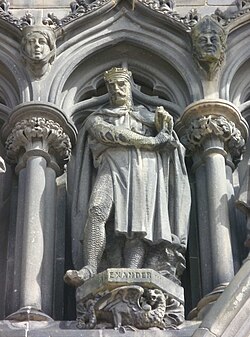
Key Facts
- Reign: July 6, 1249 – March 19, 1286.
- Major Achievement: Secured sovereignty over the Western Isles and the Isle of Man via the Treaty of Perth (1266).
- Dynasty: House of Dunkeld.
- Cause of Death: A fatal fall from his horse during a storm in Fife.
- Succession: His death left no direct male heir, leading to the brief claim of Margaret, Maid of Norway.
Early Reign and Political Struggles
Because Alexander became king as a child, his early years were marked by a power struggle between two rival political factions. One was led by Walter Comyn, Earl of Menteith, and the other by Alan Durward, the Justiciar of Scotia. While Comyn initially dominated, the balance of power shifted following an interview between the Scottish and English kings at Kelso in 1255.
International tensions also surfaced early. In 1251, Alexander married Margaret of England, daughter of King Henry III. Henry attempted to use this marriage to demand homage for the Scottish kingdom, but Alexander refused to comply, asserting Scotland's independence.
Expanding the Kingdom: The Conflict with Norway
Upon reaching his majority at age 21 in 1262, Alexander sought to reclaim the Western Isles. This ambition led to a confrontation with King Haakon IV of Norway. After Haakon rejected Scotland's claims, he launched a formidable invasion in 1263.
The conflict culminated in the Battle of Largs on October 2, 1263. Although the battle itself was indecisive, autumn storms devastated the Norwegian fleet, leaving Haakon's position untenable. Haakon died in Orkney shortly after in December 1263.
The resolution came in 1266 through the Treaty of Perth. Under this agreement, Norway ceded the Isle of Man and the Western Isles to Scotland in exchange for monetary payments. Norway retained control of Orkney and Shetland until 1469.
Family and the Succession Crisis
Alexander's personal life was marked by both familial loss and political necessity. His first marriage to Margaret of England produced three children: Margaret, Alexander, and David. Tragically, all three died young, leaving the King without a direct heir.
In 1284, the Estates recognized his granddaughter, Margaret, the Maid of Norway, as the heir presumptive. In a final attempt to secure a male successor, Alexander married Yolande de Dreux on November 1, 1285.
| Detail | Information |
|---|---|
| Born | September 4, 1241 (Roxburgh Castle) |
| Died | March 19, 1286 (Kinghorn Ness) |
| Spouses | Margaret of England (m. 1251), Yolande de Dreux (m. 1285) |
| Key Treaty | Treaty of Perth (1266) |
| Burial Site | Dunfermline Abbey |
The Fatal Ride at Kinghorn
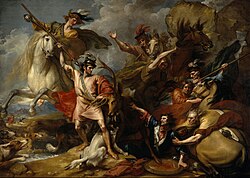
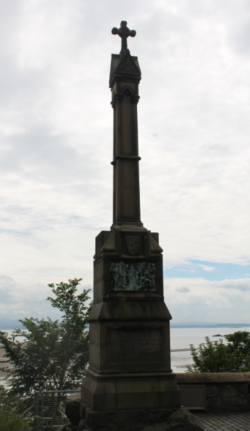
The end of Alexander's reign came abruptly on the night of March 19, 1286. After celebrating his second marriage at Edinburgh Castle, the King insisted on riding to Kinghorn in Fife to visit Queen Yolande for her birthday. Despite severe weather and repeated warnings from his retinue and a local burgess named Alexander Le Saucier, the King pressed on through the storm.
During the journey, Alexander became separated from his party. He was discovered the following morning dead with a broken neck near the shore. It is believed his horse lost its footing on a steep rocky embankment in the darkness.
His death left Scotland in a precarious position. His unborn child by Queen Yolande was lost, and the three-year-old Margaret, Maid of Norway, died in 1290 before she could be crowned. This vacuum of power eventually led to the appointment of John Balliol and a period of instability that paved the way for war with England.
Legends and Cultural Legacy
Over time, Alexander's death and reign have entered the realm of legend. Chroniclers like Raphael Holinshed and Walter Bower recorded omens of death, such as a skeletal figure appearing during a dance at his wedding to Yolande de Dreux.
Modern historical fiction has also explored his life, ranging from the Norse invasions in The Thirsty Sword to crime mysteries in The Crown in Darkness, which speculates on the possibility of murder by agents of Edward I of England, though such claims are not supported by historical records.
Frequently Asked Questions
How did Alexander III acquire the Western Isles?
He acquired them through the Treaty of Perth in 1266, following a period of conflict with Norway and the indecisive Battle of Largs in 1263.
Who was the Maid of Norway?
Margaret, the Maid of Norway, was the daughter of Alexander's eldest daughter and the granddaughter of Alexander III. She was his heir presumptive but died in 1290 before she could be crowned.
What caused the death of Alexander III?
He died from a broken neck after falling from his horse during a storm while traveling to Kinghorn in Fife on March 19, 1286.
Where is Alexander III buried?
King Alexander III was buried in Dunfermline Abbey on March 29, 1286.
Did Alexander III ever submit to the English King?
No. Despite pressure from King Henry III of England during their marriage alliance in 1251, Alexander did not comply with demands to pay homage for the Scottish kingdom.