aerodynamic liftairfoil physicsBernoulli's principleNewton's third lawangle of attack

Aerodynamic Lift: The Physics of How Wings Generate Force

Aerodynamic Lift: The Physics of How Wings Generate Force When a fluid—such as air or water—flows around an object, it exerts a force upon that object. In the context of aviation, this fo...

Aerodynamic Lift: The Physics of How Wings Generate Force

When a fluid—such as air or water—flows around an object, it exerts a force upon that object. In the context of aviation, this force is known as aerodynamic lift. Lift is specifically defined as the component of the total aerodynamic force that acts perpendicular to the direction of the oncoming flow. While we typically think of lift as an upward force that counters gravity, it can technically act in any direction perpendicular to the flow.

To understand the mechanics of flight, one must distinguish between different types of fluid forces. When the fluid is air, we refer to it as aerodynamic force; when the fluid is a liquid, it is a hydrodynamic force. Furthermore, lift is categorized by its mechanism: dynamic lift involves movement through a fluid, whereas aerostatic lift (or buoyancy) relies on density differences between an internal fluid and its surroundings, as seen in balloons and submarines. There is also planing lift, utilized by watercraft like surfboards and motorboats when only part of the body is immersed.
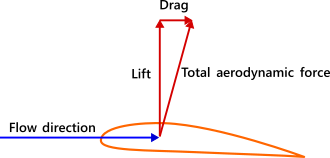
Lift is defined as the component of the aerodynamic force that is perpendicular to the flow direction, and drag is the component that is parallel to the flow direction.
: Lift is defined as the component of the aerodynamic force that is perpendicular to the flow direction, and drag is the component that is parallel to the flow direction.

Key Facts

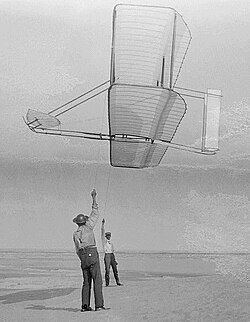
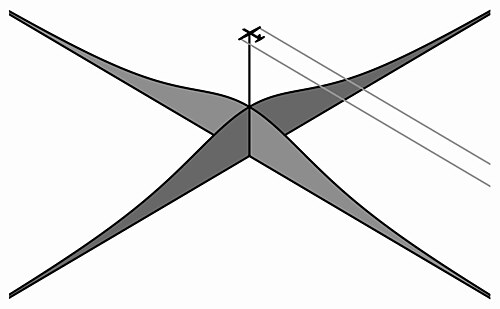
The 1902 Wright Glider shows its lift by pulling up.
  • Lift is the force component perpendicular to the oncoming flow.
  • Drag is the force component parallel to the flow direction.
  • Dynamic lift requires the movement of the object through a fluid.
  • Aerostatic lift (buoyancy) does not require movement.
  • Lift is generated through a combination of pressure differences and flow deflection.

The Mechanics of an Airfoil
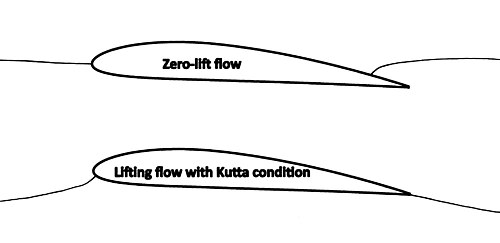
Comparison of a non-lifting flow pattern around an airfoil; and a lifting flow pattern consistent with the Kutta condition in which the flow leaves the trailing edge smoothly

The shape of a wing, known as an airfoil, is critical to its ability to generate lift. An airfoil is a cross-sectional shape designed to manipulate airflow efficiently.
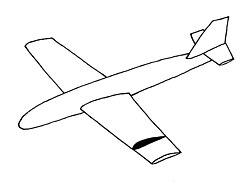
A cross-section of a wing defines an airfoil shape.
: A cross-section of a wing defines an airfoil shape.

Airfoil Geometry and Attributes

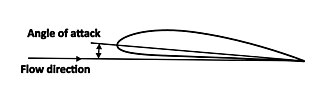
Several physical attributes influence how an airfoil performs. The angle of attack—the angle between the chord line of the wing and the oncoming flow—is a primary factor in lift production. Additionally, the camber, or the curvature of the airfoil, plays a significant role. A cambered airfoil has a different curvature on its upper and lower surfaces, whereas a symmetrical airfoil has identical profiles on both sides.
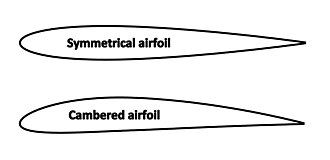
An airfoil with camber compared to a symmetrical airfoil
: An airfoil with camber compared to a symmetrical airfoil
Angle of attack of an airfoil
: Angle of attack of an airfoil

Pressure and Velocity: The Bernoulli Connection

One common way to describe lift is through Bernoulli's principle, which relates the speed of a fluid to its pressure. As air moves over the curved upper surface of an airfoil, it accelerates. This increase in velocity results in a decrease in pressure. The resulting pressure differential between the upper and lower surfaces creates the upward force we call lift.
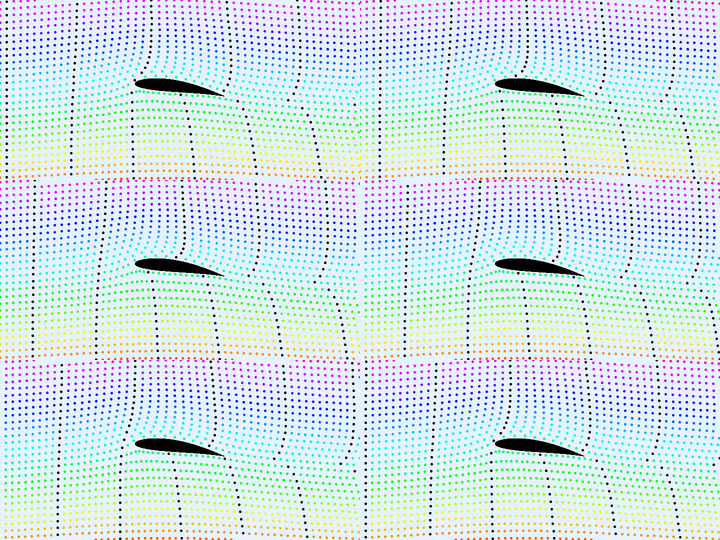
Flow around an airfoil: the dots move with the flow. The black dots are on time slices, which split into two – an upper and lower part – at the leading edge. A marked speed difference between the upper-and lower-surface streamlines is shown most clearly in the image animation, with the upper markers arriving at the trailing edge long before the lower ones. Colors of the dots indicate streamlines.
: Flow around an airfoil: the dots move with the flow. The black dots are on time slices, which split into two – an upper and lower part – at the leading edge. A marked speed difference between the upper-and lower-surface streamlines is shown most clearly in the image animation, with the upper markers arriving at the trailing edge long before the lower ones. Colors of the dots indicate streamlines.
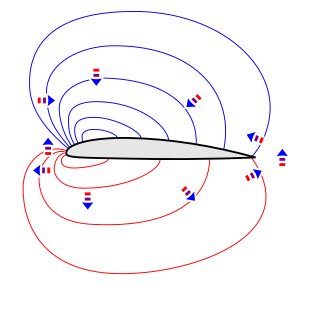
Pressure field around an airfoil. The lines are isobars of equal pressure along their length. The arrows show the pressure differential from high (red) to low (blue) and hence also the net force which causes the air to accelerate in that direction.
: Pressure field around an airfoil. The lines are isobars of equal pressure along their length. The arrows show the pressure differential from high (red) to low (blue) and hence also the net force which causes the air to accelerate in that direction.

It is important to avoid the equal transit-time fallacy. This incorrect theory suggests that air parcels must meet at the trailing edge, forcing the air on the longer upper path to move faster. In reality, the air on the upper surface actually arrives at the trailing edge much sooner than the air on the bottom.

An illustration of the incorrect equal transit-time explanation of aerofoil lift. [6]
: An illustration of the incorrect equal transit-time explanation of aerofoil lift. [6]

Flow Deflection and Newton's Laws

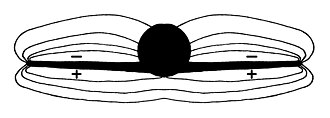
Cross-section of an airplane wing-body combination showing the isobars of the three-dimensional lifting flow

A more comprehensive view integrates Newton's third law of motion. For a wing to generate upward lift, it must exert a downward force on the air, deflecting the airflow downward. According to Newton, for every action, there is an equal and opposite reaction; therefore, the air exerts an equal upward force on the wing.
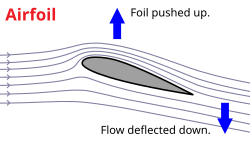
When a wing generates lift, it deflects air downward, and to do this it must exert a downward force on the air. Newton's third law requires that the air must exert an equal upward force on the wing.
: When a wing generates lift, it deflects air downward, and to do this it must exert a downward force on the air. Newton's third law requires that the air must exert an equal upward force on the wing.

Streamlines and Circulation

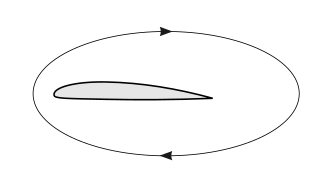
The movement of air around an airfoil can be visualized using streamlines. In a lifting flow, the streamlines are compressed above the airfoil and expanded below it. This movement is often described mathematically using the concept of circulation, which helps quantify the flow patterns around the wing.
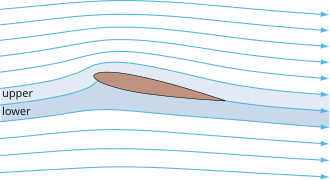
Streamlines and streamtubes around an airfoil generating lift. The flow is two-dimensional and the airfoil has infinite span. Note the narrower streamtubes above and the wider streamtubes below.
: Streamlines and streamtubes around an airfoil generating lift. The flow is two-dimensional and the airfoil has infinite span. Note the narrower streamtubes above and the wider streamtubes below.
Circulation component of the flow around an airfoil
: Circulation component of the flow around an airfoil

Limitations and Flight Phenomena

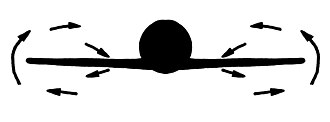
Cross-section of an airplane wing-body combination showing velocity vectors of the three-dimensional lifting flow

Lift is not infinite. As the angle of attack increases, the air may eventually struggle to follow the curvature of the wing. This leads to flow separation, where the airflow detaches from the surface, causing a sudden loss of lift known as stalling.
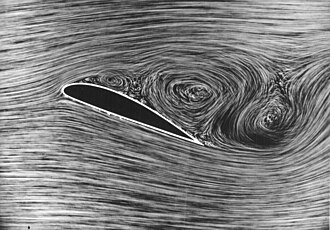
Airflow separating from a wing at a high angle of attack
: Airflow separating from a wing at a high angle of attack

Three-Dimensional Effects

In real-world applications, wings are not infinite. The tips of a wing create wingtip vortices, which are swirling patterns of air that influence the overall lift distribution and create induced drag. This creates a complex horseshoe vortex system that affects the air far behind the aircraft.
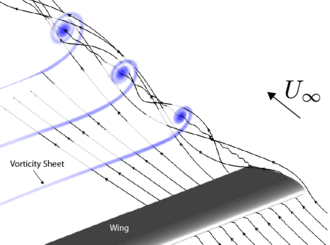
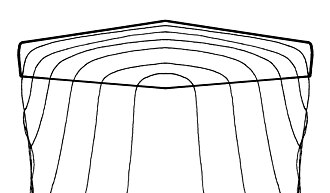
Euler computation of a tip vortex rolling up from the trailed vorticity sheet
: Euler computation of a tip vortex rolling up from the trailed vorticity sheet
Planview of a wing showing the horseshoe vortex system
: Planview of a wing showing the horseshoe vortex system

Summary of Aerodynamic Concepts

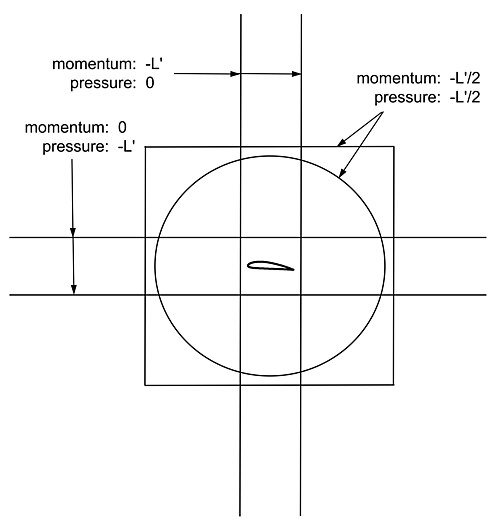
Control volumes of different shapes that have been used in analyzing the momentum balance in the 2D flow around a lifting airfoil. The airfoil is assumed to exert a downward force −L' per unit span on the air, and the proportions in which that force is manifested as momentum fluxes and pressure differences at the outer boundary are indicated for each different shape of control volume.
Comparison of Lift Mechanisms and Concepts
Concept Description Key Driver
Dynamic Lift Lift generated by movement through a fluid Airspeed and airfoil shape
Aerostatic Lift Lift based on density differences Buoyancy
Bernoulli Effect Pressure drop due to increased velocity Flow speed changes
Newtonian Reaction Upward force from downward air deflection Momentum transfer

Frequently Asked Questions

Illustration of the distribution of higher-than-ambient pressure on the ground under an airplane in subsonic flight

What is the difference between lift and drag?

Lift is the component of aerodynamic force acting perpendicular to the oncoming flow, whereas drag is the component acting parallel to the flow.

Why does a wing stall?

A stall occurs when the angle of attack becomes too high, causing the airflow to separate from the upper surface of the wing, which results in a significant loss of lift.

Is lift caused by Bernoulli's principle or Newton's laws?

Both are correct and describe the same physical phenomenon from different perspectives: Bernoulli's principle focuses on the pressure differences, while Newton's laws focus on the momentum change and flow deflection.

What is an airfoil?

An airfoil is the specific cross-sectional shape of a wing or blade designed to produce lift when moving through a fluid.

How does the angle of attack affect lift?

Increasing the angle of attack generally increases lift up to a certain point, after which the airflow may separate and cause a stall.

References

  1. "What is Lift?". Glenn Research Center | NASA. NASA Glenn Research Center. Archived from the original on February 9, 2023. Retrieved February 9, 2023.
  2. Kulfan (2010)
  3. Clancy, L. J., Aerodynamics, Section 14.6
  4. Doug McLean Aerodynamic Lift, Part 2: A comprehensive Physical Explanation The Physics teacher, November, 2018
  5. Doug McLean Aerodynamic Lift, Part 1: The Science The Physics teacher, November, 2018