1860 Civil Conflict in Mount Lebanon and Damascus
The 1860 civil conflict in Mount Lebanon and Damascus, often referred to as the 1860 Christian–Druze war, was a period of intense sectarian violence during the Ottoman era. Spanning from May to July 1860, the conflict primarily pitted local Druze forces against Maronite Christians, eventually escalating into widespread massacres that drew the attention and military intervention of European powers.
Historically, different religious communities in regions like the Chouf area of Mount Lebanon had lived in harmony, but shifting political structures and social tensions eventually led to a breakdown of order.
![Christian Church and Druze Khalwa in the Chouf area of Mount Lebanon. Historically, the Druze and the Christians in the Chouf lived in harmony.[5]](/images/28/db/28db1f5d4cae6cba7a7d31090bfcac70e59e02ce266f01bfe699762fe9b1fe47.jpg)
Key Facts
- Timeline: May 23 to July 11, 1860.
- Primary Locations: Mount Lebanon, Beqaa Valley, Galilee, and Damascus.
- Casualties: Approximately 12,000 killed in Mount Lebanon, including 10,000 Christians.
- Major Belligerents: Maronites and their allies versus Druze clans and various irregular forces.
- Outcome: Initial Druze military victory followed by a French-led military intervention.
Political Background: The Double Qaimaqamate
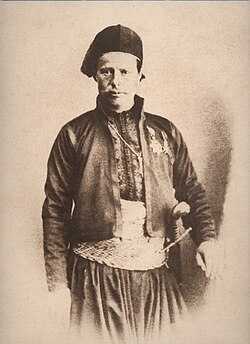
The roots of the conflict lay in the administrative changes imposed by the Ottoman Sultan. In 1842, after deposing Bashir III, the Sultan adopted a proposal from European powers to partition Mount Lebanon into two sections. This arrangement, known as the Double Qaimaqamate, divided the region into a northern district governed by a Christian deputy and a southern district governed by a Druze deputy.
Both deputies reported to the governor of Sidon in Beirut, with the Beirut-Damascus highway serving as the boundary. While intended to balance power, this division often exacerbated sectarian identities.
The Path to War
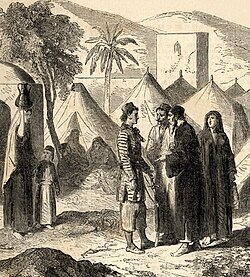
Tensions peaked in August 1859 following a brawl between Druze and Maronites in the Metn area. This local dispute escalated when Maronite Bishop Tobia Aoun mobilized a central committee in Beirut to intervene. Simultaneously, Druze fighters under Yusuf Abd al-Malik intervened in clashes near the village of Beit Mery, resulting in 20 deaths.
As the Druze lords prepared for war—allegedly with the support of Ottoman authorities—Bishop Aoun oversaw the distribution of weapons to Maronite peasants. This period was marked by a paradox: Christians felt confident in their numerical superiority but remained anxious about the hostile mood toward Muslims and Christians in the broader Syrian region.
The Outbreak of Violence in Mount Lebanon
The Battles of Metn and Zahle
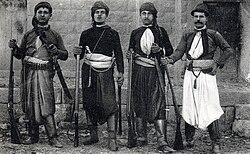
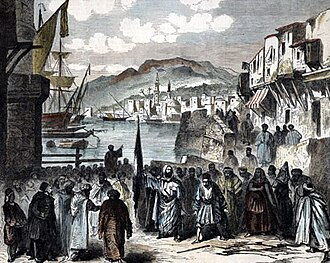
On May 30, Maronite militiamen attempted to assault Beit Mery but were countered by nearly 2,000 Druze fighters from the Talhuq and Abu Nakad clans. By May 31, the Maronite forces were routed, leading to Druze control of the Metn district. This victory was followed by the burning of 35 to 40 Maronite-majority villages and the deaths of roughly 600 Maronites.
Simultaneously, fighting erupted near Zahle. After a series of clashes at Dahr al-Baidar and Ain Dara, a major battle took place where 3,000 Christian fighters from Zahle faced Druze forces. Despite suffering higher casualties, the Druze eventually forced the Christians to retreat into the town of Zahle.
The Siege of Deir al-Qamar
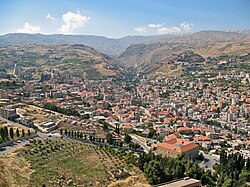
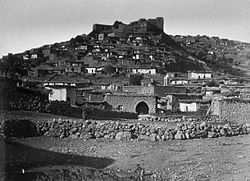
In early June, Druze forces under Bashir Nakad, supported by the Imad and Jumblatt clans, besieged Deir al-Qamar. Despite stiff initial resistance, the town surrendered on June 3 due to internal divisions and starvation. The subsequent plunder left the town in ruins, with 130 houses destroyed and between 1,200 and 2,200 Christians killed. By October, the population had plummeted from 10,000 to just 400.
Massacres in Wadi al-Taym and Rashaya
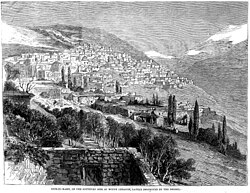
In the Wadi al-Taym valley, the Christian community of Hasbaya was encouraged by Uthman Bey to surrender their weapons and take refuge in the government house. This proved fatal; after the Druze defeated local Christian forces on June 4, they stormed the government house, massacring approximately 1,000 Christian males.
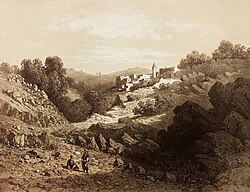
The violence spread to Rashaya on June 11, where a 5,000-strong Druze force, including troops under Isma'il al-Atrash, attacked the town and neighboring villages. The combined death toll from the Hasbaya and Rashaya massacres reached roughly 1,800.
The Fall of Zahle and the Damascus Massacre
By June 18, Druze forces and Sardiyya Bedouin cavalry stormed Zahle. The town was emptied of its inhabitants as residents fled to Metn and Keserwan. While the Druze had agreed not to loot the town, the Sardiyya tribesmen plundered jewelry, horses, and money.
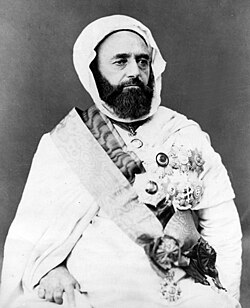
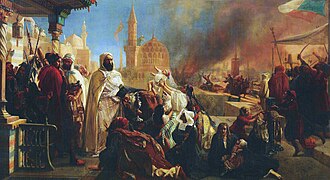
The conflict then shifted to Damascus in July. Following inflammatory speeches, mobs of 20,000 to 50,000 people—including peasants and irregulars—attacked the Christian quarters. The unarmed Christian population suffered heavily over several days of violence. During this chaos, Abd al-Qadir al-Jaza’iri, a notable leader, worked to rescue Christians from the riots.
International Intervention and Aftermath
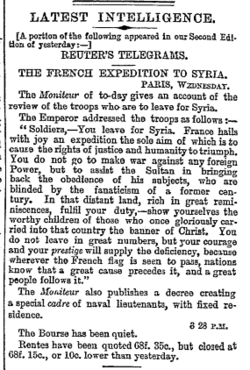
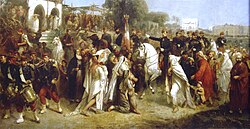
The scale of the massacres triggered an international outcry. France, under Napoleon III, invoked its historical role as the protector of Christians in the Ottoman Empire. On August 3, 1860, the Ottoman Empire agreed to the deployment of up to 12,000 European soldiers to restore order.
A formal convention was signed on September 5, 1860, involving Austria, Great Britain, France, Prussia, and Russia. France provided half of the expeditionary force, which landed in Beirut on August 16 to stabilize the region.
| Category | Details |
|---|---|
| Primary Belligerents | Maronites/Shihab clan vs. Druze clans (Jumblatt, Abu Nakad, Imad, etc.) |
| Key Locations | Mount Lebanon, Zahle, Deir al-Qamar, Hasbaya, Rashaya, Damascus |
| Estimated Deaths | ~12,000 in Mount Lebanon (10,000 Christians) |
| Intervening Power | France (led by Napoleon III) |
| Administrative Cause | The Double Qaimaqamate partition |
Frequently Asked Questions
What was the Double Qaimaqamate?
The Double Qaimaqamate was an administrative division of Mount Lebanon established in 1842 by the Ottoman Sultan. It split the region into a northern district governed by a Christian deputy and a southern district governed by a Druze deputy to manage sectarian tensions.
Who were the primary combatants in the conflict?
The conflict was fought mainly between the Maronite Christians (supported by the Shihab clan and irregulars from Zahle) and various Druze clans, including the Jumblatt, Abu Nakad, Imad, and Talhuq clans, along with some Sunni and Shia irregulars.
What happened during the Hasbaya massacre?
After being encouraged to surrender their weapons and seek refuge in the government house, approximately 1,000 Christian males were massacred by Druze forces on June 4, 1860. Women were generally spared.
Why did France intervene in the conflict?
France intervened to stop the massacres and reestablish order, citing its historical role as the protector of Christians within the Ottoman Empire, a role established by a treaty in 1523.
What was the result of the Battle of Zahle?
The Druze forces, supported by Bedouin cavalry, successfully stormed and took control of Zahle by June 18, forcing the Christian population to flee and resulting in significant casualties on both sides.