Mount Lebanon: Geography, History, and Cultural Heritage
Mount Lebanon (Arabic: Jabal Lubnān) is a majestic mountain range that defines the landscape and identity of Lebanon. Stretching approximately 170 km (110 mi) parallel to the Mediterranean coast, this range is characterized by its alpine climate and striking snow-capped peaks. The very name "Lebanon" is derived from the Semitic root LBN, meaning "white," a direct reference to the perennial snow that adorns its summits.
From the ancient cedar forests used by the Phoenicians to the complex tapestry of religious and political history, Mount Lebanon has served as both a natural fortress and a cultural crossroads for millennia.
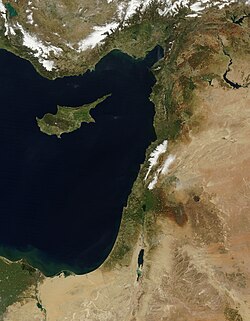
Key Facts
- Highest Point: Qurnat as Sawda' at 3,088 m (10,131 ft).
- Average Elevation: Above 2,500 m (8,200 ft).
- Length: Approximately 170 km (110 mi).
- Climate: Alpine, with average snowfall depths reaching 4 m (13 ft).
- Notable Flora: Home to the Cedrus libani (Cedar of Lebanon).
Geography and Natural Environment
The geography of Mount Lebanon is defined by its dramatic altitude changes, which often dictate the scenery more than horizontal distance. The range is a vital ecological zone, hosting diverse high-altitude flora and fauna. Most notably, the high slopes are home to the Cedars of God, a World Heritage Site containing the last remaining old-growth groves of the famous Cedar of Lebanon.
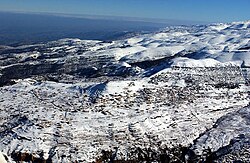
Historically, these forests were a cornerstone of regional economy and power. The Phoenicians utilized the durable cedar wood to construct ships, enabling them to dominate Mediterranean trade. This timber was so prized that King Hiram I of Tyre provided cedar from Mount Lebanon for the construction of the First Temple in Jerusalem under King Solomon.
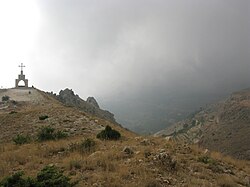
Historical Evolution
Ancient and Early Medieval Eras
Mentioned 103 times in the Old Testament, the range was incorporated into the Roman province of Syria after Pompey's conquest in 64 BCE. By the 5th century AD, the region became a spiritual center as Christian monks following the hermit Maron arrived from Northern Syria, establishing the Maronite community in the northern mountains.
In the late 8th century, the Byzantine Emperor settled the Mardaites (or Jarajima) in North Lebanon to raid Islamic territories. These settlers eventually merged with the local Maronite society. Similarly, after the fall of Acre in 1291, European settlers escaping the Mamelukes also integrated into the northern Maronite population.
Islamic and Druze Influence
The mountains have also been a sanctuary for Muslim ascetics and Sufis since the 7th century. In the 10th century, Twelver Shia Muslim communities established themselves in Keserwan and Dinniyeh. However, following military campaigns by the Mamluks and Ottomans, the Shia population gradually decreased, shifting toward Southern Lebanon and the Bekaa Valley by the 19th century.
In the 9th century, the Tanoukhiyoun tribes from Syria settled the southern range, later converting to the Druze faith in the 11th century. This region became known as Jabal ad-Duruz. By the 17th century, Emir Fakhr-al-Din II encouraged Maronite settlement in the Chouf and Metn regions to repopulate areas devastated by Ottoman expeditions.
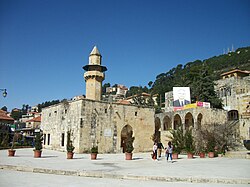
Conflict and Autonomy
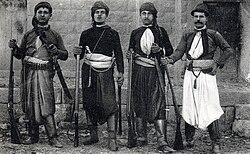
The 19th century was marked by tension between the growing Maronite population and the established Druze power. Clashes in the 1840s and 1860s led to a miniature civil war and significant massacres. Intervention by France (supporting Maronites) and Britain (supporting Druze) resulted in the 1861 establishment of the "Mount Lebanon" autonomous district under an international guarantee within the Ottoman system.
Intercommunal Relationships and Political Legacy
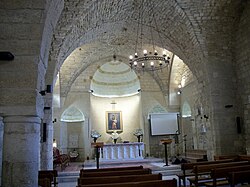
Despite periods of conflict, the Christian and Druze communities have a millennium-long history of peaceful coexistence, sharing economic activities and cultural landscapes. Scholars note that Druze communities historically maintained closer ties with Christians than with other Muslim groups, often sharing settlements.
Politically, the concept of "Greater Lebanon" emerged after World War I. In 1920, France expanded the borders of the autonomous Mount Lebanon region to include the coast and the Beqaa Valley. While this provided the Christian community with more territory, it shifted the demographic balance of the newly created state of Lebanon.
Summary of Mount Lebanon
| Feature | Detail |
|---|---|
| Highest Peak | Qurnat as Sawda' (3,088 m) |
| Primary Tree Species | Cedar of Lebanon (Cedrus libani) |
| Etymology | Semitic root LBN ("White") |
| Key Historical Groups | Phoenicians, Maronites, Druze, Shia Muslims |
| Administrative Status | Mount Lebanon Governorate |
Frequently Asked Questions
What is the highest point of Mount Lebanon?
The highest point is Qurnat as Sawda', which reaches an elevation of 3,088 meters (10,131 feet).
Why is the range called "Lebanon"?
The name comes from the Semitic root LBN, meaning "white," referring to the snow-covered peaks of the mountain range.
What is the significance of the Cedars of God?
The Cedars of God is a World Heritage Site that preserves the last remaining old-growth groves of the Cedar of Lebanon (Cedrus libani), a species historically used by Phoenicians for shipbuilding and by King Solomon for his temple.
How did the Maronite and Druze communities interact?
While they experienced violent clashes in the 19th century leading to international intervention, they also share a long history of peaceful coexistence, cultural exchange, and shared economic activities over the last thousand years.
What was the "Greater Lebanon" expansion?
In 1920, under French mandate, the borders of the autonomous Mount Lebanon region were expanded to include the coast and the Beqaa Valley, forming the modern state of Lebanon.