Yaqui History: A Legacy of Resistance and Survival
The story of the Yaqui people is one of enduring strength and an unwavering commitment to autonomy. For nearly four centuries, the Yaqui have fought to maintain their culture, their land, and their right to self-governance against the pressures of Spanish colonization and the subsequent Mexican state. From the fertile banks of the Yaqui River to the harsh conditions of forced labor camps, their journey is a testament to Indigenous resilience.
Key Facts
- Original Territory: Occupied a region along the lower Yaqui River, consisting of 80 villages and approximately 30,000 people in the 1530s.
- Jesuit Era: Maintained a mutually beneficial relationship with Jesuit missionaries for 120 years, adopting Christianity while preserving traditional beliefs.
- Major Leaders: Key figures in the struggle for independence include Juan Banderas and Jose Maria Leyva (Cajemé).
- Forced Labor: Under Porfirio Diaz, thousands of Yaqui were sold into slavery on henequen and sugar cane plantations.
- Land Recovery: President Lázaro Cárdenas reserved 500,000 hectares of ancestral lands for the Yaqui in 1937.
Early Contact and the Jesuit Era (1530s–1820s)
First encountered by Captain Diego de Guzmán in 1533, the Yaqui were a diverse society. While some lived near the coast utilizing marine resources, most resided in agricultural communities growing maize, beans, and squash, while others relied on hunting and gathering in the mountains and deserts.
Initial contact was marked by conflict. A confrontation on a level plain in 1533 sparked 40 years of struggle as the Yaqui fought to protect their territory. Interestingly, the lack of precious metals in the region likely deterred early Spanish invasions. By 1617, the Yaqui invited Jesuit missionaries to settle among them, beginning a 120-year period of relative stability.
During this time, the Jesuits introduced cattle, horses, and wheat. The Yaqui prospered, largely because they were geographically isolated from Spanish soldiers and miners and remained largely unaffected by the European epidemics that devastated other Indigenous groups. They settled into eight primary towns: Bácum, Benem, Cócorit, Huiribis, Pótam, Rahum, Tórim, and Vícam.
The Decline of the Missions
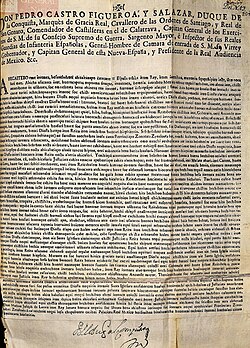
The peace fractured in the 1730s as Spanish miners and settlers encroached on Yaqui lands. This tension culminated in a bloody revolt in 1740, resulting in the deaths of 1,000 Spaniards and 5,000 Native Americans. Following the expulsion of the Jesuits in 1767, the Franciscan priests who replaced them failed to build the same trust, leading to a period of uneasy peace.
The Yaqui Wars and the Era of Enslavement (1820s–1920s)
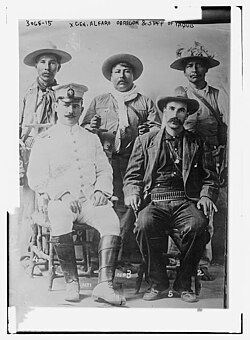
Following Mexico's independence from Spain in 1821, the Yaqui continued to assert their sovereignty, refusing to pay taxes to the new government. In 1825, Juan Banderas led a revolt aiming to create an autonomous state uniting the Yaqui, Mayo, Opata, and Pima. Though Banderas was executed in 1833, his spirit of resistance persisted.
By the late 19th century, the struggle was led by Jose Maria Leyva, known as Cajemé. His resistance lasted until 1887, during which time the Mexican Army committed severe atrocities, including the 1868 massacre where 150 Yaqui were burned alive inside a church.
Systemic Oppression and Slavery
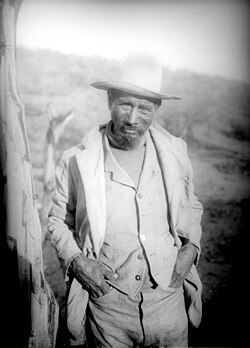
Under the dictatorship of Porfirio Diaz, the Mexican government pursued a policy of land confiscation to benefit mining and agricultural investors. This led to a horrific period of state-sponsored slavery. At least 5,000 Yaqui were sold—some for as little as 60 pesos per person—to plantations in Oaxaca, the Valle Nacional, and the Yucatán.
The conditions on the henequen plantations in the Yucatán were brutal. Workers faced extreme tropical heat, meager rations, and physical abuse if they failed to trim 2,000 leaves per day. It is estimated that two-thirds of those sent to these plantations died within a single year.
Resistance and Migration
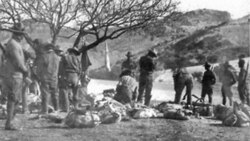
To survive, many Yaqui fled to the United States, establishing communities in Arizona, California, New Mexico, and Texas. Those in Arizona often smuggled arms and ammunition back into Sonora to support guerrilla fighters. The conflict finally reached a turning point in 1927 at Cerro del Gallo Mountain, where the Mexican Air Force and heavy artillery eventually overcame the Yaqui resistance.
Recovery and Land Rights (1920s–1930s)
The tide shifted in 1937 under President Lázaro Cárdenas. Recognizing the ancestral rights of the people, Cárdenas reserved 500,000 hectares of land on the north bank of the Yaqui River. He further supported the community by providing water pumps, advanced agricultural equipment, and the construction of an irrigation dam.
The impact of these measures was immediate. In 1935, the Yaqui produced only 250 tons of wheat and no maize or beans; by 1939, production had soared to 3,500 tons of wheat, 500 tons of maize, and 750 tons of beans. By the end of Cárdenas's term, the Yaqui population was recorded at 10,000 people.
| Period | Key Dynamic | Major Outcome |
|---|---|---|
| 1533–1617 | Initial Conflict | Armed struggle to protect land and culture. |
| 1617–1767 | Jesuit Missions | Prosperity, conversion, and introduction of livestock. |
| 1820s–1927 | Yaqui Wars | Mass enslavement, land theft, and guerrilla warfare. |
| 1937–1940s | Cárdenas Reforms | Return of ancestral lands and agricultural revival. |
Frequently Asked Questions
Who was Cajemé?
Jose Maria Leyva, known as Cajemé, was a prominent Yaqui leader who led the struggle for independence against the Mexican government until his capture and execution in 1887. The Mexican municipality of Cajeme is named in his honor.
Why did the Yaqui have a positive relationship with the Jesuits?
The relationship lasted 120 years and was mutually advantageous. The Jesuits provided protection from Spanish slavers and introduced new crops and livestock, while the Yaqui were able to maintain their land and unity as a people.
What happened to the Yaqui during the Porfirio Diaz era?
The government confiscated Yaqui lands for mining and agriculture, forcing many into rebellion. Thousands of Yaqui were sold into slavery on henequen and sugar cane plantations, where many died due to brutal conditions.
What was the Battle of Bear Valley?
Occurring on January 9, 1918, this was a firefight between the U.S. 10th Cavalry Regiment and Yaqui Indians west of Nogales, Arizona. The Yaqui were attempting to provide aid to their counterparts in Sonora.
How did Lázaro Cárdenas help the Yaqui people?
As president in 1937, Cárdenas reserved 500,000 hectares of ancestral lands for the Yaqui and provided the infrastructure—including a dam and agricultural equipment—necessary for them to regain their economic independence.