Colonial Monuments in the Americas: A Wave of Removal and Renaming
Across the Americas, a profound shift in historical memory is manifesting in the physical landscape. Monuments once erected to celebrate European explorers, conquerors, and colonial administrators are increasingly becoming flashpoints for social unrest and political debate. From the removal of statues to the renaming of national holidays, nations are grappling with the legacy of colonization and its impact on Indigenous and African descendant populations.
The Evolution of Race Day
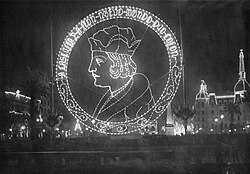
In many Spanish-speaking nations, October 12 was traditionally known as Race Day (or Día de la Raza), commemorating Christopher Columbus's 1492 landing in the Bahamas. Originally intended to celebrate the Ibero-American "race," the date has become controversial as Columbus is increasingly viewed as a figure associated with the genocide of Native Americans.
To reflect a more inclusive history, several countries have renamed the holiday:
- Spain: National Day of Spain
- Mexico: Day of the Pluricultural Nation
- Argentina: Day of American Cultural Diversity
- Chile: Day of the Discovery of the Two Worlds
- Venezuela: Day of the Indigenous Resistance
Key Facts
- Widespread Renaming: Multiple Latin American countries have replaced "Race Day" with titles emphasizing cultural diversity or indigenous resistance.
- Symbolic Targets: Christopher Columbus, Queen Isabella, and various conquistadors (Spanish conquerors) are the most frequent targets of monument removal.
- Diverse Motivations: Removals are driven by a desire to acknowledge genocide, slavery, and the systemic oppression of First Nations and African peoples.
- Institutional Shifts: Some changes are grassroots (vandalism/toppling), while others are official government mandates (legislative redesigns).
Regional Perspectives on Decolonization
Argentina and Bolivia
In Argentina, the struggle over symbolism is exemplified by the monument to Christopher Columbus in Buenos Aires. Donated by the Italian community in 1921, the 24-ton Carrara marble statue suffered structural damage from bombings in 1955 and 1987. In 2016, it was replaced in Parque Colón by a monument to Juana Azurduy de Padilla, a heroine of the Latin American wars of independence. After a legal battle involving Italian associations, the Columbus statue was eventually reassembled on the Costanera Norte in 2017.
In Bolivia, activists have used symbolic interventions. In 2020, a statue of Queen Isabella the Catholic in La Paz was dressed as a cholita (a traditional Andean woman) to signal that America already had formed societies before colonization. In 2021, indigenous groups targeted a Columbus statue in La Paz, resulting in the statue's nose being broken.
Brazil and Chile
Brazil has seen a rise in protests against figures linked to slavery and the bandeiras (expeditions that captured and enslaved indigenous people). In July 2021, the group "Revolução Periférica" set fire to a statue of the bandeirante Manuel de Borba Gato in São Paulo. Meanwhile, in Salvador, the statue of slave trader Joaquim Pereira Marinho remains a point of contention due to his role in transporting approximately 11,000 enslaved Africans.
Chile has experienced significant unrest, particularly in the Araucanía Region. Protesters have targeted monuments to General Cornelio Saavedra Rodríguez and the conquistador Pedro de Valdivia, often replacing them with symbols of the Mapuche people. In 2021, the statue of General Manuel Baquedano was removed by authorities in Santiago after becoming a symbolic center for social crisis demonstrations.
Colombia, Mexico, and Venezuela
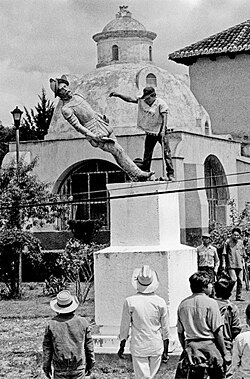
Colombia has seen the removal of equestrian statues of conquistadors Sebastián de Belalcázar and Gonzalo Jiménez de Quesada, driven by the Misak, Nasa, and Pijao peoples. In Bogotá, authorities proactively moved statues of Columbus and Queen Isabella in 2021 to prevent them from being toppled.
Mexico City removed its Columbus statue from the Paseo de la Reforma in 2020 for "examination and restoration," though Mayor Claudia Sheinbaum later announced it would be stored in the Park of the Americas. In Venezuela, President Nicolas Maduro initiated a formal decolonization process, renaming the Francisco Fajardo highway to "Grand Cacique Guaicaipuro" in honor of an indigenous resistance fighter.
North American Shifts: Canada and the United States
Canada
In Canada, the focus has shifted toward the legacy of the British Empire and the residential school system. In Montreal, statues of Queen Victoria were vandalized with green paint, and a statue of Canada's first Prime Minister, John A. Macdonald, was torn down in 2020. Macdonald is remembered by some as a founder and by others as an oppressor of First Nations. In Winnipeg, statues of Queen Victoria and Queen Elizabeth II were toppled in 2021 following the discovery of children's remains near former residential schools.
United States
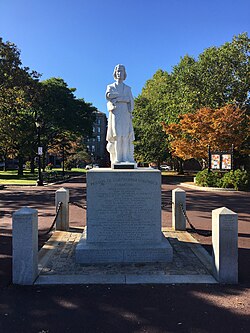
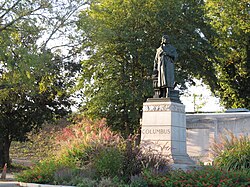
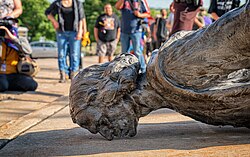
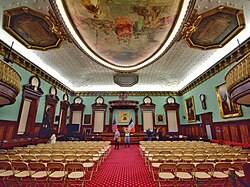
The U.S. has seen a surge in the replacement of Columbus Day with Indigenous Peoples Day. In June 2020, following the murder of George Floyd, anti-racism protests led to the decapitation and removal of the Columbus statue in Boston. In New York City, the City Council voted in 2021 to remove a statue of Thomas Jefferson—a slave owner—from the Council Chambers, lending it to the New York Historical Society for educational context.
Minnesota has also addressed colonial imagery in its state symbols. The state flag and seal, which depicted a white farmer and a Native American riding away, were criticized as racist. In 2024, Minnesota adopted a new navy and sky blue flag featuring an eight-pointed star, symbolizing "L'Étoile du Nord."
Summary of Monumental Changes
| Country | Target/Figure | Action Taken | Replacement/New Name |
|---|---|---|---|
| Argentina | Christopher Columbus | Removed from Parque Colón | Juana Azurduy de Padilla |
| Venezuela | Francisco Fajardo | Highway Renamed | Grand Cacique Guaicaipuro |
| USA (MN) | State Flag/Seal | Redesigned | Eight-pointed star design |
| Canada | John A. Macdonald | Torn down (Montreal) | N/A |
| Colombia | S. de Belalcázar | Pulled down with ropes | N/A |
Frequently Asked Questions
Why is "Race Day" being renamed in Latin America?
The holiday is being renamed because Christopher Columbus is increasingly viewed as a figure responsible for the genocide of Native Americans, making the original celebration of the "Ibero-American race" offensive to many.
Who was Juana Azurduy de Padilla?
She was a heroine of the Latin American wars of independence who fought alongside Argentines, and her statue replaced that of Columbus in Buenos Aires to honor indigenous and independence struggles.
What were the "bandeiras" in Brazil?
Bandeiras were expeditions into the interior of Brazil characterized by the torture, murder, and rape of indigenous people, who were then captured and sold into slavery.
Why was the Minnesota state flag changed?
The previous flag featured a seal depicting a Native American being driven from his land by a white farmer, which was viewed as a racist and negationist representation of colonial violence.
What is the significance of the residential school system in Canada's statue removals?
The discovery of children's remains near former residential schools—institutions designed to assimilate Indigenous children—fueled protests that led to the toppling of colonial symbols like the statues of Queen Victoria and Queen Elizabeth II.