Wladimir Köppen and the Evolution of Climate Classification
Wladimir Petrovich Köppen was a pioneering Russian-German scientist whose multidisciplinary expertise in geography, meteorology, climatology, and botany fundamentally changed how we categorize the Earth's environments. Best known for creating the Köppen climate classification system, his work bridged the gap between atmospheric physics and the natural world, providing a framework that remains a cornerstone of geographic study today.
Key Facts
- Primary Achievement: Developed the Köppen climate classification system, first proposed in 1884.
- Scientific Innovation: Coined the term aerology to describe the science of the upper atmosphere.
- Academic Breadth: Published over 500 papers across botany, meteorology, and climatology.
- Key Collaborations: Worked with son-in-law Alfred Wegener on paleoclimatology and Rudolf Geiger on the Handbuch der Klimatologie.
- Global Impact: Created the first cloud atlas in 1890.
Early Life and Academic Foundation
Born in Saint Petersburg, Russian Empire, in 1846, Köppen grew up in an intellectually rich environment. His grandfather served as a personal physician to the tsar, and his father was a distinguished geographer and ethnographer. These family ties to science and exploration laid the groundwork for Wladimir's own pursuits.
Köppen's interest in the relationship between climate and nature was sparked by his travels between Saint Petersburg and the Crimean peninsula. The stark geographical transitions and floral diversity he observed in Crimea led him to study botany at the University of Saint Petersburg starting in 1864. He later expanded his education in Germany, transferring to the University of Heidelberg in 1867 and earning his doctorate from the University of Leipzig in 1870, where he focused on how temperature affects plant growth.
The Development of Climate Classification
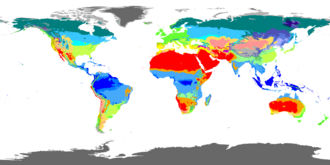
Köppen's most enduring legacy is his system for classifying the world's climates. He recognized that native vegetation is the best expression of climate; therefore, he identified five major climatic groups that correspond to five main vegetation groups:
- Tropical rainy climate
- Dry climate
- Warm temperature rainy climate
- Snowy and cold climate
- Polar climate
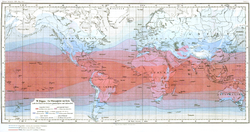
He first published a map of climatic zones based on seasonal temperature ranges in 1884. This evolved into the formal Köppen climate classification system around 1900. He spent the remainder of his life refining this model, publishing a full version in 1918 and a final version in 1936.
Professional Career and Scientific Contributions
Beyond classification, Köppen was a central figure in the birth of modern meteorology. Early in his career, he analyzed ship reports to contribute to sailing handbooks for the Atlantic, Pacific, and Indian Oceans. He later served in the Russian meteorological service and eventually moved to Hamburg, Germany, where he led the Division of Marine Meteorology at the German Maritime Observatory. In this role, he established weather forecasting services for northwestern Germany and the adjacent seas.
Köppen was also a pioneer in aerology—the study of the upper atmosphere—utilizing balloons to gather high-altitude data. His intellectual curiosity extended to paleoclimatology (the study of ancient climates). In 1924, alongside Alfred Wegener, he published Die Klimate der Geologischen Vorzeit, which provided essential evidence supporting the Milanković theory regarding the cause of ice ages.
Summary of Köppen's Scientific Legacy
| Field | Key Contribution | Significance |
|---|---|---|
| Climatology | Köppen Classification System | Standardized global climate mapping based on vegetation. |
| Meteorology | Aerology | Established the science of the upper atmosphere. |
| Atmospheric Science | First Cloud Atlas (1890) | Provided a systematic visual reference for cloud types. |
| Paleoclimatology | Research on Geological Climates | Supported theories on the timing and cause of ice ages. |
Personal Life and Social Advocacy
Köppen's personal life was closely intertwined with his professional circle; his daughter Else married his student, the famous scientist Alfred Wegener. Beyond the laboratory, Köppen was deeply concerned with social welfare, advocating for school reform, improved nutrition for the underprivileged, and sustainable land-use practices.
A believer in global unity, he was a strong proponent of Esperanto, an international auxiliary language, and translated several of his scientific works into the language to promote world peace.
Frequently Asked Questions
What is the Köppen climate classification system?
It is a system that categorizes the world's climates into five main groups based on seasonal temperature and precipitation patterns, which correlate closely with the types of vegetation found in those regions.
What is aerology?
Aerology is a term coined by Wladimir Köppen to describe the scientific study of the upper layers of the atmosphere.
How did Köppen contribute to the study of ice ages?
Through his work in paleoclimatology and his 1924 publication with Alfred Wegener, Köppen provided crucial data that supported the Milanković theory on the cycles of ice ages.
Who was Alfred Wegener in relation to Köppen?
Alfred Wegener was both a student of Wladimir Köppen and his son-in-law, having married Köppen's daughter, Else.
Did Köppen work on anything other than climate maps?
Yes, he co-authored the first cloud atlas in 1890, wrote a popular textbook on the thermodynamics of the atmosphere, and was active in social reform and the promotion of Esperanto.