Wilhelm Schuler: The Chemist and Entrepreneur Who Shaped Modern Pharmaceutical Research
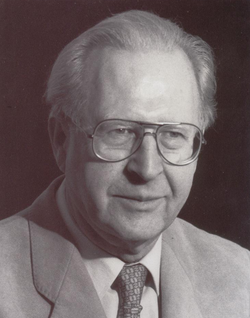
Wilhelm Alfons Schuler (1914–2010) was a distinguished chemist, inventor, and entrepreneur whose career spanned the second half of the 20th century. From his early academic pursuits in Germany to the establishment of international pharmaceutical ventures in Ireland, Schuler combined scientific rigor with a keen business instinct, leaving a lasting impact on both the food and pharmaceutical industries.
Academic Foundations and Early Research
Schuler began his academic journey in 1934 at the Königliche Technische Hochschule zu Danzig, where he earned the title of Diplomchemiker (equivalent to a Master of Chemistry) in 1939. Although briefly drafted into the Wehrmacht, he was quickly recalled to the University of Danzig by Paul Rabe to contribute to critical research on pharmaceutical ingredients.
Working under Henry Albers, Schuler focused his early efforts on organic phosphorus compounds—chemicals containing phosphorus-carbon bonds—and later specialized in alkaloids, which are naturally occurring organic compounds that mostly contain basic nitrogen atoms. He earned his PhD in 1941 and continued his work as an assistant to Albers before moving to the University of Hamburg toward the end of World War II.
At Hamburg, Schuler joined the research group of Ilse Esdorn, focusing on the analysis of natural products, including glucosides and mucus from medicinal plants. It was during this period that he developed a method for producing a gelling agent from heather (erica), a discovery that gained significant traction in the cosmetics and food industries.
Entrepreneurial Ventures and Drug Development
The success of his heather-based gelling agent, which he licensed to the company Spangenberg, provided the financial foundation for Schuler to enter the business world. At age 32, he co-founded Dr. Schuler & Lange, Chemisches und Pharmazeutisches Laboratorium GmbH in Hamburg. This firm specialized in the production of drug ingredients and pharmaceutical contract research.
Collaborating with biologist and pharmacologist Otto Nieschulz, Schuler developed several successful medications, including:
- Pecazine [Pacatal(D)]: A neuroleptic drug used to treat psychiatric conditions.
- Kolton (D): An antihistaminic drug consisting of an 8-chloro theophylline salt of diphenylpyraline.
- Vaditon (D): A specialized galenic form (the science of preparing and compounding medicines) of pyramidones, enabling administration via injection.
Leadership at Degussa and Strategic Innovations
In 1953, Schuler entered a unique agreement with Degussa AG, allowing him to maintain his private business interests while leading pharmaceutical research at the Chemiewerk Homburg subsidiary. His creativity and leadership led to his appointment as the head of the entire Degussa research department in 1959.
Under his direction, the R&D department was restructured to focus on strategic, long-term solutions. His most notable contributions during this tenure included the development of zeolites (microporous aluminosilicate minerals) for use in detergents and the creation of automotive catalysts. These innovations remain fundamental to the operations of Evonik Degussa GmbH today.
International Expansion and Later Years
Schuler's entrepreneurial drive extended beyond Germany. In 1960, he founded Loftus Bryan Chem. Ltd. in County Wicklow, Ireland, which he eventually sold to the American pharmaceutical giant Schering-Plough twenty years later. In 1982, he partnered with his daughter to establish Iropharm Ltd. in Ireland, focusing on intermediates and generic pharmaceutical ingredients. Iropharm was sold to Allied Signal in 1997 and subsequently acquired by Sigma-Aldrich.
Schuler spent the majority of his life in Bad Homburg vor der Höhe, where he passed away on June 5, 2010.
Key Facts
- Academic Credentials: PhD in Chemistry (1941) and Diplomchemiker (1939).
- Industrial Impact: Developed a heather-based gelling agent for food and cosmetics.
- Pharmaceutical Successes: Co-developed Pecazine, Kolton, and Vaditon.
- Corporate Leadership: Head of research at Degussa, implementing strategic R&D for zeolites and catalysts.
- Global Business: Founded Loftus Bryan Chem. Ltd. and Iropharm Ltd. in Ireland.
| Period/Entity | Key Contribution/Role | Impact/Outcome |
|---|---|---|
| University of Hamburg | Heather gelling agent | Commercialized via Spangenberg for food/cosmetics |
| Dr. Schuler & Lange | Contract Research | Development of Pecazine, Kolton, and Vaditon |
| Degussa AG | Head of Research | Zeolites for detergents and automotive catalysts |
| Loftus Bryan / Iropharm | Irish Pharma Ventures | Acquired by Schering-Plough and Sigma-Aldrich |
Frequently Asked Questions
What was Wilhelm Schuler's primary contribution to the food and cosmetics industry?
Schuler discovered a method for producing a gelling agent derived from heather (erica), which he licensed to the company Spangenberg for widespread industrial use.
Which pharmaceutical drugs are associated with Schuler's research?
He was involved in the development of the neuroleptic drug Pecazine, the antihistaminic drug Kolton, and an injectable form of pyramidones known as Vaditon.
How did Schuler influence the company Degussa?
As head of research, he restructured the R&D department and pivoted the company toward strategic developments, specifically zeolites for detergents and automotive catalysts.
What were Schuler's business ventures in Ireland?
He founded Loftus Bryan Chem. Ltd. in 1960 and Iropharm Ltd. in 1982, both of which focused on pharmaceutical ingredients and were eventually acquired by larger global corporations.
What scientific fields did Wilhelm Schuler specialize in?
His expertise spanned organic phosphorus compounds, alkaloids, the analysis of natural products, and the development of pharmaceutical intermediates.