Wild West Shows: The History of Frontier Spectacles
Long before the era of cinema, the American public experienced the thrill of the frontier through Wild West shows. These massive touring productions blended entertainment with ethnographic exhibition, bringing the rugged lifestyle of the American West to audiences across the globe. Rather than mere theatrical plays, these events were designed to showcase the authentic skills of the frontier.
To maintain an air of authenticity, many organizers avoided the word "show" in their titles, as it implied the performers were simply acting. Instead, they preferred terms like "exposition" or "exhibition." This distinction was crucial because many of the performers—including cowboys and Native Americans—were individuals who had participated in legendary battles and historic events before the settlement of the American frontier fundamentally changed their way of life.
Key Facts
- Authenticity: Many productions used terms like "exposition" to signal that they were ethnographic examples of real frontier life.
- Performers: Casts often featured genuine cowboys and Native Americans who had lived through the era of the frontier.
- Global Reach: Some productions, such as Bud Atkinson's Circus and Wild West, toured as far as Australia.
- Longevity: Shows operated from the mid-19th century well into the mid-20th century.
The Evolution of Frontier Exhibitions
The trajectory of these spectacles began in the mid-1800s, with early efforts like Forepaugh & The Wild West operating between 1865 and 1890. As the frontier closed, the demand for these experiences grew, leading to the rise of legendary figures who became synonymous with the American West.
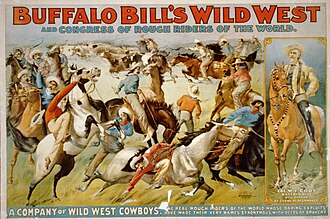
The most iconic of these was Buffalo Bill's Wild West and Congress of Rough Riders, which operated from 1883 to 1916, setting the gold standard for the genre by combining military precision with frontier skill.
Diverse Production Styles
While some shows focused on the "Rough Rider" aesthetic, others integrated circus elements or specialized in equestrian mastery. For example, Broncho John and his Corps of Expert Horsemen emphasized the skill of the rider, while the Miller Bros. 101 Ranch Real Wild West provided a comprehensive look at ranch life across two distinct periods of operation.
Notable Wild West Productions
The landscape of frontier entertainment was vast, featuring a wide array of promoters and performers. From the early 1900s to the 1940s, various troupes toured the country, often specializing in specific regional identities or particular skills like roping and riding.
| Production Name | Active Period | Key Figures/Notes |
|---|---|---|
| Forepaugh & The Wild West | 1865–1890 | Early pioneer of the genre |
| Buffalo Bill's Wild West | 1883–1916 | Congress of Rough Riders |
| Miller Bros. 101 Ranch Real Wild West | 1907–1916, 1925–1931 | Comprehensive ranch exhibition |
| L. O. Hillman's Wild West Aggregation | 1900–1920 | Long-running aggregation |
| Allen Bros. Wild West | 1929–1934 | Charles and Mert H. Allen |
| Gene Autry's Flying A Ranch Stampede | 1942 | Mid-century Western spectacle |
Other Significant Troupes
- Pawnee Bill's Wild West Show: A major contemporary to Buffalo Bill.
- Texas Jack's Wild West: Active from 1901 to 1905.
- Booger Red's Wild West Show: Operated between 1904 and 1910.
- Young Buffalo Wild West: Featured Annie Oakley and Chief Red Shirt.
- Bud Atkinson's Circus and Wild West: Notable for touring Australia in 1912.
Frequently Asked Questions
Why did many productions avoid using the word "show"?
The term "show" suggested that the performers were merely acting. To emphasize that the events were authentic ethnographic examples of the true Wild West, promoters used terms like "exposition" or "exhibition."
Who were the typical performers in these exhibitions?
Many performers were actual cowboys and Native Americans who had been involved in historic events and legendary battles before the settlement of the American frontier.
Which show is considered one of the most famous?
Buffalo Bill's Wild West and Congress of Rough Riders, which operated from 1883 to 1916, is among the most prominent examples of the genre.
Did these shows travel outside of the United States?
Yes, some productions had international reach; for instance, Bud Atkinson's Circus and Wild West toured Australia in 1912.
When did these shows typically operate?
While some began as early as 1865, many were highly active in the early 1900s, with some productions continuing into the 1930s and 1940s.