Buffalo Bill's Wild West: The Legend of the First Outdoor Western Show
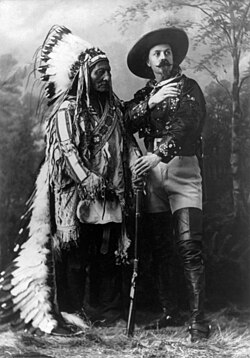
In 1883, in Omaha, Nebraska, William "Buffalo Bill" Cody transformed his own life adventures into a groundbreaking spectacle: Buffalo Bill's Wild West. This production marked the birth of the first outdoor western show, blending historical reenactments with high-energy showmanship to capture the imagination of audiences worldwide.
The show's meteoric rise was not merely due to the performances but also to the innovative marketing of publicist Arizona John Burke. Burke utilized cutting-edge promotional techniques for the era, including press kits, celebrity endorsements, billboards, product licensing, publicity stunts, and op-ed articles, ensuring the show became a global phenomenon.
Key Facts
- Founded: 1883 in Omaha, Nebraska.
- Global Reach: Toured Europe eight times between 1887 and 1906.
- Peak Popularity: Performed for 18,000 people at the 1893 Chicago World's Fair.
- Royal Patronage: Received command performances for Queen Victoria and King Edward VII.
- End of an Era: Declared bankrupt in 1913.
Global Tours and Royal Recognition
Buffalo Bill's Wild West achieved immense success across the Atlantic, touring Europe in two major phases: four tours between 1887 and 1892, and another four from 1902 to 1906. The inaugural 1887 tour coincided with Queen Victoria's Golden Jubilee as part of the American Exhibition.
The show gained prestigious royal approval when the Prince of Wales (later King Edward VII) requested a private preview. This led to a command performance for Queen Victoria and another on June 20, 1887, for her Jubilee guests, which was attended by European royalty including the future Kaiser Wilhelm II and King George V. The London run alone saw over 300 performances and sold more than 2.5 million tickets.
Later tours expanded the show's reach. Between 1902 and 1904, the production visited nearly every major city in Great Britain. In 1905, it spent two months in Paris before touring France. The final tour in 1906 spanned France, Italy, Austria, the Balkans, Hungary, Romania, Ukraine, Poland, Bohemia (now the Czech Republic), Germany, and Belgium.
The Peak and Decline of the Empire
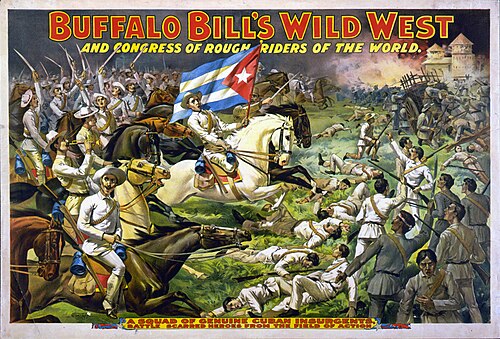
In 1893, the show was renamed Buffalo Bill's Wild West and Congress of Rough Riders of the World. This year marked the show's commercial zenith during its appearance at the Chicago World's Fair. Interestingly, this coincided with a speech by scholar Frederick Turner, who famously declared that the American frontier had officially "gone," signaling the end of the first stage of American history.
However, the late 19th century brought economic hardship. By 1894, a general depression and flooding in the cotton-producing South made tickets unaffordable for many, leading to significant financial losses for Cody. In a desperate attempt to recover, Cody signed a contract with Bonfil and Temmen, which effectively tricked him into selling the show. He was demoted to an employee and attraction for the Sells-Floto Circus, leading to a gradual decline that ended in bankruptcy in 1913.
Show Content and Spectacles
Each performance lasted between three and four hours, beginning with a massive horseback parade featuring the Congress of Rough Riders. The program was a mix of skill displays and dramatized history.
Historical Reenactments
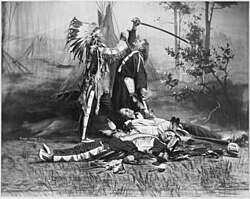
The show featured semi-historical scenes, such as the charge on San Juan Hill and the Battle of the Little Bighorn (known as "Custer's Last Stand"). In the latter, Buck Taylor played General George Armstrong Custer. The narrative depicted Custer's death, followed by Buffalo Bill arriving too late to save him but avenging him by killing and scalping a character called Yellow Hair (or Yellowhand).
Skills, Animals, and Racing
Beyond the drama, the show highlighted frontier skills. Expert marksmen performed shooting competitions using rifles, shotguns, and revolvers. Rodeo events featured cowboys like Lee Martin attempting to rope and ride broncos (unbroken horses that buck their riders), as well as dealing with mules, buffalo, Texas steers, elk, deer, bears, and moose.
The production also included staged hunts using some of the world's last remaining buffalo herds. Racing was another staple, featuring contests between cowboys, Mexicans, and Indians, as well as unique events like a 100-yard foot race against an Indian pony and races between Lady Riders.
| Event/Act | Description | Key Feature |
|---|---|---|
| Custer's Last Stand | Battle of Little Bighorn reenactment | Buck Taylor as Gen. Custer |
| Attack on the Burning Cabin | Grand finale battle | Settlers vs. Indians |
| Rodeo Events | Animal handling and roping | Broncos and wild animals |
| Marksmanship | Shooting competitions | Rifles, shotguns, and revolvers |
| Races | Competitive speed events | Includes Lady Riders and ponies |
Frequently Asked Questions
When and where was Buffalo Bill's Wild West founded?
The show was founded in 1883 in Omaha, Nebraska, by Buffalo Bill Cody.
How did the show achieve such high popularity?
Its success was driven by the innovative marketing of Arizona John Burke, who used celebrity endorsements, press kits, and product licensing, as well as high-profile appearances like the 1893 Chicago World's Fair.
Which European royals attended the show?
The show was attended by Queen Victoria, the Prince of Wales (later King Edward VII), the future Kaiser Wilhelm II, and the future King George V.
What happened to the show's finances in the 1890s?
Economic depression and flooding in the South led to financial losses. Cody was subsequently tricked by Bonfil and Temmen into selling the show, which eventually led to its bankruptcy in 1913.
What were some of the main acts in the performance?
Key acts included the Bison Hunt, Train Robbery, the Attack on the Burning Cabin, and the reenactment of Custer's Last Stand.