Wild West Shows and Native American Performers
Between 1883 and 1917, hundreds of Native Americans were employed by Wild West shows, becoming central figures in these massive spectacles. Far from being mere background additions, Native performers were integral to the shows' identity and appeal from the very beginning. In the inaugural 1883 show in Omaha, Nebraska, Native Americans featured in six of the twelve performances, including the opening parade.
Recruitment initially took place in Rushville, Nebraska, located just across the border from the Pine Ridge Agency. However, the trajectory of hiring shifted significantly in 1885 when Colonel Cody hired the renowned Hunkpapa Lakota Sioux leader, Sitting Bull. Known as the last Native American to surrender during the American Indian Wars and the victor of the Battle of the Little Bighorn, Sitting Bull joined the show in Buffalo, New York, on June 12, 1885.
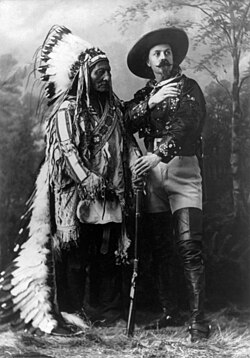
Although Sitting Bull only toured for one season, his presence established the Lakota as the preferred group for subsequent employment. This preference reinforced existing American and European perceptions of the Sioux as formidable warriors. By employing actual Native performers rather than surrogates, the shows tapped into a deep cultural fascination with Native peoples during the late nineteenth and early twentieth centuries.
Key Facts
- Employment Period: Hundreds of Native Americans served in these shows between 1883 and 1917.
- Primary Group: The Lakota Sioux became the preferred performers following the hiring of Sitting Bull in 1885.
- Cultural Preservation: Performances allowed Native Americans to practice cultural traditions that were often illegal on reservations.
- Government Conflict: The Office of Indian Affairs (OIA) attempted to restrict hiring to enforce assimilation policies.
- Financial Incentive: Performers often earned significantly more money in the shows than they did on reservations.
Types of Performances
Native performers showcased a diverse array of skills, including equestrianism, artistry in dance, and precision with bows and arrows. However, the most enduring elements of the shows were the historical re-enactments. These dramatizations recreated recent conflicts, such as attacks on wagon trains, stagecoaches, pony-express riders, and settlers' cabins.
Between 1885 and 1898, Buffalo Bill expanded these re-enactments to include the death of George Armstrong Custer at the Battle of the Little Bighorn and, following the 1890 tragedy, the Wounded Knee Massacre.
Beyond entertainment, these shows served as a sanctuary. Scholar Vine Deloria, Jr. suggests that by "playing" Indian, performers were engaging in a form of cultural refusal, choosing a caricature of their heritage over the total homogenization demanded by American society. For fifty years, the shows provided a space where Native Americans could exist free from the harassment of politicians, missionaries, and government agents.
Conflict Over Hiring and Government Regulation
The employment of Native Americans was not without controversy. Protectionist groups, including the Indian Rights Association and the Office of Indian Affairs (OIA), criticized the shows. These reformers argued that promoters exploited performers and claimed that Native Americans needed to be "civilized" through industry, education, and land ownership.
The OIA specifically feared that the shows undermined assimilation policies—the government's effort to integrate Native Americans into dominant white culture. To combat this, the OIA began regulating hiring in 1886. By 1889, the OIA required performers to sign individual contracts under the supervision of government agents before they were granted permission to leave their reservations.
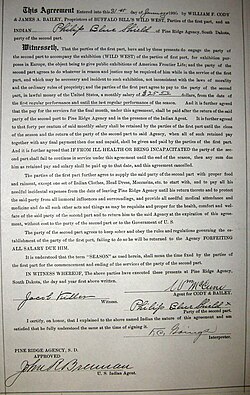
Under Commissioner Thomas Jefferson Morgan, who took office in 1889, the OIA became even more aggressive. Morgan frequently rejected contracts or imposed impossible requirements to prevent Native Americans from joining shows. He further pressured performers by threatening to withhold tribal status, annuities, and land allotments.
The Morality Inquiry of 1890
In 1890, the OIA held an inquiry to determine if show business was a "moral" profession for Native Americans. Acting Commissioner A.C. Belt argued that if the business was not considered elevating for white people, it could not be good for Native Americans. However, the performers themselves refuted this claim.
Performers such as "No Neck" and "Black Heart" defended their work, comparing the conditions of the show favorably to those at the Pine Ridge Agency. One performer, Rocky Bear, pointedly showed his inquisitors a purse containing $300 in gold coins saved for his children's clothing, noting that while he was "getting poor" on the reservation, the show fed him well and provided a necessary income.
Summary of Wild West Show Employment
| Category | Details |
|---|---|
| Active Years | 1883–1917 |
| Key Figure | Sitting Bull (joined June 12, 1885) |
| Primary Skills | Equestrianism, archery, dance, and historical re-enactments |
| Regulatory Body | Office of Indian Affairs (OIA) |
| Primary Conflict | Assimilation policies vs. cultural preservation and economic independence |
Frequently Asked Questions
Why were the Lakota Sioux preferred as performers?
The preference for the Lakota began after the hiring of Sitting Bull in 1885. Their reputation as fierce warriors aligned with the image of Native Americans held by audiences in America and Europe at the time.
What did the Native performers actually do in the shows?
They performed equestrian stunts, demonstrated archery and dance, and participated in historical re-enactments of events like the Battle of the Little Bighorn and attacks on stagecoaches or wagon trains.
How did the Office of Indian Affairs try to stop the hiring?
The OIA implemented strict regulations, requiring supervised individual contracts and the commissioner's permission to leave reservations. Commissioner Thomas Jefferson Morgan also threatened to withhold land allotments and annuities from those who joined the shows.
Did the performers feel exploited by the shows?
While protectionist groups claimed exploitation, many performers defended their employment. They testified that the shows provided better food and significantly higher pay than was available on the reservations.
What was the cultural significance of these shows for the performers?
The shows allowed Native Americans to continue cultural practices that were illegal on reservations and provided a space to maintain their identity away from the pressure of government and missionary assimilation.