Whorls in Botany: Understanding Plant Arrangement and Floral Structure
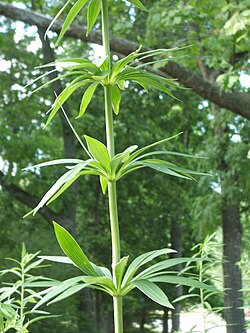
In the diverse world of plant morphology, the way leaves and floral organs are positioned on a stem is not random. One of the most striking arrangements is the whorl (also known as a verticil). A whorl occurs when three or more organs—such as leaves, petals, or stamens—radiate from a single point, effectively wrapping around the stem or stalk.
Key Facts
- A whorl must consist of at least three elements; two opposite leaves do not constitute a whorl.
- Whorled leaf arrangements are relatively rare and typically occur in species with very short internodes (the space between nodes on a stem).
- Most flowers are cyclic, meaning their structure is based on four distinct types of whorls.
- Not all plants use whorls; some, like the Magnoliaceae family, feature spirally arranged parts.
Whorled Leaf Arrangements
While many plants have leaves that alternate or grow in pairs, whorled leaves are less common. This pattern is often found in genera such as Galium, Nerium, Elodea, and Lilium. In some cases, leaf-like bracts (modified leaves) may also be arranged in whorls, as seen in the genus Trillium.
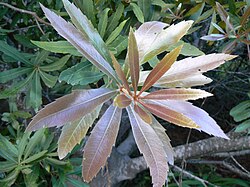
Leaf whorls are not limited to herbaceous plants; they also appear in woody trees. For example, Brabejum stellatifolium and certain species within the Proteaceae family, such as those in the genus Banksia, exhibit this trait. In these woody species, the plant often utilizes a pattern of crowded internodes within the whorl, which then alternate with longer internodes between the whorls.
The Structure of Cyclic Flowers
The morphology of most flowers is described as cyclic, meaning the floral organs are organized into concentric circles or whorls. A complete flower typically consists of four primary types of whorls:
- The Calyx: The outermost layer, consisting of zero or more whorls of sepals located at the base.
- The Corolla: The layer situated above the calyx, consisting of zero or more whorls of petals.
- The Androecium: The male reproductive part, consisting of zero or more whorls of stamens. Each stamen is composed of a filament and an anther.
- The Gynoecium: The female reproductive part, consisting of zero or more whorls of carpels. Each carpel includes an ovary, a style, and a stigma.
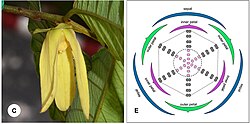
If a flower lacks any of these four structures, it is classified as incomplete or imperfect. It is important to note that whorls are not universal in floral design; some plants, such as those in the Magnoliaceae family, arrange their parts in a spiral rather than a circle.
Summary of Botanical Whorls
| Type of Whorl | Components | Examples/Details |
|---|---|---|
| Leaf Whorl | 3+ leaves or bracts | Galium, Lilium, Brabejum stellatifolium |
| Calyx | Sepals | Base of the flower |
| Corolla | Petals | Above the calyx |
| Androecium | Stamens (filament & anther) | Male reproductive organs |
| Gynoecium | Carpels (ovary, style, & stigma) | Female reproductive organs |
Frequently Asked Questions
What is the difference between opposite leaves and a whorl?
The primary difference is the number of elements. Opposite leaves occur in pairs (two leaves per node), whereas a whorl must consist of at least three elements radiating from a single point.
What are cyclic flowers?
Cyclic flowers are those whose floral parts (sepals, petals, stamens, and carpels) are arranged in concentric circles or whorls rather than in a spiral.
Which plant families do not use whorls in their flowers?
The Magnoliaceae family is a notable example where floral parts are spirally arranged rather than whorled.
What makes a flower "incomplete" or "imperfect"?
A flower is considered incomplete or imperfect if it lacks any of the four primary floral structures: the calyx, corolla, androecium, or gynoecium.
How do internodes affect whorled leaf growth?
Whorled leaves are generally rare except in species with very short internodes. In some woody trees, crowded internodes within the whorl alternate with longer internodes between the whorls.