Understanding Plant Reproductive Morphology: The Science of How Plants Breed
From the intricate petals of a rose to the towering cones of a pine tree, the physical structures plants use to reproduce are among the most diverse in the natural world. This field of study, known as plant reproductive morphology, examines the form and structure of the plant parts involved in sexual reproduction. By understanding these structures, scientists can determine a plant's breeding system, which is the primary driver of the genetic structure in nonclonal plant populations.
The scientific understanding of these processes evolved significantly in 1793 when Christian Konrad Sprengel demonstrated that pollination involves both biotic (living) and abiotic (non-living) interactions. This groundwork later allowed Charles Darwin to integrate floral morphology into his theory of evolution, specifically through the study of coevolution between flowers and their insect pollinators.
The Foundation: Alternation of Generations
Unlike humans, plants utilize a complex lifecycle called the alternation of generations. This process involves two distinct multicellular stages:
- The Sporophyte: This generation produces spores. While the sporophyte itself is asexual, it is often described using sexual terms based on the type of gametophyte it eventually produces.
- The Gametophyte: Spores grow into gametophytes, which produce gametes (eggs and sperm). When these gametes unite, they grow back into a new sporophyte, completing the cycle.
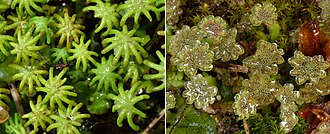
The dominance of these generations varies by plant group. In bryophytes (liverworts, mosses, and hornworts), the sexual gametophyte is the dominant stage. In contrast, for ferns and seed plants—including conifers and flowering plants—the sporophyte is the dominant, visible plant, while the gametophyte remains very small. In seed plants, the female gametophyte is hidden within the sporophyte for nutrition, and the male gametophyte is reduced to just a few cells inside a pollen grain.
The Anatomy of a Flower
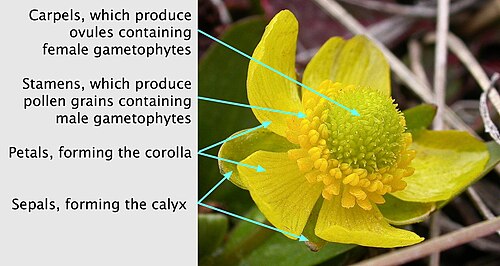
In angiosperms (flowering plants), the flower is the primary reproductive structure. While flowers vary wildly, a "perfect" or bisexual flower—such as that of the Ranunculus glaberrimus—illustrates the standard components.
Non-Sexual Structures
The outer parts of the flower are known as the perianth. This consists of the calyx (the outer sepals) and the corolla (the inner petals). These parts generally serve to protect the reproductive organs or attract pollinators.
The Male System: Androecium
The androecium is composed of stamens. Each stamen produces pollen grains, which contain the male gametophyte derived from a microspore.
The Female System: Gynoecium
The gynoecium consists of carpels. Each carpel contains one or more ovules, which house the female gametophyte produced from a megaspore. The carpel includes a stigma to receive pollen and a style that connects the stigma to the ovary, allowing pollen to reach the female gametophyte for fertilization.

When two or more carpels, styles, and stigmas are fused together, the resulting structure is called a pistil.
Variations in Plant Sexuality
Not all flowers contain both male and female organs. Botanists categorize flowers and plants based on which functional parts are present.
Flower Types
- Bisexual (Perfect): Contains both functional stamens and carpels.
- Unisexual (Imperfect): Lacks one of the two sexes. Staminate flowers are male, while carpellate (or pistillate) flowers are female.
Plant-Level Sexual Systems
The distribution of these flowers across a plant species defines its sexual system:
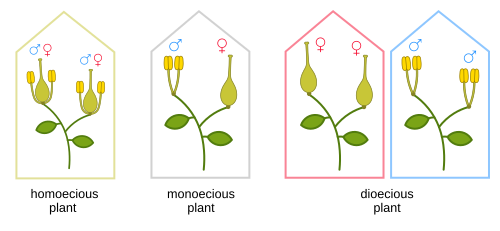
- Homoecious: The species only produces bisexual flowers.
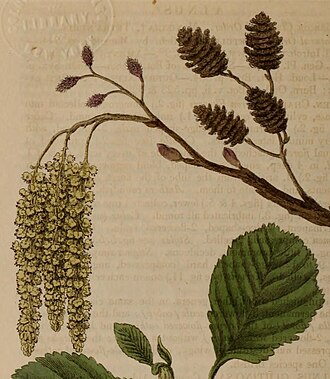
- Monoecious: A single plant produces separate male and female unisexual flowers. An example is the European alder (Alnus glutinosa), which has separate male and female catkins.
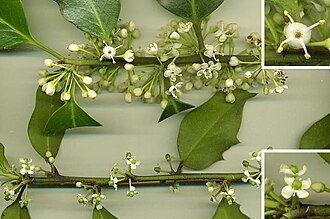
- Dioecious: Individual plants are either entirely male or entirely female. The European holly (Ilex aquifolium) is a classic example; only female plants can produce berries.
Complex and Rare Variations
Some plants exhibit highly specialized reproductive strategies. For instance, Amborella is dioecious but can switch its sex over time. Similarly, the Jack-in-the-pulpit (Arisaema triphyllum) changes sex based on growth: smaller plants are mostly male, while larger, older plants produce more female flowers.
Other variations include the Asteraceae (sunflower family), which group small flowers called florets into heads. These can be homogamous (all florets have the same sexual morphology) or heterogamous (a mixture of sexual forms).
Key Facts
- Outcrossing (Allogamy): The fusion of gametes from two different plants, occurring in approximately 55% of higher plant species.
- Dioecy Rate: About 6% of angiosperm species are dioecious.
- Self-Incompatibility: A genetic mechanism used by flowering plants to prevent self-fertilization and ensure outcrossing.
- Dichogamy: A strategy where male and female parts mature at different times to promote outcrossing. This includes protandry (male parts mature first) and protogyny (female parts mature first).
- Apomixis: A form of non-sexual reproduction where seeds are produced without embryo fertilization.
Summary of Plant Sexual Systems
| System | Flower Type | Distribution | Example |
|---|---|---|---|
| Homoecious | Bisexual | All flowers on all plants are bisexual | Ranunculus glaberrimus |
| Monoecious | Unisexual | Male and female flowers on the same plant | Alnus glutinosa |
| Dioecious | Unisexual | Male plants and female plants are separate | Ilex aquifolium |
The Evolutionary Advantage of Outcrossing
Most higher plants favor outcrossing over self-fertilization (autogamy) because it masks deleterious recessive mutations, increasing the genetic health of the population. To achieve this, plants have evolved several morphological and temporal barriers.
Beyond self-incompatibility and dichogamy, dioecy is a definitive way to ensure outcrossing. While its evolution is complex, it may be driven by resource allocation. For example, in wind-pollinated plants, separate male catkins may disperse pollen more effectively. In climbing plants, separating the energy-intensive process of fruit production from rapid upward growth may provide a competitive advantage.
Frequently Asked Questions
What is the difference between a monoecious and a dioecious plant?
A monoecious plant has both male and female flowers on the same individual plant. A dioecious plant has only one sex per individual; some plants in the population are entirely male, and others are entirely female.
What does "alternation of generations" mean?
It is a lifecycle where a plant alternates between a sporophyte stage (which produces spores) and a gametophyte stage (which produces gametes like sperm and eggs).
What is a "perfect" flower?
In botanical terms, a perfect flower is a bisexual flower, meaning it possesses both functional stamens (male) and functional carpels (female).
How do plants prevent self-pollination?
Plants use several methods, including self-incompatibility (a genetic barrier), dioecy (separate male and female plants), and dichogamy (timing the maturation of male and female parts so they do not overlap).
Can a plant change its sex?
Yes, some species exhibit sex-switching. For example, Amborella and Arisaema triphyllum can change their sexual expression based on age, size, or other environmental factors.