West Slavic Languages: History, Classification, and Linguistic Features
The West Slavic languages represent a distinct branch of the Slavic language family, which itself is a part of the broader Indo-European lineage. Spoken primarily across Central and Eastern Europe, these languages serve as a cultural and linguistic bridge between the East and South Slavic worlds. From the widespread Polish language to the smaller Sorbian language islands in Germany, the West Slavic group showcases a rich history of migration, political shift, and linguistic evolution.
Traditionally, these languages are spoken in a mostly continuous region that includes the Czech Republic, Slovakia, and Poland, extending into the westernmost parts of Belarus and Ukraine, and small portions of eastern Lithuania. Additionally, "language islands" exist, such as the Sorbian communities in Lusatia, Germany, and Slovak-speaking areas in Hungary.
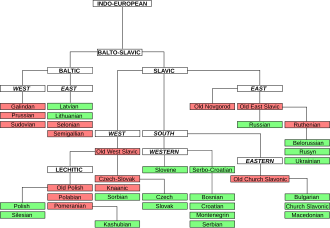
Key Facts
- Major Languages: Includes Polish, Czech, Slovak, Kashubian, Silesian, Upper Sorbian, and Lower Sorbian.
- Script: All West Slavic languages utilize the Latin script, unlike East Slavic (Cyrillic) or South Slavic (mixed).
- Classification: Divided into three primary subgroups: Czech–Slovak, Lechitic, and Sorbian.
- Origins: Diverged from Common Slavic between the 3rd and 10th centuries AD.
- Geographic Core: Centered in Poland, the Czech Republic, and Slovakia.
Linguistic Classification
The classification of West Slavic languages is generally based on similarity and the degree of mutual intelligibility. Most linguists divide the group into three branches:
- Czech–Slovak: These two are more closely related to each other than to any other West Slavic languages. Slovak, in particular, shares certain features with South Slavic languages like Slovene and BCMS (Bosnian, Croatian, Montenegrin, and Serbian).
- Lechitic: This group primarily includes Polish and Kashubian.
- Sorbian: Comprising Upper and Lower Sorbian. While some linguists place Sorbian within the Lechitic branch, others treat it as a separate branch because Sorbian dialects are highly diverse and lack common features that distinguish them as a single group from other Slavic languages.
According to the Max Planck Institute for Evolutionary Anthropology's Glottolog database, these languages are categorized under the ISO 639-5 code zlw.
Distinctive Linguistic Features
As West Slavic languages split from the East and South Slavic branches (estimated between the 3rd–6th or 6th–10th centuries AD), they developed several unique characteristics. These features distinguish them from their cousins in the East and South.
Phonological and Morphological Shifts
- Palatalization: The Proto-Slavic *tj and *dj evolved into palatalized ts and (d)z (e.g., the word for "night" is noc in Polish, Czech, and Slovak, compared to noch in Russian).
- Consonant Retention: They retained the groups kv and gv (e.g., Polish kwiat for "flower" and gwiazda for "star"), as well as tl and dl (e.g., radło/radlo/rádlo for "ard").
- Consonant Development: Palatized x developed into š, and groups like pj, bj, mj, vj developed into soft consonant forms without the addition of an l (epenthesis).
Stress and Grammar
West Slavic languages show a tendency toward fixed stress. In Czech and Slovak, the stress typically falls on the first syllable, while in Polish, it generally falls on the penultimate (second to last) syllable. Other markers include the use of -ego or -ého endings for the genitive singular of adjectival declension and specific shifts in pronouns, such as the use of ten ("this") and co ("what").
Historical Evolution
The early Slavic expansion reached Central Europe around the 7th century. By the 9th century, West Slavic political entities like the Principality of Nitra and Great Moravia had emerged. Some tribes settled on the fringes of the Carolingian Empire, where the Obotrites received territories from Charlemagne in exchange for military support against the Saxons.
During the high medieval period, the Ostsiedlung (German eastward expansion) and the 11th-century Wendish Crusade pushed many West Slavic tribes further east. The Sorbs and Polabian Slavs (such as the Veleti and Obodrites) fell under the Holy Roman Empire and underwent significant Germanization.
The political landscape shifted over the centuries: the Duchy of Bohemia became a kingdom in the 12th century, while the Slovaks were incorporated into the Kingdom of Hungary. By the 16th century, the Habsburgs ruled over Bohemians, Moravians, Slovaks, and Silesians. Following the dissolution of the Austrian Empire and Austria-Hungary, the region saw the creation of Czechoslovakia, which remained united until 1992.
| Subgroup | Primary Languages | Key Characteristics |
|---|---|---|
| Czech–Slovak | Czech, Slovak | High mutual intelligibility; first-syllable stress. |
| Lechitic | Polish, Kashubian | Penultimate stress; distinct from Sorbian by some linguists. |
| Sorbian | Upper Sorbian, Lower Sorbian | Highly diverse dialects; spoken in German language islands. |
Frequently Asked Questions
Which script do West Slavic languages use?
All West Slavic languages use the Latin script. This distinguishes them from East Slavic languages, which use Cyrillic, and South Slavic languages, which use a mix of both.
How are Czech and Slovak related to other West Slavic languages?
Czech and Slovak are more closely related to each other than they are to Polish or Sorbian. Additionally, Slovak shares certain linguistic features with South Slavic languages such as Slovene.
What are the Sorbian languages?
Upper and Lower Sorbian are West Slavic languages spoken in the Lusatia region of Germany. They exist as "language islands" surrounded by German-speaking populations.
When did West Slavic languages diverge from Common Slavic?
Linguists estimate the divergence occurred between the 3rd and 6th centuries AD, though some theories suggest a later window between the 6th and 10th centuries.
Are Silesian and Moravian considered separate languages?
While traditionally viewed as dialects, there have been efforts over the past century to standardize and recognize Silesian, Moravian, and Lachian as separate languages.