Czech Language: History, Structure, and Dialects
The Czech language (čeština) is a West Slavic language spoken primarily in the Czech Republic. As a member of the Indo-European family, it shares a deep ancestral connection with other Slavic tongues, most notably Slovak, with which it forms a distinct Czech–Slovak subgroup. Today, it serves as the official language of the Czech Republic and is one of the official languages of the European Union.
With approximately 9.8 million native speakers and 2.7 million second-language speakers, Czech is a vibrant language with a rich literary tradition and a complex grammatical structure that reflects its long evolution in Central Europe.
Key Facts
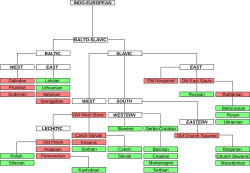
- Language Family: Indo-European → Balto-Slavic → Slavic → West Slavic → Czech–Slovak.
- Speakers: Approximately 12 million total speakers (as of 2012–2021).
- Official Status: Official language of the Czech Republic and the European Union.
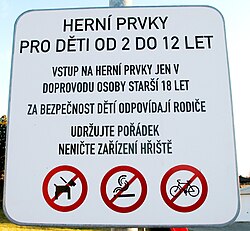
- Writing System: Latin script using the Czech alphabet.
- Regulatory Body: The Institute of the Czech Language of the Academy of Sciences of the Czech Republic.
Historical Evolution
Medieval and Old Czech
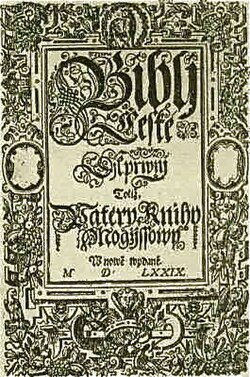
The earliest written records of the Bohemian (Czech) language appear in the form of glosses and short notes during the 12th and 13th centuries. By the late 13th and early 14th centuries, the language began appearing in literary works, and administrative documents followed toward the end of the 14th century. A landmark of this era was the Leskovec-Dresden Bible, the first complete translation of the Bible into Czech.
Early Modern Czech
In 1615, the Bohemian diet attempted to establish Czech as the sole official language of the kingdom. However, the defeat of the Protestant aristocracy in the Bohemian Revolt of 1620 led to a mass emigration of intellectuals. This, combined with the devastation of the Thirty Years' War, hindered the language's growth. By 1627, both Czech and German were official languages, but German became the dominant tongue of the upper classes throughout the 18th century.
The Modern Revival
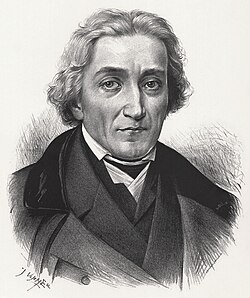
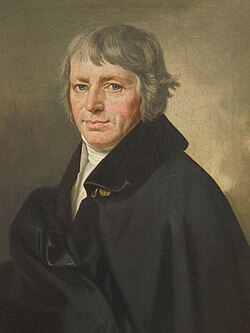
The transition to modern Standard Czech was driven by key figures who sought to revive the language. Josef Dobrovský played a pivotal role in restoring Czech as a written language, while Josef Jungmann's comprehensive Czech–German dictionary provided the essential foundations for the modern standard.
Geographic Distribution
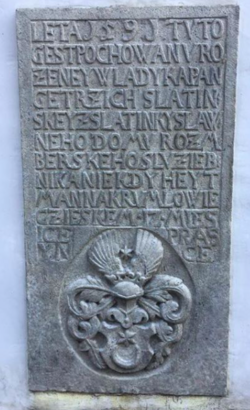
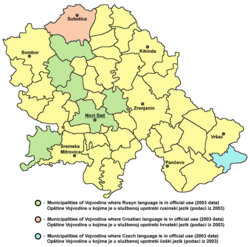
While centered in the Czech Republic, the language is recognized as a minority language in several countries, including Austria, Bosnia and Herzegovina, Croatia, Poland, Romania, Slovakia, and Ukraine. It also maintains a presence in regions like Vojvodina, Serbia.
Beyond Europe, Czech is found in diaspora communities, such as in Texas, USA, though these versions often omit the characteristic diacritics (accent marks) used in standard orthography.
![Praha, Texas (Note the absence of diacritics. In standard Czech, it would be Vítáme Vás […] Matička Praha.)](/images/54/0c/540ccd892f3f1c1490cc3f70c47ddc74944835f2a1c64e88eddb6c3bd7517a39.jpg)
Phonology and Writing System
Vowels and Consonants
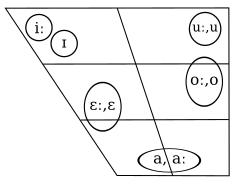
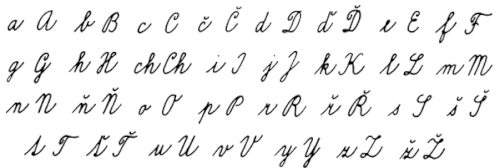
Czech utilizes the Latin script and is characterized by a distinction between short and long vowels. Long vowels are marked with an acute accent (e.g., á, é, í). The language also employs diphthongs such as ou, au, and eu.
Consonants are categorized into three groups: hard (e.g., /d/, /k/, /t/), neutral (e.g., /b/, /f/, /m/), and soft (e.g., /ɲ/, /ʃ/, /ʒ/). One of the most distinctive sounds in Czech is the fricative trill /r̝/, written as ⟨ř⟩.
Grammar and Structure
Declension and Case
Czech is a highly inflected language, meaning words change their endings to indicate their grammatical function. Nouns and adjectives are declined based on gender (masculine animate, masculine inanimate, feminine, and neuter) and case.
| Case | Masculine Animate (Big dog) | Masculine Inanimate (Black backpack) | Feminine (Small cat) | Neuter (Hard wood) |
|---|---|---|---|---|
| Nominative | velký pes | černý batoh | malá kočka | tvrdé dřevo |
| Genitive | bez velkého psa | bez černého batohu | bez malé kočky | bez tvrdého dřeva |
| Accusative | vidím velkého psa | vidím černý batoh | vidím malou kočku | vidím tvrdé dřevo |
| Instrumental | s velkým psem | s černým batohem | s malou kočkou | s tvrdým dřevem |
Verb Conjugation
Czech verbs are conjugated based on person and number. They are further categorized into classes (I through V) and are distinguished by aspect (perfective vs. imperfective). Irregular verbs, such as být (to be) and chtít (to want), are common in daily speech.
Language Varieties and Dialects
Standard vs. Common Czech
There is a notable difference between Standard Czech (used in formal writing and education) and Common Czech (used in everyday conversation). Common Czech often features simplified morphological endings, particularly in the instrumental plural and certain adjective declensions.
Regional Dialects
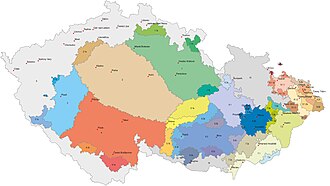
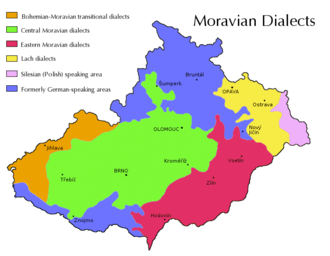
Czech is divided into several regional dialect groups:
- Bohemian Dialects: Including Central Bohemian, Southwestern (with Chod and Doudleby subgroups), and Northeastern (including the Krkonoše subgroup).
- Moravian Dialects: Known as moravština, these include Central Moravian, Eastern Moravian (with Slovácká and Wallachian subgroups), and Silesian dialects.
Frequently Asked Questions
Is Czech mutually intelligible with Slovak?
Yes, Czech and Slovak are closely related West Slavic languages and share a high degree of mutual intelligibility, making it relatively easy for speakers of one to understand the other.
What is the difference between Standard and Common Czech?
Standard Czech is the formal, regulated version used in official documents and literature. Common Czech is the spoken variety used in daily life, which often employs different grammatical endings and a more relaxed structure.
What are the most distinctive features of Czech phonology?
Czech is known for its use of long and short vowels and unique consonants, most notably the fricative trill ⟨ř⟩, which is considered one of the most difficult sounds for non-native speakers to master.
Who regulates the Czech language today?
The language is regulated by the Institute of the Czech Language, which is part of the Academy of Sciences of the Czech Republic.