Washington at Princeton: The Legacy of Charles Willson Peale's Masterpiece
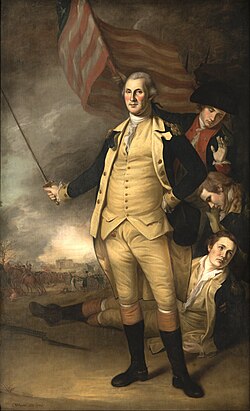
In the realm of American art, few images capture the gravity and leadership of the Revolutionary era as poignantly as Washington at Princeton. Painted in 1779 by the renowned American artist Charles Willson Peale, this oil on canvas work serves as a powerful tribute to George Washington following the pivotal 1777 Battle of Princeton.
The painting was originally commissioned by the Supreme Executive Council of Pennsylvania to adorn the council chamber within Independence Hall in Philadelphia. To meet the demand for this iconic image, Peale produced eight versions of the work, ensuring that Washington's likeness reached various influential circles of the young nation.
Artistic Inspiration and Composition
Peale did not create the composition in a vacuum. While capturing the likeness of Washington—who sat for the artist in Philadelphia in early 1779—Peale drew significant inspiration from European masters. Specifically, he based the composition on Thomas Gainsborough's Portrait of Augustus Hervey, a work Peale had encountered during the Exhibition of 1768 in London.
This blend of European stylistic influence and American subject matter helped elevate the portrait from a simple likeness to a piece of high art, reflecting the dignity and stature of the Commander-in-Chief.
Key Facts
- Artist: Charles Willson Peale
- Completion Date: Early 1779
- Subject: George Washington after the 1777 Battle of Princeton
- Dimensions: 236.2 cm x 148.6 cm (93 in x 58.5 in)
- Medium: Oil on canvas
- Original Commission: Supreme Executive Council of Pennsylvania for Independence Hall
Distribution and Market Value
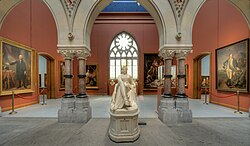
The legacy of Washington at Princeton is preserved through the distribution of Peale's eight copies. Today, seven of these paintings are held by prestigious U.S. institutions, including:
- The Pennsylvania Academy of the Fine Arts (Owner of the original)
- The Metropolitan Museum of Art (New York City)
- The National Portrait Gallery (Washington, D.C.)
- The United States Senate
- The Yale University Art Gallery (New Haven, Connecticut)
- Colonial Williamsburg
- Nassau Hall at Princeton University (where it is titled George Washington after the Battle of Princeton)
The financial value of the work reflects its historical significance. In January 2006, the painting sold for $21.3 million. At that time, it set the record for the highest price ever paid for an American portrait, a record that remained until it was eventually surpassed by an Andy Warhol portrait of Marilyn Monroe.
| Attribute | Detail |
|---|---|
| Artist | Charles Willson Peale |
| Year | 1779 |
| Medium | Oil on canvas |
| Dimensions | 236.2 cm x 148.6 cm |
| Current Owner (Original) | Pennsylvania Academy of the Fine Arts |
| Compositional Influence | Thomas Gainsborough |
Frequently Asked Questions
Who painted Washington at Princeton?
The painting was created by the American artist Charles Willson Peale in 1779.
How many versions of this painting exist?
Charles Willson Peale made eight copies of the painting in total.
Where is the original painting located?
The original painting is owned by the Pennsylvania Academy of the Fine Arts in Philadelphia.
What inspired the composition of the portrait?
Peale based the composition on Thomas Gainsborough's Portrait of Augustus Hervey, which he saw in London in 1768.
What was the record sale price for the painting?
In January 2006, the painting sold for $21.3 million, which was the highest price paid for an American portrait at that time.