Battle of Princeton: Washington's Strategic Victory in New Jersey
The Battle of Princeton, fought on January 3, 1777, stands as a pivotal moment in the American Revolutionary War. Following a daring surprise attack at Trenton, General George Washington sought to maintain the momentum of the patriot cause before his army entered winter quarters. This engagement resulted in a colonial victory that significantly boosted morale and encouraged a new wave of recruits to join the Continental Army in the spring.
The conflict was part of the broader New York and New Jersey campaign, characterized by high-stakes maneuvers and the struggle for control over the Mid-Atlantic colonies.
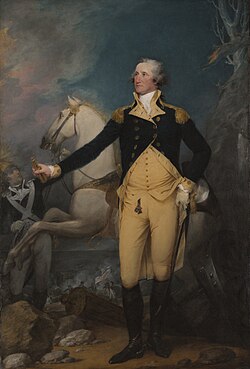
Key Facts
- Date: January 3, 1777
- Location: Princeton, New Jersey
- Outcome: American victory
- American Commander: General George Washington
- British Commanders: Lord Cornwallis and Lieutenant Colonel Charles Mawhood
- Strategic Impact: Boosted patriot morale and increased Continental Army enlistments.
The Road to Princeton: From Trenton to Assunpink Creek
The stage for the battle was set on the night of December 25–26, 1776, when Washington led 2,400 men across the Delaware River to seize Trenton, capturing 900 Hessians. After briefly returning to Pennsylvania, Washington crossed back into New Jersey on December 29 to establish a defensive position.
In response, General Lord Cornwallis assembled a force of over 9,000 British troops. On January 2, 1777, Cornwallis attempted to attack Washington's 6,000 troops at the Battle of the Assunpink Creek. After three failed attempts to cross the bridge into the American defenses, the British called off the attack for the night.
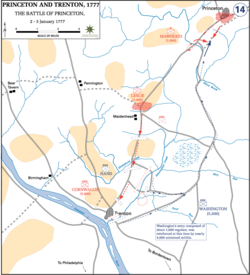
The Bold Evacuation
Under the cover of darkness on the night of January 2, Washington executed a daring maneuver. He evacuated his position, circled Cornwallis' main army, and marched toward the British garrison stationed at Princeton. This movement allowed him to surprise the smaller force left behind by Cornwallis.
The Engagement at Princeton
Lieutenant Colonel Charles Mawhood had been left in command of approximately 1,200 British troops in Princeton. As Mawhood attempted to move his regiments to join Cornwallis, he sighted the American army. Unsure of the enemy's size due to the wooded terrain, Mawhood retreated toward Princeton to consolidate his forces.
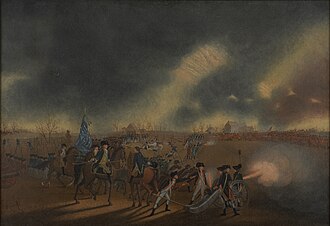
The Clash of Forces
General Hugh Mercer, acting on Washington's orders, attempted to intercept Mawhood's rear. However, Mawhood launched a counterattack with the 17th and 55th Regiments, along with cavalry and artillery, overrunning Mercer's position. A brigade of 1,100 inexperienced militiamen under Cadwalader arrived to assist, but many fled upon seeing the retreat of Mercer's men.
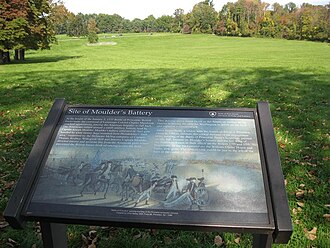
Washington's Arrival and British Collapse
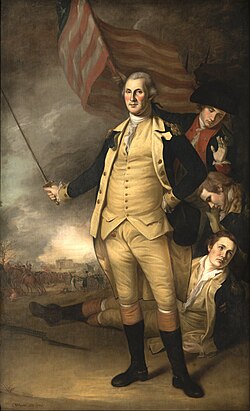
The tide turned when General Washington arrived on the field. The British forces, including the 40th and 55th Regiments, attempted to hold a position near a ravine at the edge of town. After a brief stand, the British line collapsed. Some soldiers retreated from the town, while others sought refuge in Nassau Hall.
Alexander Hamilton deployed three cannons to blast the building, prompting the British to surrender. Approximately 194 British soldiers laid down their arms and exited the hall.
Aftermath and Strategic Consequences
Following the victory, Washington declined a suggestion to push toward New Brunswick to capture a British pay chest of 70,000 pounds. Instead, he moved his army to Somerset Courthouse and eventually to Morristown for winter encampment. Cornwallis, in turn, abandoned several posts in New Jersey and retreated to New Brunswick, leading to a period of small-scale skirmishes known as the Forage War.
The battle's legacy is preserved today at the Princeton Battlefield State Park. In recent years, the American Battlefield Trust successfully preserved an additional 24 acres of the site to protect the land where Washington once charged.
| Category | United States (Continental Army) | Great Britain |
|---|---|---|
| Commanders | George Washington, Hugh Mercer, Alexander Hamilton | Lord Cornwallis, Charles Mawhood |
| Troop Strength | 4,500 men, 35 guns | 1,200 men, 6–9 guns |
| Killed | 25–44 | 50–100 |
| Wounded | 40 | 58–70 |
| Captured | 0 | 194–280 |
Frequently Asked Questions
Why was the Battle of Princeton significant?
The battle, along with the victory at Trenton, provided a critical boost to the morale of the American patriot cause and led to an increase in recruits for the Continental Army during the spring of 1777.
Who were the primary commanders during the battle?
The American forces were led by General George Washington, with key roles played by Hugh Mercer and Alexander Hamilton. The British forces were commanded by Lord Cornwallis and Lieutenant Colonel Charles Mawhood.
What happened at Nassau Hall?
British soldiers took refuge in Nassau Hall during the final stages of the battle. After Alexander Hamilton used cannons to attack the building, the British surrendered, and 194 soldiers were captured.
How did Washington avoid Cornwallis' main army?
Washington used a tactical evacuation on the night of January 2, circling around Cornwallis' larger force to launch a surprise attack on the smaller British garrison at Princeton.
What is the Forage War?
The Forage War refers to the series of small-scale skirmishes that occurred in New Jersey over several months following the Battle of Princeton, after Cornwallis retreated to New Brunswick.