Victorian Architecture: A Global Legacy of Revival and Eclecticism
Victorian architecture refers to a diverse collection of architectural revival styles that flourished during the reign of Queen Victoria (1837–1901). While the era spans the mid-to-late 19th century, many of the most iconic elements associated with the style did not gain widespread popularity until after 1850. Characterized by historicism—the practice of interpreting and reviving historic styles—Victorian design followed the Georgian and Regency periods and eventually gave way to Edwardian architecture.
Though rooted in the British and French custom of naming styles after reigning monarchs, the term "Victorian" extends far beyond the borders of the United Kingdom. It is widely used to describe buildings from the same period across the British Empire and the United States.
Key Facts
- Timeframe: Spans the reign of Queen Victoria (1837–1901), with peak popularity from 1850 onwards.
- Core Philosophy: Based on eclectic revivals of historic styles rather than a single unified design.
- Material Innovation: Transitioned from cast and wrought iron frames to more structurally sound steel.
- Global Reach: Spread via the British Empire to Canada, Australia, India, Sri Lanka, and the United States.
- Key Styles: Includes Gothic Revival, Italianate, Second Empire, and Queen Anne.
Victorian Architecture in the United Kingdom
The Gothic Revival
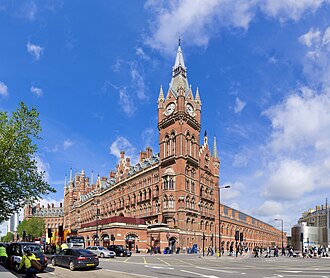
Emerging in the early 19th century, the Gothic Revival was a romantic reaction against the rigid symmetry of Palladianism. This style sought to reinvent the medieval past, blending purpose and everyday life. Architects like Augustus Pugin were instrumental in this retrospective movement.
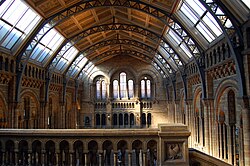
Technological advancements allowed for the integration of metal components. Joseph Paxton, the architect of the Crystal Palace, became a leading exponent of iron frame construction. In Scotland, Alexander Thomson pioneered the use of cast iron and steel for commercial buildings, blending neo-classical elements with Egyptian and Oriental themes.
Diverse Revival Styles
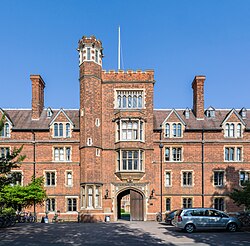
Beyond the Gothic, the Victorian era embraced a wide array of eclectic styles. These ranged from the Jacobethan (a precursor to the Queen Anne style) and Renaissance Revival to the French-inspired Second Empire and the British Arts and Crafts movement. Some styles, such as Italianate and Neoclassical, were not exclusive to the Victorian era but are strongly associated with it due to the sheer volume of buildings constructed during this time.
International Spread and Colonial Influence
As the British Empire expanded, architects emigrated to colonies in Canada, Australia, New Zealand, and South Africa. Initially, they brought the fashions of their home country. However, by the late 19th century, improved transport and publications like The Builder magazine allowed colonial architects to stay current with evolving English trends.
Australia and Asia
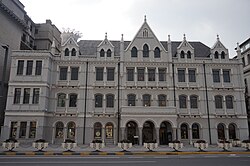
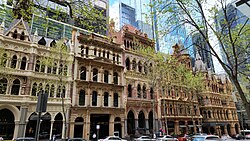
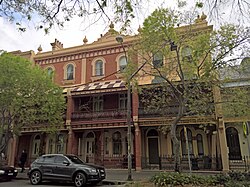
In Australia, the Victorian period (1840–1890) coincided with a gold rush and population boom. This led to a proliferation of styles, including Filigree (characterized by ornate iron-wrought detailing), Academic Classical, and Italianate. In Hong Kong, British colonial influence is still visible in landmarks like the Former Marine Police Headquarters.
Ireland and Sri Lanka
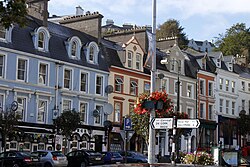
While Georgian architecture dominates cities like Dublin and Cork, Victorian styles flourished in specific suburbs and regional towns. Cobh is particularly noted for its colorful Italianate buildings. In Sri Lanka, the British colonial period left a legacy of Victorian design in the Royal College Main Building and the Galle Face Hotel.
North America
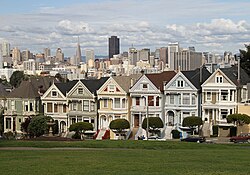
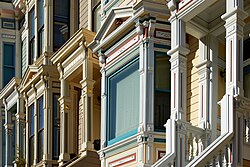
In the United States, "Victorian" generally describes styles popular between 1860 and 1900. Common variations include Queen Anne, Stick-Eastlake (known for machine-cut geometric decoration), and Richardsonian Romanesque. Terms like "Painted Ladies" or "gingerbread" are often used to describe the ornate aesthetics of these homes, though they are not formal architectural styles.
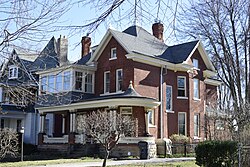
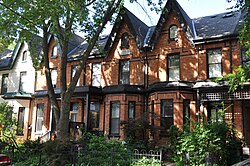
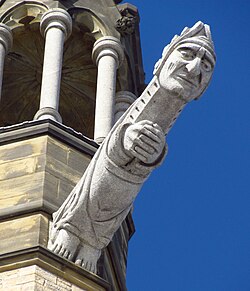
Canada also saw a strong Victorian influence, particularly through the work of dominion architects. Thomas Fuller's completion of the Canadian Parliament Buildings in 1866 established a High Victorian Gothic influence that persisted for decades.
India
Victorian architecture is prevalent in former British colonial hubs such as Mumbai, Kolkata, and Chennai. Notable examples include the Chhatrapati Shivaji Terminus in Mumbai and the Victoria Memorial in Kolkata.
Industrial and Urban Preservation
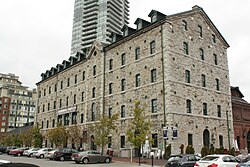
Victorian architecture was not limited to residences and government buildings; it also defined the industrial landscape. The Stone Distillery serves as a prime example of Victorian industrial design. Today, organizations like the Victorian Society work to preserve these landmarks, including campaigns to save outdated Victorian gasometers from demolition.
| Style | Key Characteristics | Primary Regions |
|---|---|---|
| Gothic Revival | Pointed arches, medieval inspiration, ornate stone carvings | UK, Canada, USA |
| Italianate | Flat roofs, overhanging eaves, bracketed cornices | UK, Ireland, USA, Australia |
| Queen Anne | Asymmetrical facades, wrap-around porches, towers | USA, UK |
| Second Empire | Mansard roofs, French influence, imposing scale | France, UK, USA, Australia |
| Filigree | Intricate wrought-iron lace work, verandas | Australia |
Frequently Asked Questions
What exactly defines "Victorian" architecture?
It is not a single style but a collection of revivalist styles used during the reign of Queen Victoria (1837–1901). It is characterized by eclecticism, historicism, and the use of new materials like iron and steel.
Is Victorian architecture only found in the UK?
No. Due to the reach of the British Empire and the emigration of architects, Victorian styles are found globally, with significant concentrations in Australia, Canada, India, and the United States.
What is the difference between Gothic Revival and High Victorian Gothic?
Gothic Revival was the broader movement to bring back medieval forms. High Victorian Gothic is a specific, later phase of this movement, often characterized by more bold colors and heavier ornamentation.
What are "Painted Ladies"?
"Painted Ladies" is a descriptive term, primarily used in San Francisco, for Victorian houses painted in three or more colors to highlight their architectural details; it is not a formal architectural style.
Which materials were most common in Victorian construction?
Early Victorian buildings used traditional stone and brick, but the era saw a massive shift toward cast iron and wrought iron frames, which were eventually replaced by steel for better structural tension.